







Raipur/ New Delhi
Gausingh Bhunjia, a tribal man in his early 40s, is a hornbill tracker in the Udanti-Sitanadi Tiger Reserve of Chhattisgarh, spread over Gariaband and Dhamtari districts.
Though Bhunjia had been engaged as a casual staff of the forest department since 2007, he was more of a fire watcher before this. Forest fires are a huge concern in the summer months in this Reserve situated in central Chhattisgarh and dominated by Sal (Shorea robusta) trees.
Now, Bhunjia receives around Rs 10,000 for walking 10-15 km per day, tracking and photographing the birds with his Nikon camera. “But still I keep an eye and remove pile of dead leaves which can catch fire easily when there is a lack of moisture, endangering the flora and and the fauna,” he told The Indian Tribal.
The dedicated worker is a resident of Aamamora panchayat which falls in the Kulhadighat range of the forest and has some 100 Bhunjia households. In Chhattisgarh, the Bhunjia community has been designated as a PVTG.
Like Bhunjia, Durjan Kamar, is also a tribal from the Kamar PVTG community. He used to be involved in patrol duty, but since 2024, has been deployed as a hornbill tracker in the reserve.
The efforts of trackers like Kamar and Bhunjia have paid results. Earlier, a few cases of poaching used to happen but it has been greatly reduced. In the past three years, there were around seven poaching cases. The reserve has 120 villages and each has about 40-50 percent tribals. “Now, the hunters and poachers feel afraid due to arrests. In the villages, trackers like us, about 15 in number, make people understand that harming wildlife is a punishable offence,” Bhunjia shared.
Dedicated Trackers, Use Of AI
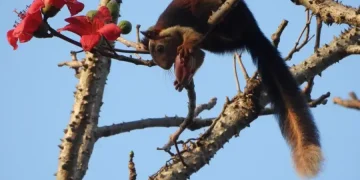
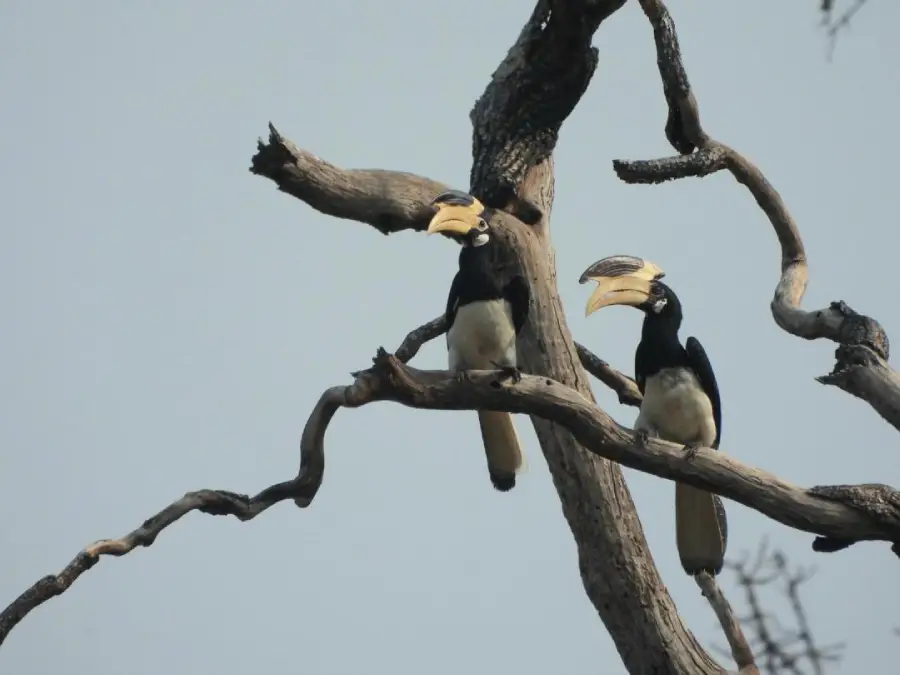
Apart from the hornbill trackers, the use of AI and community-intel has helped in the revival of three species in the reserve–the Malabar giant squirrel, the Indian flying squirrel and the Malabar pied hornbill.
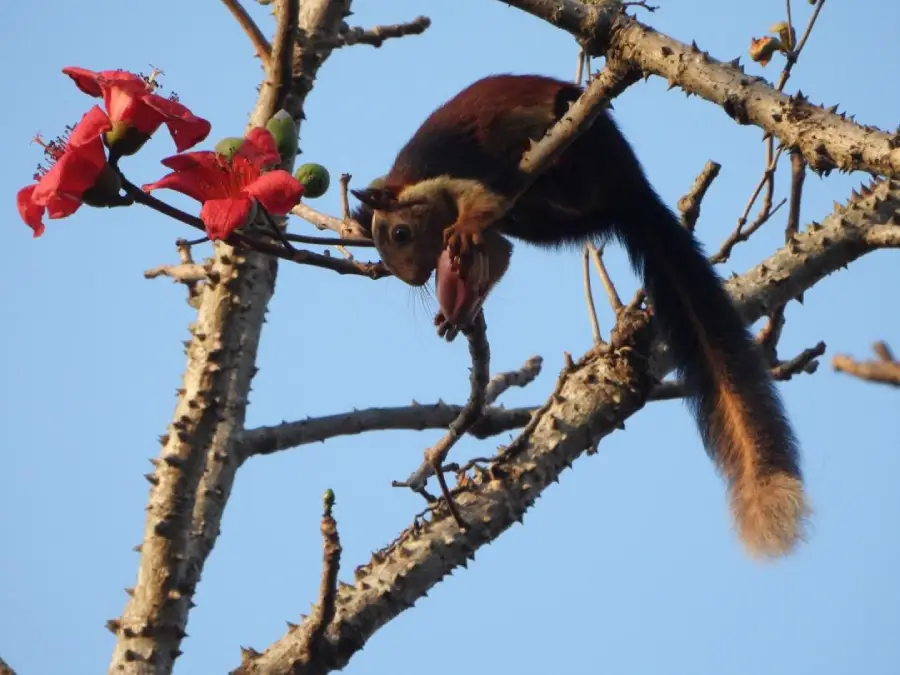
These species flourish in undisturbed habitats comprising inter-connected dense canopies which act as arboreal highways. “The Central Indian Highlands, of which Udanti-Sitanadi is a part, acts as a crucial ecological link between the Western Ghats, the Eastern Ghats and the Himalayas. This faunal bridge has helped in the expansion of the home range of these species at present.
“Earlier, the reduction in dense canopy cover due to biotic factors (encroachment, poaching, illegal tree felling and non-forestry works) had resulted in habitat destruction and a subsequent population decline of these species,” said Deputy Director Varun Jain.
As early as 2022, the Reserve started using AI tools such as the Google Earth Engine portal for the detection of canopy cover loss, canopy fragmentation, encroachments and surface water loss inside an area which spans over 1840 square kilometers.
This Google Earth Engine remote sensing portal has helped in identifying hotspot areas where the canopy cover and surface water had registered a decrease in the past 15 years using satellite images. These hotspots were later subjected to ground-truth work with the help of drones. A total of 850 hectares of encroachment were also removed in the past three years and solar-powered pumps installed in 21 ponds to help birds and animals quench thirst.
In degraded areas, plantations of Ficus species and fruit trees were carried out. Community-led programs like Hornbill Restaurants (in reality the planting of fruit trees) and Weaving Back the Squirrel Canopies (targeted increase of canopy cover) have been initiated to conserve the squirrels and hornbills.
The efforts have expanded the home range of the hornbills from an earlier one range (Kulhadighat) to four ranges (Kulhadighat, Arsikanhar, South Udanti and Indagaon). Similarly, both the squirrel species are now recorded in six out of eight ranges.
Working With Tribals, Villagers
Forest guard Rakesh Markandiya said Aamamora comes in the buffer range of Udanti-Sitanadi where the possibility of poaching is more or less present due to its proximity to Odisha, but community involvement helps reduce the risks. The tiger reserve has villages both in the core (critical habitat area) as well as in the buffer areas.
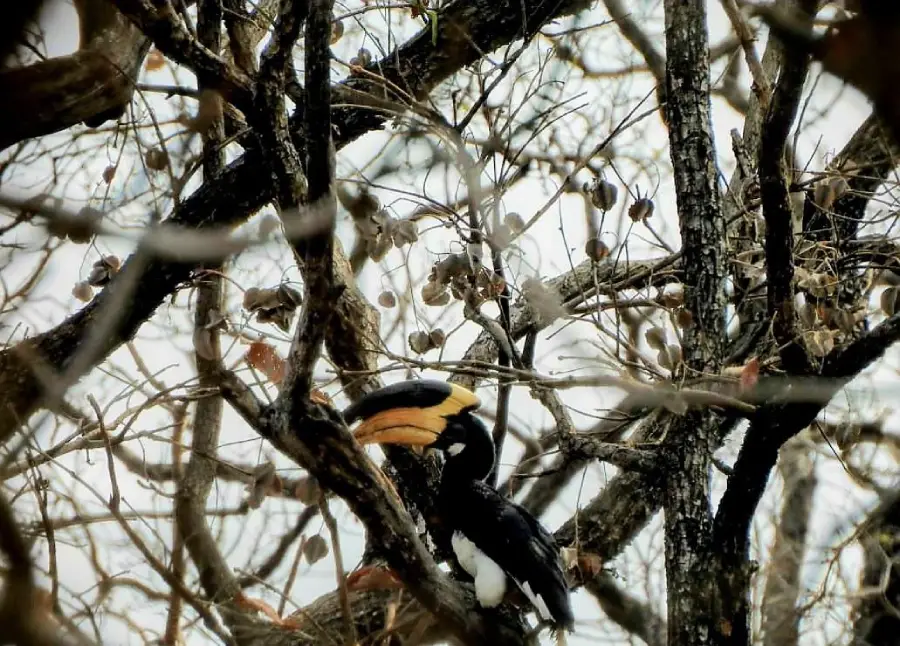
“Locals used to know about the existence of the hornbill. Then, suddenly one day we spotted them. After that, the conservation process started. Sometimes, children use slingshots or gulel to kill birds. So, even making them aware is necessary. Both the Malabar and the Indian grey hornbill are spotted, but the grey one is even more in number. To promote ecotourism, locals have been told to protect the birds and the squirrels.”
The forest guard shared that every day early in the morning trackers go out and target the areas where the Ficus tree species and water bodies are abundant. These are the places where the birds usually come to eat and drink.
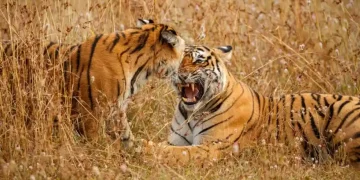
Even today in some parts, hunting is a tradition with tribal communities like Sendra in Jharkhand (Dalma Hills) and also in Chhattisgarh’s Kanger Valley National Park. “Sometimes, people in the villages do not understand the conservation concept. The mouse deer here used to be poached,” Markandiya said. Jain noted that when forest protection and removal of encroachments yielded good results, three tigers came to Udanti-Sitanadi from Maharashtra through the wildlife corridor.
“One tiger came in April last year. When I sent a photo of it to the NTCA, I was told that it must be a territorial tiger or a tiger from outside any tiger reserve. It was a male animal, stayed here for six months and went elsewhere. It shows how habitat improvement helps,” the Indian Forest Service officer shared.