




Kinnaur
In a place where mountains are unstable, roads often break down, and the effects of development are felt directly on the ground, the victory of a 31-year-old has created a buzz — one that is being seen as part of a wider shift in the district, where younger people are beginning to bring environmental concerns, land politics, and constitutional rights into the centre of public life. And this matters much in this tribal district.
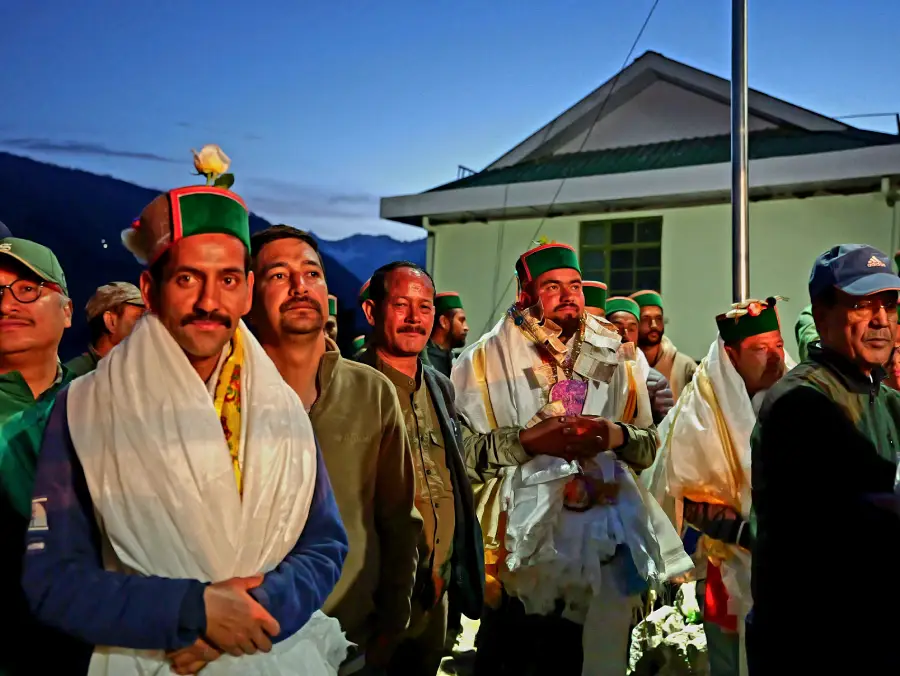
Yowan Negi, the newly-elected Up Pradhan of Rarang gram panchayat, said he would continue working around the commitments outlined in his manifesto, particularly stronger public participation, accountability in local governance and decision-making rooted in local consent. “Development should happen with the participation of people, not over their voices,” he reiterated.
His remarks showcase the growing influence of environmental concerns, constitutional rights and community participation in grassroots democracy.
Elections to the Panchayati Raj Institutions were held across the State in three phases on May 26, May 28, and May 30, with counting of votes on May 31.
How Environmental Anxiety Changed Politics in Kinnaur
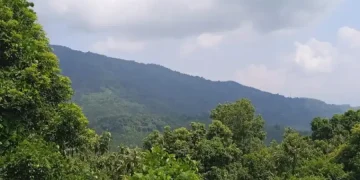
Kinnaur has lived with landslides, slope failures and repeated damage to roads and orchards for years. The Batseri and Nigulsari landslides left a deep impression on the district and sharpened public fear about what happens when fragile Himalayan terrain is pushed too hard.
In village after village, people have seen how tunnelling, blasting, hydropower expansion and heavy road work can unsettle slopes and change the landscape in ways that are not easy to repair. In that setting, questions about development are never only about projects. They are about safety, survival and whether the mountain itself can bear the pressure placed upon it.
It was in this atmosphere that Negi’s “No Means No” movement took shape in Kinnaur. The movement was not simply a protest against one hydropower project. It became a statement of refusal from communities that felt they were being asked to accept decisions taken elsewhere, with too little regard for the land they live on.
For many young people in the district, the movement gave shape to a simple idea. If a community is asked to live with the ecological cost, it must also have a real say in the decision.
“If decisions directly affect villages, then villages must also have a meaningful role in those decisions,” Negi said while speaking about governance in fragile mountain regions.
What makes this politically significant is that younger voices in Kinnaur are no longer limiting themselves to protest alone. Many are now seeking representation within democratic institutions themselves.
Why The Constitution Matters In A Tribal Himalayan Region
That idea has constitutional weight in Kinnaur. The district falls under Article 244 and the Fifth Schedule of the Constitution, which are meant to protect the rights and governance structures of Scheduled Tribe communities in Scheduled Areas.
The purpose behind these safeguards is clear. Tribal communities have distinct social, cultural and ecological relationships with land, forests and natural resources, and these relationships cannot be ignored by distant planning or administrative decisions.
This is why Yowan Negi’s win matters beyond the village itself. It shows a clear shift from protest outside institutions to participation inside them. For many young people in Kinnaur, politics is no longer only about marches, public meetings or objections. It is also about stepping into local governance and participating in decision-making. That shift matters because ecological concern is no longer sitting outside democracy. It is becoming part of it.
In many ways, this reflects a broader generational shift in Kinnaur’s politics. Younger representatives are increasingly speaking about ecology, constitutional rights and governance together rather than treating them as separate concerns.
The Constitution provides this shift with a strong foundation. Article 21 protects the right to life and personal liberty, and over the years, the courts have read into it the right to a safe and healthy environment. In a district where landslides, unstable slopes and damaged land affect homes, farms and daily movement, the connection is not hard to see. When a slope gives way, it is not only an environmental loss. It becomes a question of life and dignity.
Article 19 is important too. It protects the freedom to speak, to express dissent and to assemble peacefully. When villagers in Kinnaur raise their voices against projects they believe will harm the mountains, they are not standing outside democracy. They are using the rights the Constitution gives them.
Article 14 adds another dimension. Equality before the law cannot mean much if mountain communities bear the greatest environmental burden while having the least say in the decisions that shape their future. When people are expected to live with the effects of blasting, tunnelling and slope cutting without being properly heard, equality remains incomplete.
The Forest Rights Act, 2006, strengthens this argument. It was passed to address the long history of injustice faced by forest-dwelling Scheduled Tribes and other traditional forest dwellers. The law recognises rights over forest land and resources, and gives the Gram Sabha an important role in that process.
In a district like Kinnaur, where forest use, grazing routes, water sources and common land are part of everyday life, that matters deeply. It reminds us that governance in such places cannot be separated from local community rights.
What is happening in Kinnaur is therefore not only an environmental conflict. It is also a democratic question. Can development still be called democratic if the people living with its consequences are rarely part of the decision-making process? Can the constitutional protections mean for Scheduled Areas have meaning if the reality on the ground remains one of exclusion?
From Protest To Representation
Young people in Kinnaur are beginning to answer those questions differently. Many have grown up seeing roads cut off by landslides, orchards damaged by weather shifts and mountains altered by construction work. They are inheriting a region where ecological uncertainty is part of daily life.
For many young people in the district, local elections are no longer only about leadership positions. They are also becoming spaces where questions of environmental protection, representation and community participation are openly debated. That experience is changing politics. The old language of patronage is no longer enough. More people are asking who decides, who benefits and who bears the damage.
This is where the idea of ecological democracy becomes useful. At its core, the debate in Kinnaur is about whether communities living in fragile mountain regions truly have a voice in decisions affecting their land and future. It also means that environmental protection is not separate from democracy. It is part of it. In Kinnaur, a young representative elected from a village shaped by this struggle carries that idea into local governance.
Yowan Negi’s victory should be seen in that light. It is not only a personal win. It is a sign that the political imagination of Kinnaur is changing. A generation shaped by landslides, environmental anxiety and the “No Means No” movement is beginning to enter institutions with a different set of expectations. It wants rights, not just promises. It wants representation, not just outreach. It wants decisions made with the people, not over them.
Negi’s victory therefore reflects more than a routine Panchayat election result. It suggests that ecological anxiety in the Himalayas is gradually reshaping the language of grassroots democracy itself.
That may be the most important lesson from Rarang. In a fragile mountain region, democracy cannot be measured only by elections. It must also be measured by whether communities still have the power to protect the land, forests and water systems that make life possible.
(The writer is a doctoral researcher at Department of Political Science, Panjab University. Views expressed are personal.)