




Sagar/New Delhi
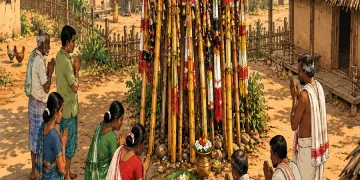
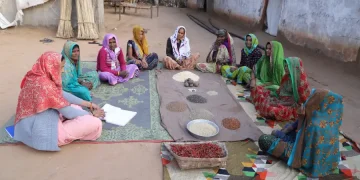
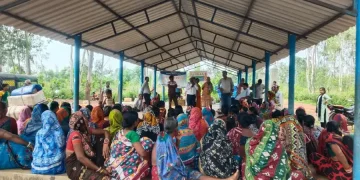
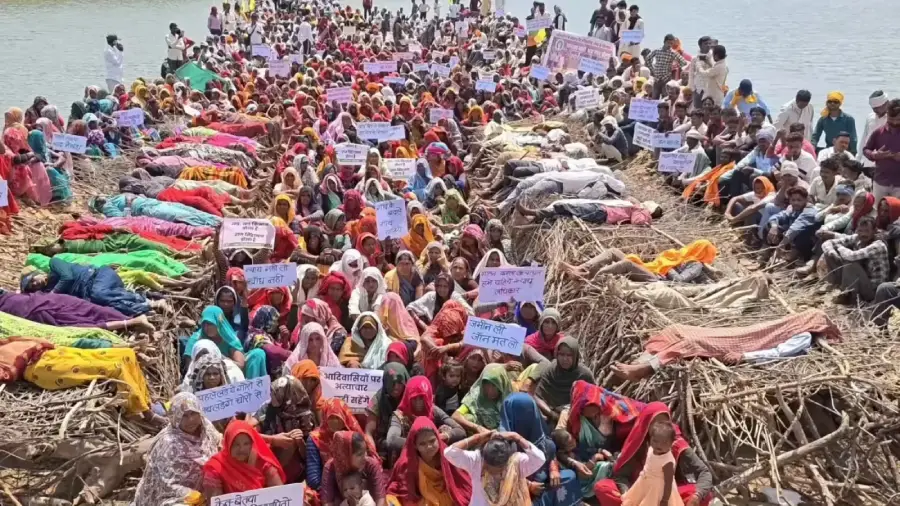
Thousands of Gond and Kol tribal women have intensified protests against the Ken-Betwa river-linking project, calling displacement “worse than death”. Alleging that the project threatens their ancestral lands, the women led a visceral ‘Chita Andolan’ (lying on symbolic funeral pyre) “to protect their heritage and a legacy of traditional water wisdom”.
While the most intense phase of the protest has transitioned into a strategic standoff — negotiations between the two sides are currently on — the message remains clear: displacement is a fate worse than death.
A Decades-Old Vision
The Ken-Betwa Link Project (KBLP) is the first component of the 1980 National Perspective Plan, which envisioned interlinking 30 rivers to redistribute water across India. Formulated by the National Water Development Authority (NWDA), the project to link the Ken and Betwa, both tributaries of the Yamuna, was officially set in motion in 2010 after decades of feasibility studies and policy shifts.
Bundelkhand’s Struggle
Bundelkhand, a drought-prone region in central India, has often been promised relief from its water shortages. Covering 14 districts across Madhya Pradesh and Uttar Pradesh, the area has seen many engineering projects come and go, but local communities have not seen real improvement. Now, the KBLP, India’s first inter-state river-linking plan, aims to solve the problem. With a cost of Rs 44,605 crore, it is the most expensive attempt so far.
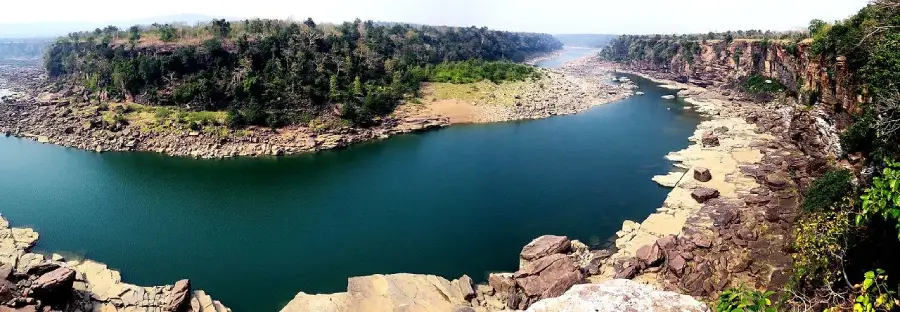
The main part of the project is the Daudhan Dam, which will collect what is called ‘surplus’ water from the Ken River and send it through a 221-kilometre canal to the Betwa basin. The project will provide drinking water to 6.2 million people and irrigate 1.062 million hectares. These numbers look impressive on paper, but for the people in the area, the price of the Daudhan Dam is not counted only in rupees.
Submerging Conservation: Panna Tiger Reserve At Crossroads
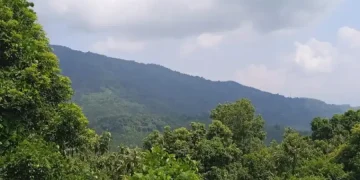
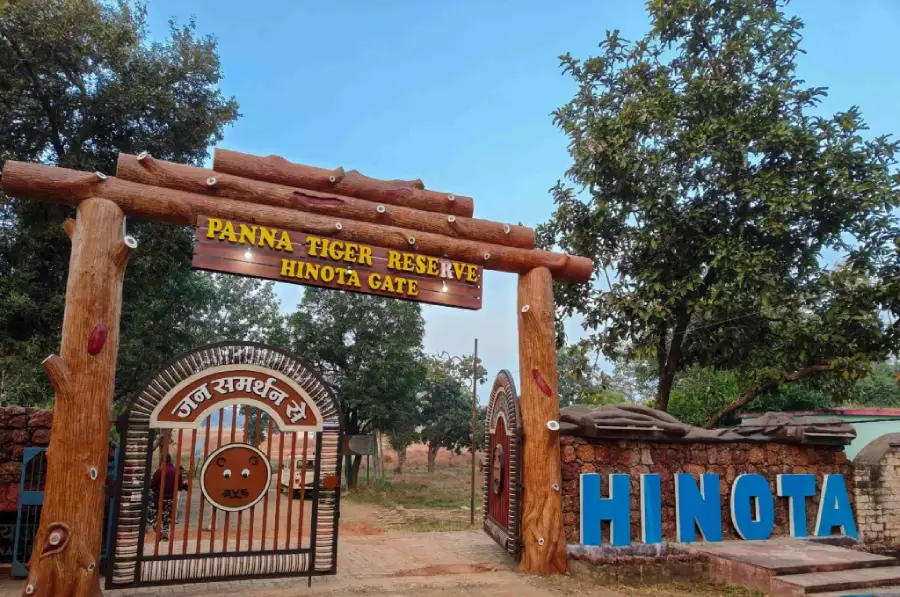
The Executive Summary of the Comprehensive Environmental Impact Assessment by AFC India Ltd makes clear what will be lost: 10,500 hectares of wildlife habitat submerged, 2.3 million trees felled, most of them inside the Panna Tiger Reserve and nearly 70% of the reserve’s core zone gone. Roughly, 55 tigers would be pushed to the edge of survival.
Renowned conservationist M.K. Ranjitsinh resigned from the Madhya Pradesh Wildlife Board in protest, stating plainly: “You can have either the interlinking project or the Panna Tiger Reserve; you cannot have both.”
Scientists have also raised a more fundamental question: Does the Ken River even have surplus water to give? Several studies argue it does not and that the deforestation the dam requires could actually alter Bundelkhand’s rainfall patterns, turning a drought remedy into a drought accelerant.

Furthermore, river researcher Himanshu Thakkar, who is challenging the project in the National Green Tribunal (NGT), points out that the “surplus water” data has never been independently reviewed. He warns: “The truth is that the Ken River does not have a surplus of water to give, but we are expected to believe it without questioning.”
KEY FACTS
- The Ken-Betwa link project is expected to flood 70% of the core area in Panna Tiger Reserve and lead to the loss of 2.3 million trees.
- Over 6,600 families from the indigenous Gond and Kol tribes face displacement due to the construction of the Daudhan Dam.
- Recent resistance has transitioned from active ‘Chita’ protests to a strategic ‘Satyagraha’ due to the imposition of Section 163 and a temporary pause for negotiations following administrative assurances of a compensation review.
- People are being offered Rs 12.5 lakh per acre as cash compensation, but this does not make up for the loss of land, livelihoods or access to forests.
- Traditional water harvesting methods like restored farm ponds, check dams and Chandela-era tanks have doubled crop yields and helped refill groundwater in Bundelkhand but being overlooked
“Justice Or Death”: A Protest Written In Fire
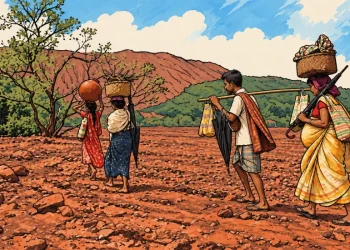
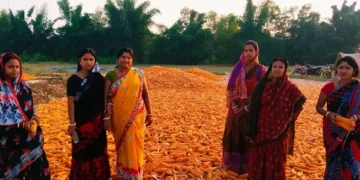
While the forests take the first hit, the people who live within them bear the brunt of it. The Gond and Kol tribes of Daudhan village in Chhatarpur’s Bijawar tehsil have lived on this land for generations, depending entirely on farming and forest produce.
As construction approached its peak, they chose a visceral form of protest: the Chita Andolan. Around 7,000 tribal women joined the movement, lying on mock funeral pyres to signal that displacement is a kind of death. This was accompanied by the Jal Andolan and Mitti Andolan, where protesters waded into rivers with ropes around their necks or buried themselves in mud.
The standoff escalated on April 9 when enraged tribal communities, protesting alleged compensation corruption, forced an administrative team to flee the site. In response, Section 163 was imposed to curb rising tensions and prevent further direct confrontations between the indigenous residents and officials.
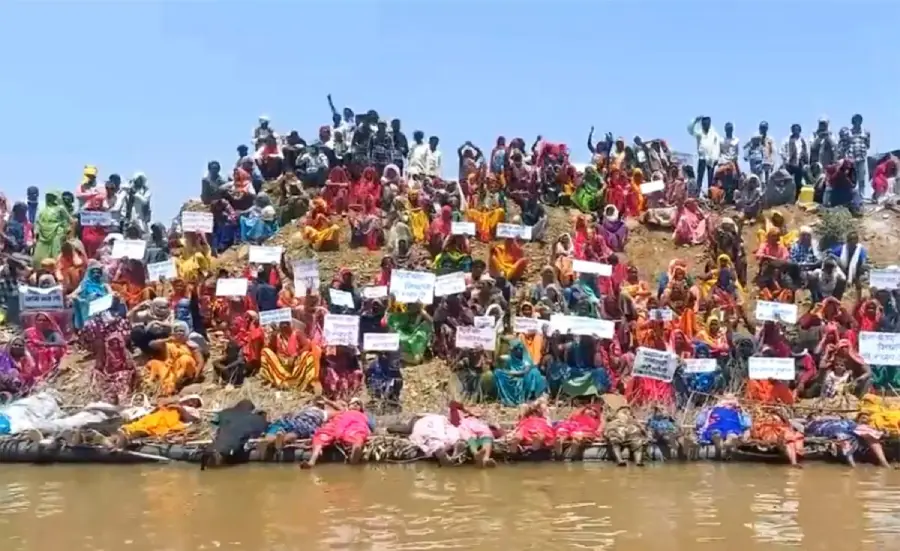
However, as of May 7, 2026, the movement has entered a phase of strategic pause. Following an intense 12-day continuous protest in April, the residents of Daudhan and surrounding villages postponed their active agitation. This decision followed a request from the Chhatarpur district administration for a 10-day window to address massive discrepancies in compensation surveys.
Despite this pause, ground resistance remains fierce. In villages like Imalha, farmers have physically stopped officials from starting work on their fields. This persistent deadlock recently halted the installation of vital electrical lines for five days. During this standoff, the administrative vacuum led to the theft of approximately 2,100 meters of high-quality power lines, valued at nearly Rs 20 lakh, further delaying the dam’s construction.
Rehabilitation Deficit: Beyond Cash Compensation
The scale of the crisis is officially documented by the Ken-Betwa Link Project Authority: the Daudhan dam will displace 5,288 families in Chhatarpur and 1,400 families in Panna. The government calls the settlement fair and refers to the Right to Fair Compensation and Transparency in Land Acquisition, Rehabilitation and Resettlement Act, 2013.
In reality, families get Rs 12.5 lakh per acre of land and Rs 6 lakh for housing. But they do not get anything for losing access to Mahua flowers, Tendu leaves or the forest commons that help them survive when they are not farming. The Act says people should get land in return for land, but the administration only gives cash.
For many of these communities, this is their second displacement — the first came when they were moved for the Panna Tiger Reserve. Research on tribal displacement has long documented this pattern: the poorest communities absorb the costs of projects whose benefits flow elsewhere.
Nationally, tribals make up for over 8% of India’s population but account for nearly 40% of all development-related displacement. The World Commission on Dams estimated that large dams worldwide have displaced between 40 and 80 million people. Ken-Betwa is primed to add to both counts.
Lessons From The past: Efficacy Of Decentralised Water Management
The Ken-Betwa project is difficult to justify, as Bundelkhand already has valuable experience in managing water. The problem is that people have stopped using these traditional methods and the government is neither focusing on nor funding them.
A 2020 report from the Atal Bihari Vajpayee Institute of Good Governance and Policy Analysis shows that the Chandela and Bundela dynasties-built thousands of tanks and ponds between the 9th and 14th centuries. Tikamgarh district alone still has nearly 900 of these. When the BIWAL (Bundelkhand Initiative for Water, Livelihoods and Agriculture) programme restored a 100-hectare Chandela tank in Madumar village by removing 11,920 cubic metres of silt, 86 farmers saw their Rabi crop yields increase right away.
Other areas have seen even bigger improvements. In 1997, Kol tribe members were freed from bonded labour and given land that was less than 5% productive. Between 2009 and 2011, with help from Akhil Bhartiya Samaj Seva Sansthan, they built 61 farm ponds and check dams. Wheat yields increased from 19,910 kg to 190,920 kg in just a few years. Mustard yields grew 14 times higher. As local jobs became more stable, fewer people left their villages.
Researcher Liansang Puii has shown that the traditional Haveli system of earthen bunding raised groundwater levels by two to five metres in the Parasai-Sindh watershed in Jhansi. This allowed farmers to double the number of times they could plant crops. Watershed models by ICAR-NRCAF for the Garhkundar-Dabar region also show that decentralised water management can greatly reduce dependence on unpredictable monsoons, which is exactly what Bundelkhand needs most.
Even the systems that deliver water have problems that money alone cannot solve. A Centre for Science and Environment study in the Banda district found that up to 70% of water distributed through schemes like the Jal Jeevan Mission becomes contaminated due to poor drainage planning. This ends up polluting the drinking water it was supposed to protect. Water security depends not just on supply, but also on how water is managed after it is delivered.
Towards A Sustainable Hydrology: Choosing People Over Mega-Engineering
Although Bundelkhand has extensive water infrastructure, the region lacks political commitment to maintain and improve these systems. Chandela tanks, check dams, farm ponds and watershed systems built over centuries have deteriorated due to neglect. Restoring these structures would cost much less than Rs 44,605 crore and would avoid displacing communities and deforestation.
As the current standoff in villages like Imalha shows, the choice in Bundelkhand is no longer just about access to water—it is about the choice between a large-scale intervention and a solution that respects local lives.
In contrast, the Ken-Betwa Link Project would result in the destruction of a tiger reserve and the flooding of ancestral lands of communities previously displaced. The project may also fail to provide enough water if the Ken River does not produce the expected surplus. Evidence from Madumar, Jhansi and the Kol farmlands show the greater effectiveness of locally tailored approaches.
(The author is a research scholar and Senior Research Fellow (SRF) at Dr. Harisingh Gour Central University, Sagar, Madhya Pradesh. Views expressed are personal)