






Raipur/New Delhi
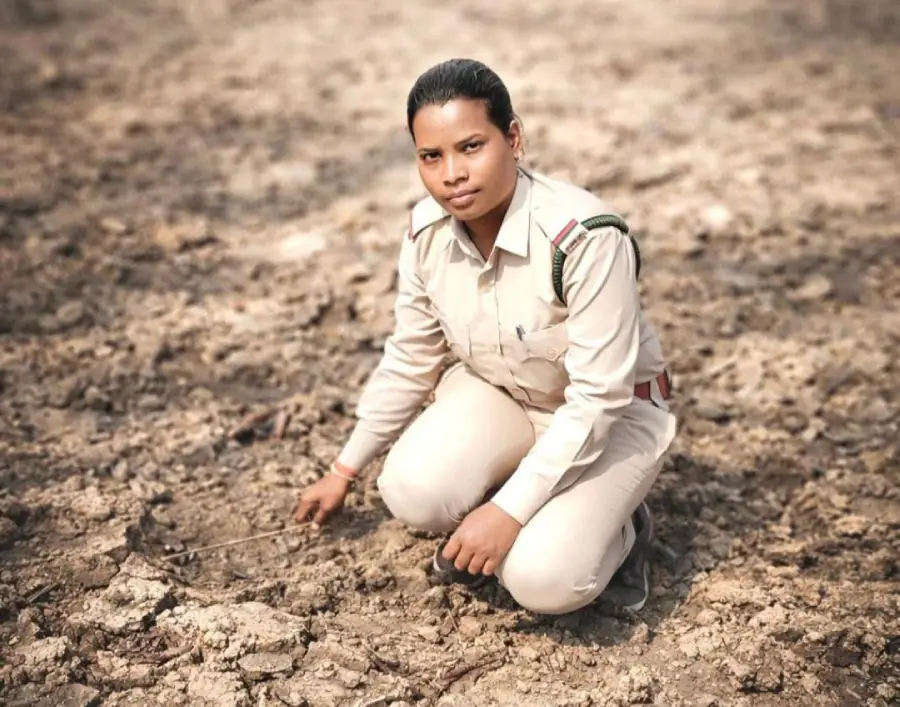
On any given day, forest guard Kamaleshwari Painkra starts her duty around seven in the morning, leading a team of 10 dedicated members whose duty is to prevent human-elephant conflict and minimise crop damage.
Their field area is inside the Kothari range of the Barnawapara Wildlife Sanctuary in the Baloda Bazar-Bhatapara district of central Chhattisgarh where elephants are ever present. The sanctuary was established in 1976 and occupies 245 sq km area.
After her initial entry in the forest services in 2017, Painkra’s first posting happened in Barnawapara in 2019. “Before this field job, I underwent intense training for six months in neighbouring Mahasamund district and patiently awaited my duty,” she told The Indian Tribal.
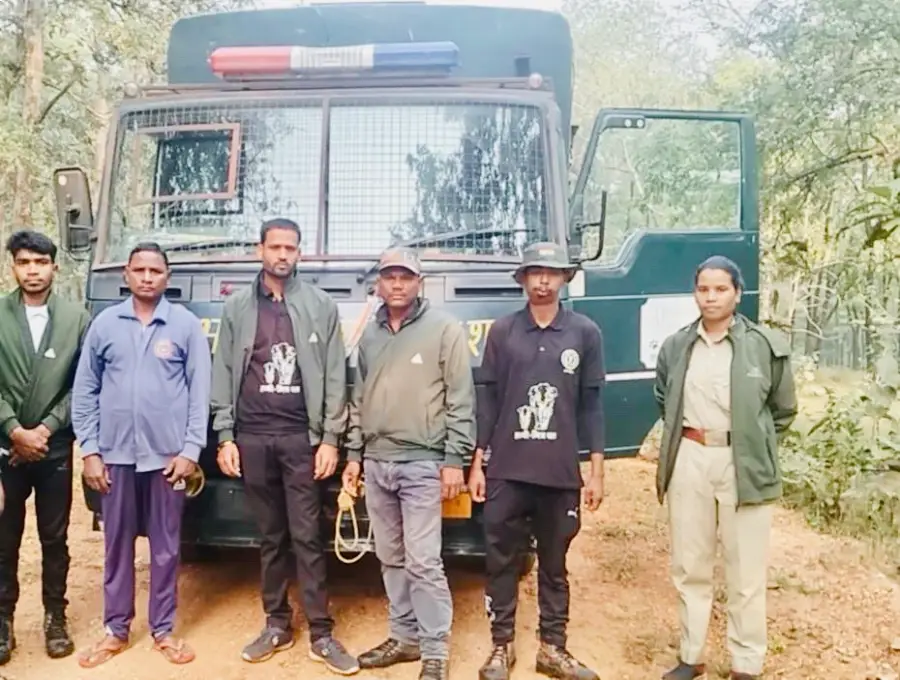
At present, under Painkra’s care, there is a group of 10 locals which was formed in 2023. Her duty is to guide and direct this Hathi Mitra Dal (Friends of Elephants). The team, along with Painkra, usually travels on those routes where the presence of elephants was confirmed a day before.
Painkra informed that there are some 30 elephants inside Barnawapara, which still has 18 villages inside and most of them are tribal-dominated ones. Three villages had been relocated earlier. A few others are on the relocation radar.
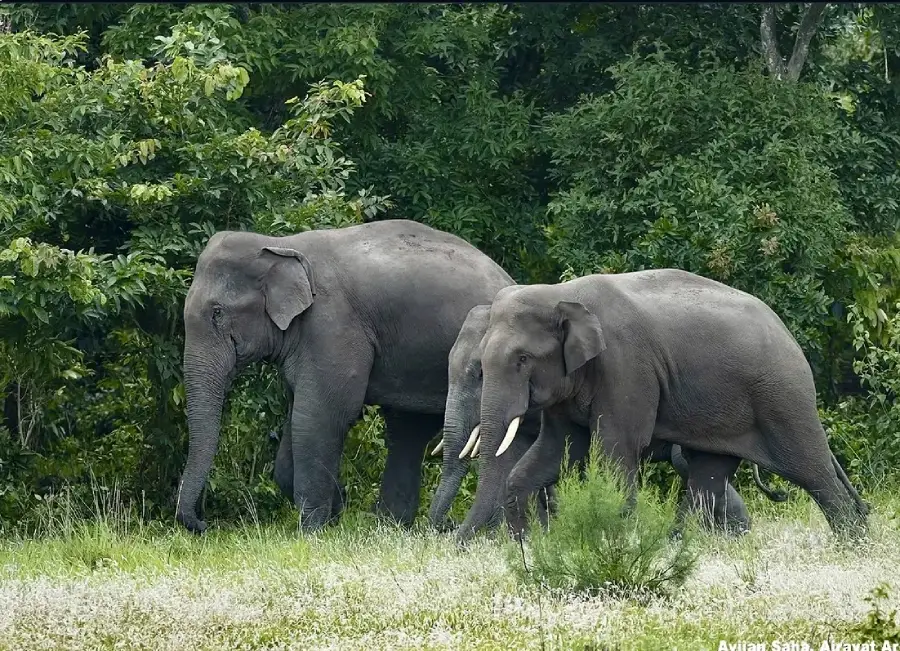
“Sometimes, we see the animals directly, and at other times, we come to know about their presence in the area through dung. At times, they betray their presence as they eat bamboo leaves and shoots which are favourite foods. The animals came around 2019-2020 in search of a suitable habitat and stayed behind.”
Tracking Elephants
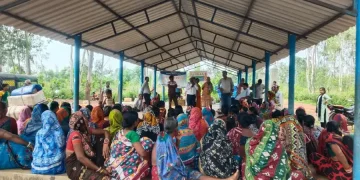
There are many Hathi Mitra Dals across Chhattisgarh, as the state records a high incidence of human-elephant conflict in its central and northern parts. These people are carefully selected from the villages to monitor the movement of elephants and talk to communities about the best ways to avoid conflict situations.
The animals mostly raid paddy fields during the harvest season around November-December. The state has about 3.7 million hectares under rice cultivation which is mostly rainfed, covering both uplands and shallow lowlands, according to the Indian Council of Agricultural Research.
Generally, people in the villages where the presence of elephants is high are advised not to enter forests. But many tribals and forest dwellers are dependent on the collection of minor forest produce. Apart from the paddy harvest time, the Mahua collection season in the summer (March-April) also attracts elephants due to the sweet taste of the flowers and their strong aroma.
According to Painkra, at present, this single Hathi Mitra Dal group is managing well across the district. Besides Barnawapara, they also look after other areas where elephants are reported. Generally, they travel in a big truck-like vehicle during patrol. “Sometimes, sirens are sounded to disperse the animals from habitations when they don’t go away. Mostly, mud houses with tiled roofs are in danger from elephant depredations,” the tribal forest guard shared.
High Conflict Across India
India has around 23,446 elephants. Several states such as Jharkhand, Odisha, West Bengal and Chhattisgarh go through high level of human-elephant conflict and solutions range from the deployment of Hathi Mitra Dals to the use of drones as mitigation measures. The conflict has assumed alarming proportion due to land use change, extensive paddy cultivation and disturbance caused by mining.
In these states, encountering elephants is quote common for forest staff while on duty and Painkra was no exception. “In January this year, I was face to face with a solitary male elephant while driving a scooty with a beat guard around one in the afternoon. The animal could have attacked us, but somehow we were lucky. I backed off and left the place,” she shared with The Indian Tribal.
While on duty in the field, Painkra and her Hathi Mitra Dal team use the Gaj Sanket and the ODK Collect apps, which help in registering information regarding elephant location and other details.
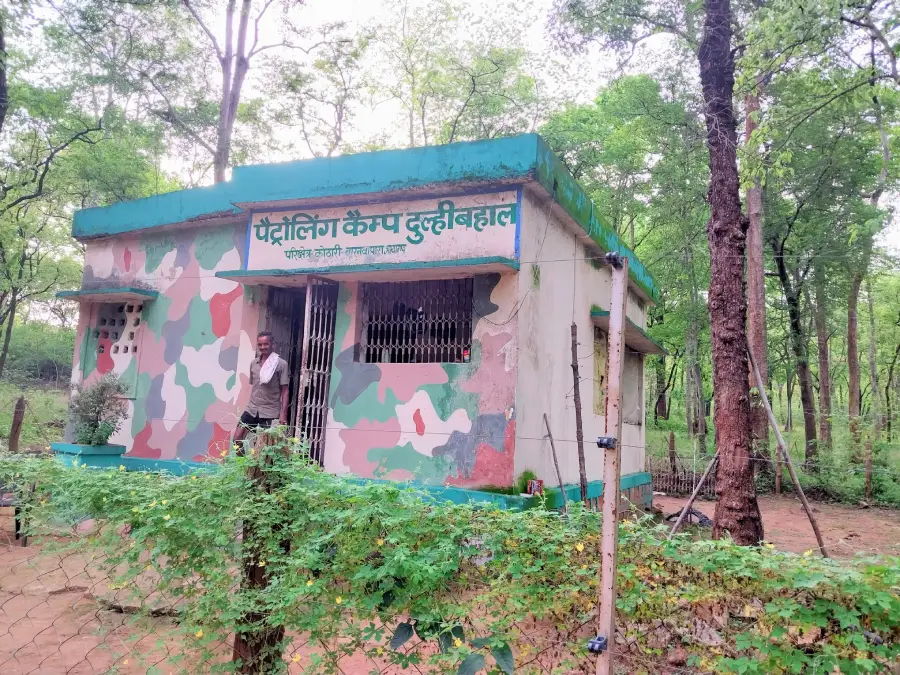
Despite apps, patrol duty becomes a huge problem in the heavy monsoon season. Painkra shared that during the rains, the big vehicle cannot travel to many places and then the staff is forced to travel on bikes. However, as the scooty incident shows, it leaves them with little or no protection.
Elephants regularly cross over to Chhattisgarh from neighbouring Jharkhand and Odisha. This movement started around the late 90s. Currently, there are about 275-320 elephants in Chhattisgarh.
“The elephants in Barnawapara do not always cause disturbance, but one has to manage them well. Initially, I used to think that as a woman it would be difficult for me to stay inside the jungle and work. But after that I fell in love with the place and its wildlife,” Painkra said.
In many villages across Chhattisgarh, when elephants are spotted, usually people use firecrackers to drive away the animals. Prabhat Dubey, who is based in Surguja district, believes that scientific elephant management training all over the state can help Hathi Mitra Dals achieve much better results with low casualties. He has trained many such groups.
Dhammshil Ganvir, the divisional forest officer of Balodabazar-Bhatapara district, said that Painkra had been put in charge to lead the Hathi Mitra Dal for better management in the field. “As part of her duty, she also conducts several awareness on human-elephant conflict.”
The officer shared that in Barnawapara, there is also a focus on practices to reduce forest fires which are a threat in the summer months. Besides, a youth volunteer programme has been launched to connect young people with forests to encourage future green leaders. They also act as first response individuals in the villages in times of crises.