



New Delhi/Shivpuri
Among the 17 Sustainable Development Goals to be achieved by 2030, one key goal is to end hunger and ensure food security. With this objective, Vikas Samvad Samiti, a Bhopal-based non-profit, launched a seed conservation campaign in Shivpuri district of Madhya Pradesh among the Sahariyas, a Particularly Vulnerable Tribal Group.
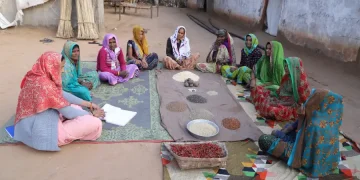
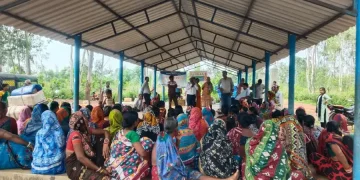
As part of this initiative, now spread across 15 villages of Shivpuri, about 250 Sahariya tribal families conserve seeds of various crops traditionally known to them. These mainly include millets and pulses. Though nutritious small millets like Kodo and Kutki are widely cultivated in Madhya Pradesh, marginalised tribal farmers often face difficulties in accessing new and good-quality seeds. To overcome this, seeds are sometimes brought from other areas. However, saving seeds locally ensures a continuous and reliable supply for future use.
Seed conservation addresses gaps in nutritional security in these villages located in Pohari block of Shivpuri. Started eight years ago, the initiative also aimed to tackle malnutrition prevalent among the Sahariyas. Seed banks were initially set up in two villages and later expanded to others. Under the initiative, seeds are collected, carefully preserved and distributed to farmers in need during the monsoon.
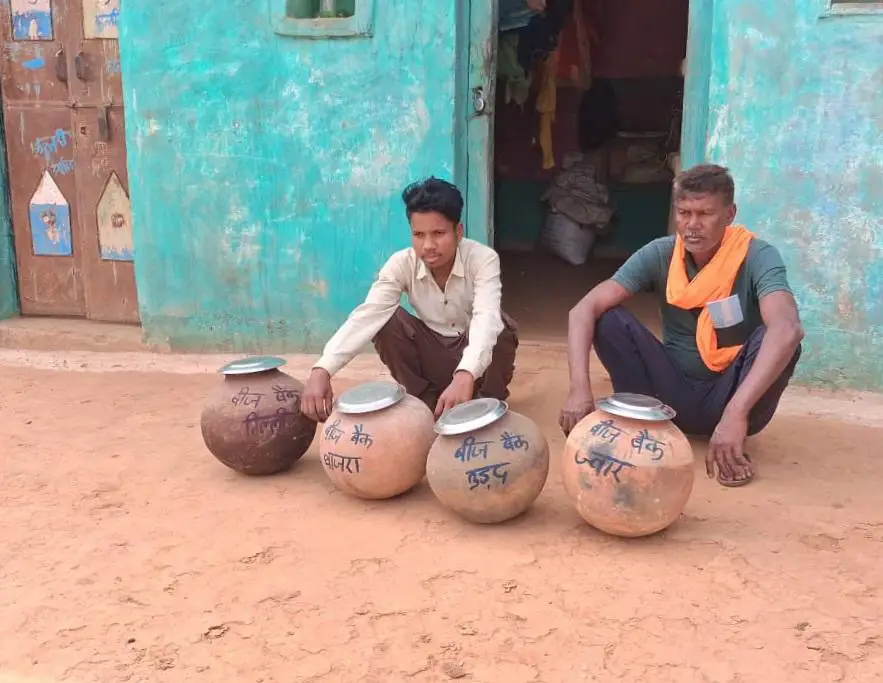
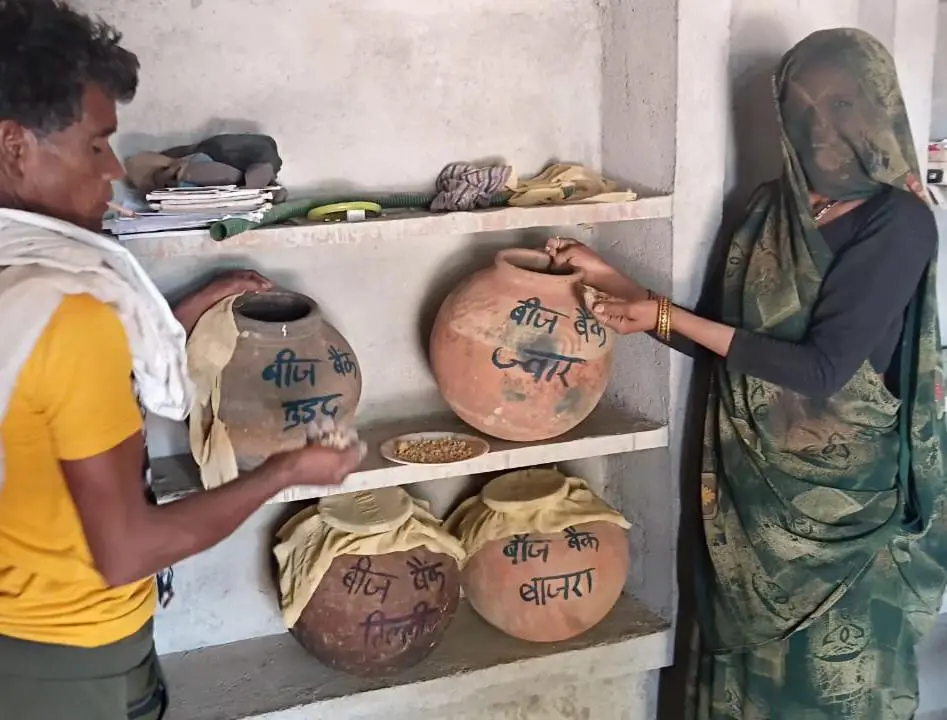
The effort began with collecting five to ten kg of seeds from individuals in the villages who had a surplus. The seeds were then stored in traditional containers such as mitti ghadas (clay pots) or steel containers. According to Atar Singh Adivasi, a Sahariya tribal resident of Mehra village, this was a significant step as they earlier depended on seths (wealthy merchants) for seeds.
Migration Woes
Some Sahariya farmers are still unable to sow wheat in winter—which has a high minimum support price—due to a lack of irrigation. They depend solely on the monsoon to cultivate bajra (pearl millet), til (sesame), peanuts and urad (black gram). Many migrate to Morena and Sheopur to harvest high-quality wheat, to Baran in Rajasthan for mustard, and to Agra for potato harvesting. These migrations provide an alternative source of income.
Typically, labourers receive one quintal of wheat for harvesting one bigha of land (roughly 0.619 acres), with cash payments being rare. Hardship persists, with daily wages sometimes as low as Rs 400 and poor living conditions. “Sometimes, we live in the fields during the harvest,” Adivasi said.
When families migrate, children often drop out of school to accompany their parents and miss meals under PM POSHAN, formerly the mid-day meal scheme. Mehra has a primary school, but as Madhya Pradesh does not provide eggs in mid-day meals, children miss out on crucial nutrition even when they do not migrate.
Apart from seed conservation, the initiative also focuses on nutrition gardens, poultry farming, awareness and sanitation. However, despite the construction of toilets, open defecation continues. “There is no water connection, so the toilets are used as storerooms,” Adivasi added.
Water scarcity remains a major concern. The water table is low, and drinking water becomes scarce during summer. Sahariya families often travel to other villages in search of water as handpumps and wells run dry. The rocky terrain prevents rainwater absorption, worsening the shortage. Borewells have largely failed.
“Jal Jeevan Mission, India’s piped water supply scheme, has not worked here. Tanks have been constructed and pipelines laid, but borewells have failed due to insufficient water,” Ajay Singh Yadav, district coordinator of Vikas Samvad Samiti, told The Indian Tribal. Efforts are underway to conserve local water bodies such as talabs.
Another Sahariya resident, Ramkes Adivasi, pointed out that landholdings are small. “Wheat harvesting in Morena is more profitable than in Shivpuri. At times, labourers receive up to 1.5 quintals for harvesting one bigha of land. Potato harvesting in Agra pays Rs 450 per day, and labourers work for about 20 days at a stretch. Contractors often transport around 30 labourers at a time,” he said. Wheat is often exchanged for other goods through an informal barter system, Yadav added.
Towards Self-Sufficiency
Atar Adivasi, who owns about an acre of land, manages a seed bank at his home. He said that beneficiaries who receive seeds must return double the quantity after harvest. In several villages, stocks of Kodo and Kutki had depleted, requiring procurement from outside.
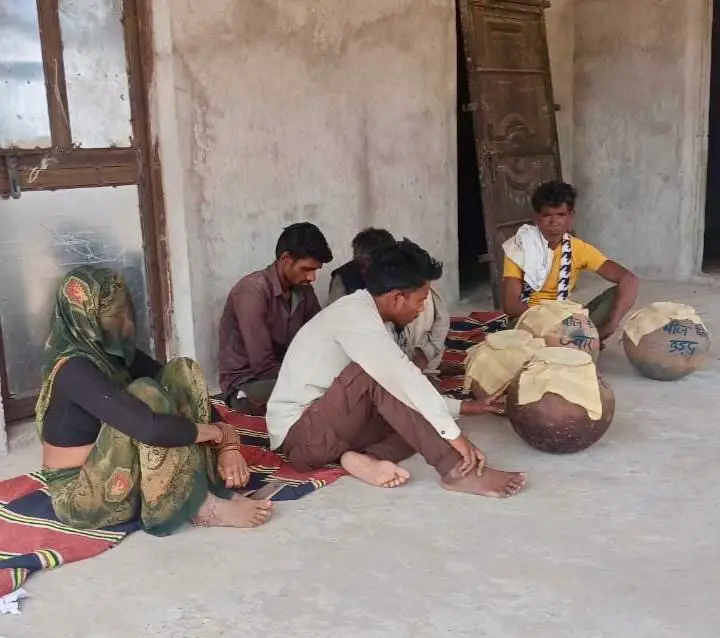
Although small millets now have a minimum support price, they were once largely ignored by consumers, leading to their decline in local diets. Farmers also shifted to crops like groundnut and soybean for better profits.
In the 15 villages, malnutrition-related deaths, as well as infant and maternal mortality, have declined significantly. Last year, only one infant death was reported. Around 2015–16, when the non-profit began its work, several children and women had died due to malnutrition and starvation. Lack of institutional deliveries also contributed to infant deaths.
Madhya Pradesh continues to report high levels of child malnutrition. According to the National Family Health Survey-5, the infant mortality rate in rural areas stands at 43.5 per 1,000 live births, while the under-five mortality rate is 52.5 per 1,000 live births.