


• About
  • Editor & Writers
  • Contact
  • Sitemap
No Result
View All Result
Support Our Mission
Thursday, September 3, 2026
The Indian Tribal
  • Home
  • Achievers
    • उपलब्धिकर्ता
  • Cuisine
    • खान पान
  • Health
    • स्वास्थ्य
  • Legal
    • कानूनी
  • Music
    • संगीत
  • News
    • Updates
    • खबरें
  • Sports
    • खेलकूद
  • Variety
    • विविध
  • हिंदी
    • All
    • आदिवासी
    • उपलब्धिकर्ता
    • कला और संस्कृति
    • कानूनी
    • खबरें
    • खान पान
    • खेलकूद
    • जनजाति
    • भारत
    • विविध
    • संगीत
    • संस्कृति
    • स्वास्थ्य
    The Indian Tribal

    मणिपुर में संघर्ष के बीच आदिवासी कोचों ने संभाली नई पीढ़ी के खिलाड़ियों की कमान

    The Indian Tribal

    ओडिशा के आदिवासी किसान ने 10 सालों में बचाईं धान की 100 से ज्यादा देशी किस्में

    The Indian Tribal

    आदिवासी समुदायों में पारंपरिक दाइयों की भूमिका क्यों अब भी कायम है, जब सरकार संस्थागत प्रसव पर दे रही है जोर?

    The Indian Tribal

    ओडिशा के विशेष रूप से कमजोर जनजातीय समूहों की सदियों पुरानी विवाह संस्कृति एवं परंपराएँ बदलाव के दौर में भी कायम

    The Indian Tribal

    आदिवासी महोत्सव में झारखंड के विद्यार्थियों को मिलेगा फिल्म निर्माण सीखने का अवसर

    The Indian Tribal

    ‘ट्री ऑफ लाइफ’ सखुआ: पत्तों से रोजगार, बीजों से उद्योग, राल से औषधि और संरक्षण में छिपा भविष्य

    The Indian Tribal

    रांची से उठेगी सखुआ क्रांति: क्यों है सखुआ झारखंड की संस्कृति, आस्था और प्रकृति का प्रहरी?

    The Indian Tribal

    दिशोम गुरु शिबू सोरेन की विरासत ही झारखंड की दिशा: पहली पुण्यतिथि पर बोले हेमंत

  • Gallery
    • Videos
  • Latest News
The Indian Tribal
  • Home
  • Achievers
    • उपलब्धिकर्ता
  • Cuisine
    • खान पान
  • Health
    • स्वास्थ्य
  • Legal
    • कानूनी
  • Music
    • संगीत
  • News
    • Updates
    • खबरें
  • Sports
    • खेलकूद
  • Variety
    • विविध
  • हिंदी
    • All
    • आदिवासी
    • उपलब्धिकर्ता
    • कला और संस्कृति
    • कानूनी
    • खबरें
    • खान पान
    • खेलकूद
    • जनजाति
    • भारत
    • विविध
    • संगीत
    • संस्कृति
    • स्वास्थ्य
    The Indian Tribal

    मणिपुर में संघर्ष के बीच आदिवासी कोचों ने संभाली नई पीढ़ी के खिलाड़ियों की कमान

    The Indian Tribal

    ओडिशा के आदिवासी किसान ने 10 सालों में बचाईं धान की 100 से ज्यादा देशी किस्में

    The Indian Tribal

    आदिवासी समुदायों में पारंपरिक दाइयों की भूमिका क्यों अब भी कायम है, जब सरकार संस्थागत प्रसव पर दे रही है जोर?

    The Indian Tribal

    ओडिशा के विशेष रूप से कमजोर जनजातीय समूहों की सदियों पुरानी विवाह संस्कृति एवं परंपराएँ बदलाव के दौर में भी कायम

    The Indian Tribal

    आदिवासी महोत्सव में झारखंड के विद्यार्थियों को मिलेगा फिल्म निर्माण सीखने का अवसर

    The Indian Tribal

    ‘ट्री ऑफ लाइफ’ सखुआ: पत्तों से रोजगार, बीजों से उद्योग, राल से औषधि और संरक्षण में छिपा भविष्य

    The Indian Tribal

    रांची से उठेगी सखुआ क्रांति: क्यों है सखुआ झारखंड की संस्कृति, आस्था और प्रकृति का प्रहरी?

    The Indian Tribal

    दिशोम गुरु शिबू सोरेन की विरासत ही झारखंड की दिशा: पहली पुण्यतिथि पर बोले हेमंत

  • Gallery
    • Videos
  • Latest News
No Result
View All Result
The Indian Tribal
No Result
View All Result
  • Home
  • Achievers
  • Cuisine
  • Health
  • Legal
  • Music
  • News
  • Sports
  • Variety
  • हिंदी
  • Gallery
  • Latest News
Support Our Mission
Home » The Indian Tribal / News » Bastar Pandum 2026: Rewriting Former Maoist Bastion’s Story From Conflict To Celebration

Bastar Pandum 2026: Rewriting Former Maoist Bastion’s Story From Conflict To Celebration

In a land once defined by fear and silence, songs, rituals and flavours are now speaking loudly. Bastar Pandum has emerged as both a cultural revival and a marker of lasting peace. Shweta Singh reports

February 8, 2026
The Indian Tribal

Colourful Start To Bastar Pandum 2026

Jagdalpur/New Delhi

The sun rose gently over Jagdalpur on Sunday, the second day of Bastar Pandum 2026, casting light on bamboo pavilions, handwoven textiles and earthen vessels simmering with age-old recipes. A steady stream of visitors, locals, officials, students and tourists, moved through the festival grounds, pausing to taste tribal food, watch folk performances and speak to artisans who have travelled from deep forest villages to be part of Bastar’s largest cultural gathering.

Organised by the Chhattisgarh government, Bastar Pandum has quickly grown into a defining cultural platform for the region since it was first launched in 2024. Conceived as a celebration of tribal identity and living traditions, the festival has also, over the years, acquired a deeper meaning: it mirrors Bastar’s journey from being a Maoist hotbed to a region tentatively but confidently embracing peace and development.
The Indian Tribal
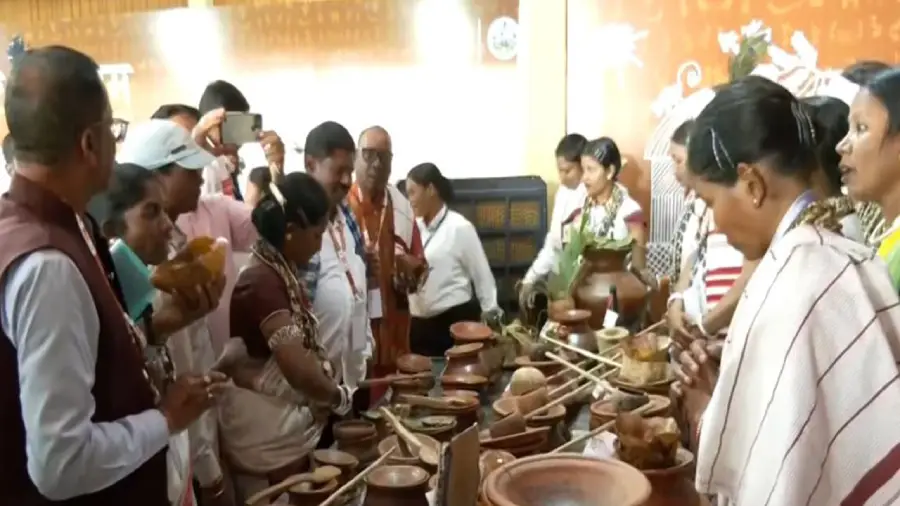
A Culinary Stall (Pic : ANI)

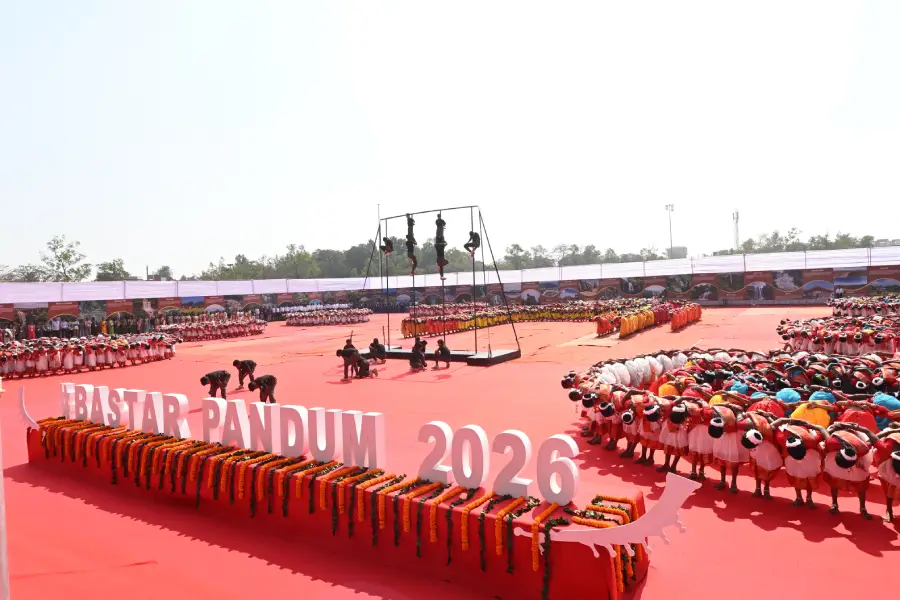
The 2026 edition was inaugurated a day earlier by President Droupadi Murmu, whose presence itself carried strong symbolism. On Day 2, that symbolism translated into lived experience—children attending workshops on tribal painting, women demonstrating traditional food preparation, and folk artists reclaiming space that once felt inaccessible due to insecurity.

Divisional-level competitions will be held till February 9, during which more than 700 artists from 84 teams will present performances in 12 cultural disciplines.

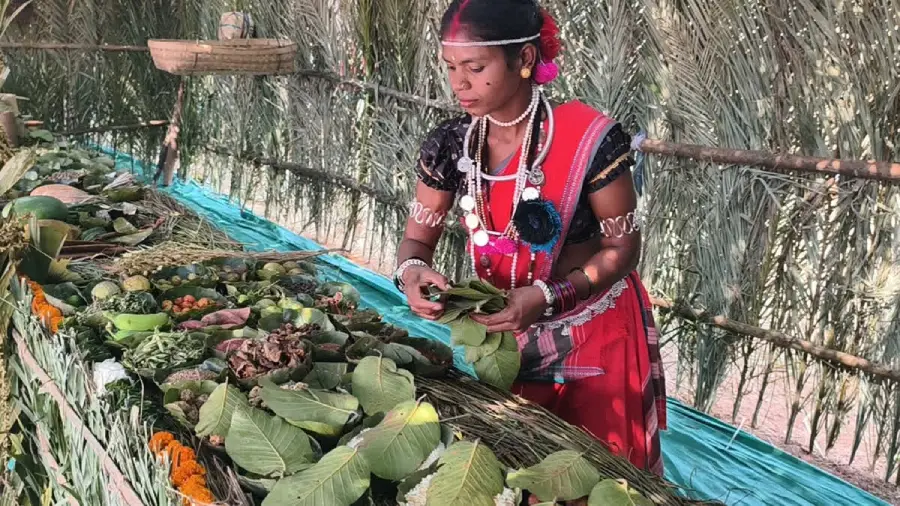
At the heart of the festival is Bastar’s culinary memory. Rows of stalls showcased dishes rarely seen outside village kitchens—fermented rice drinks, oil-free preparations flavoured only with salt, chilli and tamarind, and porridges made from forest produce and native grains. Members of the judging panel meticulously evaluated authenticity, preparation methods and cultural relevance, underlining the festival’s focus on preservation rather than commercialisation.

Food participants explained that many of these recipes had survived only through oral tradition. Some were once everyday staples that faded as markets and packaged foods entered rural life, while others nearly disappeared during years when conflict disrupted normal village routines. Bastar Pandum, they said, has become a rare opportunity to bring those tastes back into public memory, with support from district authorities and the state government.

Beyond cuisine, the festival grounds resonated with music and movement. Folk artists from across Bastar divisions performed devotional invocations to local deities, seasonal songs and community dances that marked harvests and festivals such as Chherchera. Each performance, though brief, carried layers of history—rituals shaped by forests, agriculture and collective living.
The Indian Tribal
A Participant Arranges Her Stall (Pic : ETV Bharat)

For many performers, appearing before the President on the inaugural day was a milestone that reaffirmed the value of traditions often dismissed as peripheral. Artistes spoke of a renewed responsibility to protect ancestral customs, traditional attire and musical forms so future generations understand life as it existed before roads, mobile towers and outside influences reshaped the region.

The cultural assertion on display also stands in contrast to Bastar’s not-so-distant past. For nearly four decades, large parts of the region were trapped in a cycle of Maoist violence, fear and mistrust. Villages were cut off, schools shut down, and cultural gatherings became difficult, if not impossible. The silence that conflict imposed extended beyond security—it threatened to erode community practices passed down over centuries.

That context loomed large in the President’s address at the inauguration, where she linked Bastar’s cultural vitality with its resilience. Reflecting on the region’s worldview, she remarked that in Bastar, every stage of life is celebrated as a festival—from sowing seeds in fertile soil to the arrival of mango season—adding that there is much the rest of the country can learn from this way of life.

The President’s broader message underscored the changing security landscape. With sustained action against Maoist violence, the atmosphere of fear that once defined Bastar is steadily receding. Large numbers of former Maoist cadres have surrendered, and efforts are underway to reintegrate them into society through welfare and livelihood schemes. The emphasis, she noted, is on restoring normalcy and dignity, not just ending violence. The Centre has fixed March 31 this year to ensure a Maoist-free India.

This shift is increasingly visible on the ground. Roads and electricity have reached villages that were once inaccessible, drinking water facilities are expanding, and schools closed for years are reopening. Children attending classes again has become one of the most tangible signs of change. State initiatives such as the Niyad Nellanar Yojana, alongside central schemes focused on tribal welfare, are being credited with accelerating this transition.
The Indian Tribal
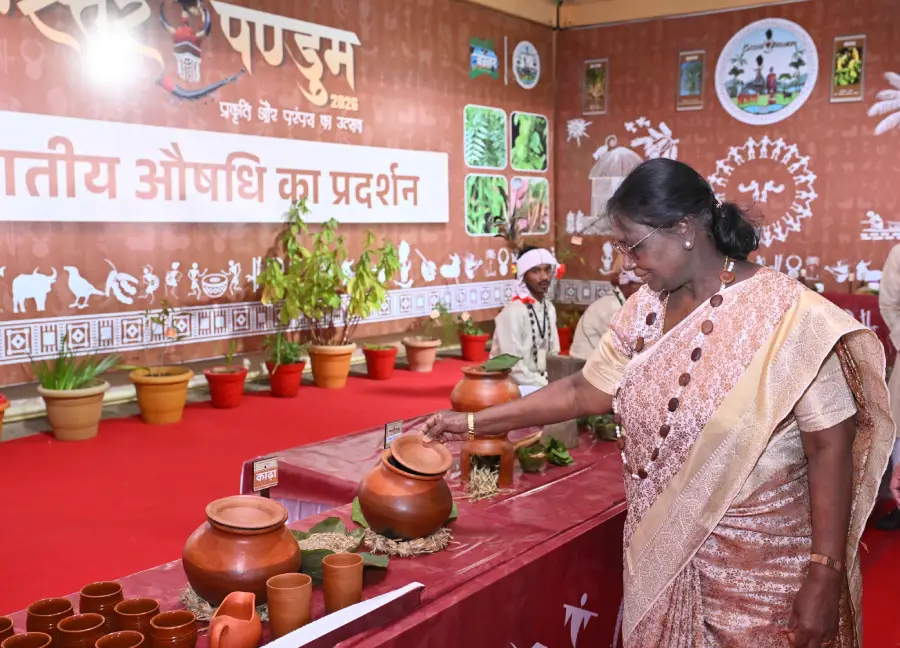
President Takes A Look At The Exhibits

Bastar Pandum fits squarely into this larger narrative. While it is a cultural festival at its core, its timing and scale signal confidence—confidence that people can gather freely, perform publicly and celebrate identity without fear. Officials say the festival also aims to create economic opportunities for artisans and performers by connecting them with wider audiences.

Education and youth engagement featured prominently in conversations around the festival. With Eklavya Model Residential Schools expanding access to quality education in tribal areas, community leaders stressed that cultural pride and modern education must go hand in hand. Preserving heritage, they argued, does not mean resisting progress but shaping it on local terms.

The presence of the Chhattisgarh Governor, the Chief Minister and Union Ministers at the inauguration reinforced the political importance being attached to Bastar’s transformation. Their participation signalled alignment between cultural revival and governance priorities aimed at inclusive development.

As evening fell on Day 2, lamps flickered across the festival grounds and the rhythm of drums echoed through Jagdalpur. Visitors lingered longer, sampling one last dish or watching a final performance. For many locals, Bastar Pandum is no longer just an event—it is a statement that Bastar’s identity will no longer be overshadowed by its years of conflict.
The Indian Tribal
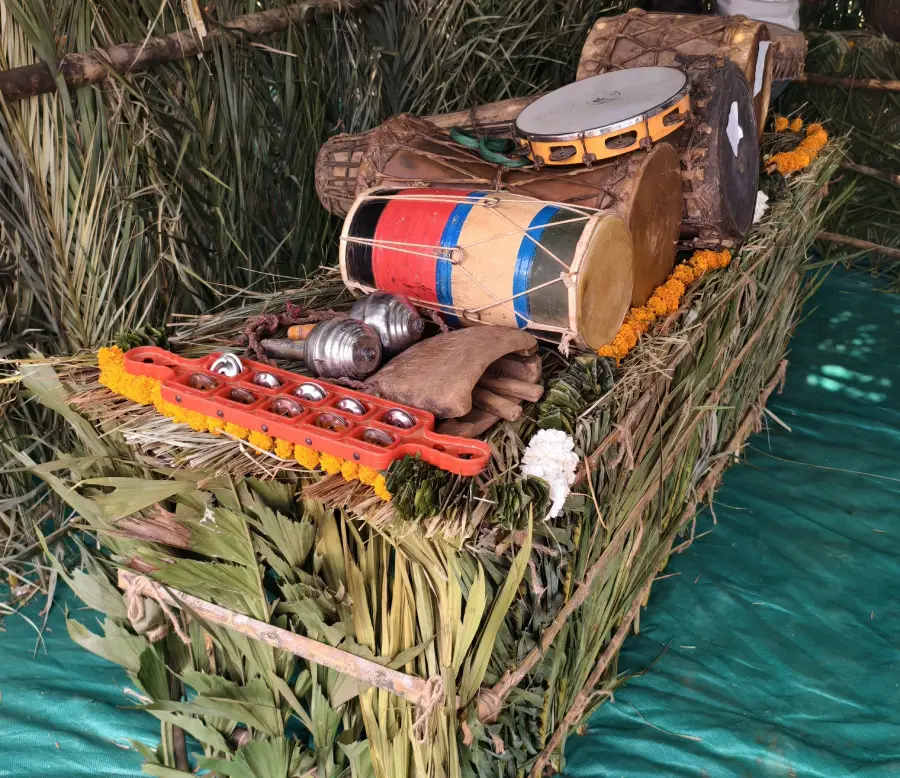
Traditional Tribal Musical Instruments On Display (Pic : ETV Bharat)

From a once Maoist-dominated landscape to a stage filled with song, food and shared memory, Bastar Pandum reflects a region redefining itself. In celebrating what endured through decades of hardship, Bastar is also quietly announcing what lies ahead: peace rooted in culture, and development that does not erase identity but amplifies it.

Alongside Bastar Pandum, the Bastar Olympics has emerged as another powerful symbol of Chhattisgarh’s turnaround story, using sport as a tool for healing, confidence-building and reintegration in a region long scarred by insurgency. Launched to draw youth away from isolation and fear, the Bastar Olympics has seen thousands of young participants from remote, once Maoist-affected villages compete in athletics and indigenous games, many for the first time on an organised platform.


Root Woot | Online Puja Samagri Root Woot | Online Puja Samagri Root Woot | Online Puja Samagri

Support Our Mission

The Indian Tribal

For the past four-and-a-half years, we have travelled across India to bring to our readers the ‘Unknown, Lesser-Known Tribal Life’, which rarely finds space in the mainstream media.

We have done this without external funding, driven only by our conviction that India’s tribal heritage deserves to be documented with dignity, depth and authenticity.

If you like our work, and if it has informed, inspired or helped you understand India’s tribal/indigenous communities better, we invite you to become a part of this mission.

Your contribution will not merely fund a news platform. It will help preserve voices, traditions, histories and aspirations that form an invaluable part of India’s identity.

Because when an untold story is documented, a piece of India’s heritage is preserved forever.

Thanks
Editor

In Numbers

49.4 %
Female Literacy rate of Scheduled Tribes

Update

Three GI Products Of Jharcraft Receive Certificates

Three traditional products of Jharkhand — Jharkhand Tasar Silk Sarees and Fabrics, Jharkhand Bamboo Craft and Munda Jewellery — received their Geographical Indication (GI) certificates at the 62nd Foundation Day of the Textiles Committee, Ministry of Textiles, held in Mumbai on Saturday. Union Textiles Minister Giriraj Singh handed over the certificates to Garima Singh, IAS, Managing Director, Jharcraft, at the ceremony. The recognition is a significant achievement for Jharcraft and Jharkhand, highlighting the state’s rich handloom and handicraft heritage and strengthening the identity and market potential of its traditional products.
The Indian Tribal
Adivasi

How Education And Forest Enterprises Are Driving India’s Tribal Resurgence

by The Indian Tribal
August 31, 2026

A new emphasis on education, value addition to forest produce and grassroots capacity-building is now helping create a pathway towards greater economic and social empowerment, reasons Amit Kumar. Part-1

The Indian Tribal

ओडिशा के आदिवासी किसान ने 10 सालों में बचाईं धान की 100 से ज्यादा देशी किस्में

August 28, 2026
The Indian Tribal

PM Modi Calls For Playground-Over-Playstation To Widen India’s Olympic Footprint

August 27, 2026
The Indian Tribal

आदिवासी समुदायों में पारंपरिक दाइयों की भूमिका क्यों अब भी कायम है, जब सरकार संस्थागत प्रसव पर दे रही है जोर?

August 26, 2026
The Indian Tribal

After Delhi And Jharkhand, Bihar Witnesses Violence As Protesters Make Bid To Gherao Chief Minister’s Residence

August 25, 2026
Supreme court of India

SC Seeks Centre, Jharkhand Response On JPSC Exam Irregularities, CBI Probe Plea

August 24, 2026
Previous Post

Droupadi Murmu First President To Spend Night At Similipal National Park, Urges Tribals To Speak Up

Next Post

Bastar’s Identity Is Its Rich Culture And Heritage, Not Explosives: Amit Shah

Top Stories

The Indian Tribal
Adivasi

India’s Tribal Communities Are Rewriting Their Place In The National Story

September 1, 2026
The Indian Tribal
Adivasi

How Education And Forest Enterprises Are Driving India’s Tribal Resurgence

August 31, 2026
The Indian Tribal
Adivasi

Adivasi Ekta Mahajutaan: Congress-Led Congregation Seeks Protection Of Tribal Representation

August 30, 2026
Load More
  • About Us
  • Editor & Writers
  • Contact
  • Redressal
  • Copyright Policy
  • Privacy Policy And Terms Of Use
  • Disclaimer
  • Sitemap

  • Achievers
  • Cuisine
  • Health
  • India
  • News
  • Legal
  • Music
  • Sports
  • Trending
  • Chhattisgarh
  • Delhi
  • Gujarat
  • Jammu & Kashmir
  • Jharkhand
  • Kerala
  • Madhya Pradesh
  • Maharashtra
  • North East
  • Arunachal Pradesh
  • Assam
  • Manipur
  • Meghalaya
  • Mizoram
  • Nagaland
  • Sikkim
  • Tripura
  • Odisha
  • Telangana
  • West Bengal
  • Political News
  • Variety
  • Art & Culture
  • Entertainment
  • Adivasi
  • Tribal News
  • Scheduled Tribes
  • हिंदी
  • उपलब्धिकर्ता
  • कानूनी
  • खान पान
  • खेलकूद
  • स्वास्थ्य
  • संस्कृति
  • संगीत
  • विविध
  • कला और संस्कृति
  • खबरें
  • असम
  • अरुणाचल प्रदेश की ताज़ा ख़बरें
  • ओडिशा
  • केरल
  • गुजरात
  • छत्तीसगढ़
  • जम्मू और कश्मीर
  • झारखंड
  • तेलंगाना
  • दिल्ली
  • नॉर्थईस्ट
  • पश्चिम बंगाल
  • मध्य प्रदेश
  • महाराष्ट्र
  • त्रिपुरा
  • नागालैंड
  • मणिपुर
  • मिजोरम की ताज़ा ख़बरें
  • मेघालय
  • सिक्किम की ताज़ा ख़बरें
  • राजस्थान

About Us

The Indian Tribal is India’s first bilingual (English & Hindi) digital journalistic venture dedicated exclusively to the Scheduled Tribes. The ambitious, game-changer initiative is brought to you by Madtri Ventures Pvt Ltd (www.madtri.com). From the North East to Gujarat, from Kerala to Jammu and Kashmir — our seasoned journalists bring to the fore life stories from the backyards of the tribal, indigenous communities comprising 10.45 crore members and constituting 8.6 percent of India’s population as per Census 2011. Unsung Adivasi achievers, their lip-smacking cuisines, ancient medicinal systems, centuries-old unique games and sports, ageless arts and crafts, timeless music and traditional musical instruments, we cover the Scheduled Tribes community like never-before, of course, without losing sight of the ailments, shortcomings and negatives like domestic abuse, alcoholism and malnourishment among others plaguing them. Know the unknown, lesser-known tribal life as we bring reader-engaging stories of Adivasis of India.

Follow Us

All Rights Reserved

© 2026 Madtri Ventures [P] Ltd.

No Result
View All Result
  • Home
  • Achievers
  • Cuisine
  • Health
  • Health
  • Legal
  • Music
  • News
  • Sports
  • Variety
  • हिंदी
    • उपलब्धिकर्ता
    • खान पान
    • कानूनी
    • खेलकूद
    • खेलकूद
    • संगीत
    • संगीत
    • स्वास्थ्य
    • स्वास्थ्य
    • विविध
  • Gallery
  • Videos

© 2026 Madtri Ventures [P] Ltd.