




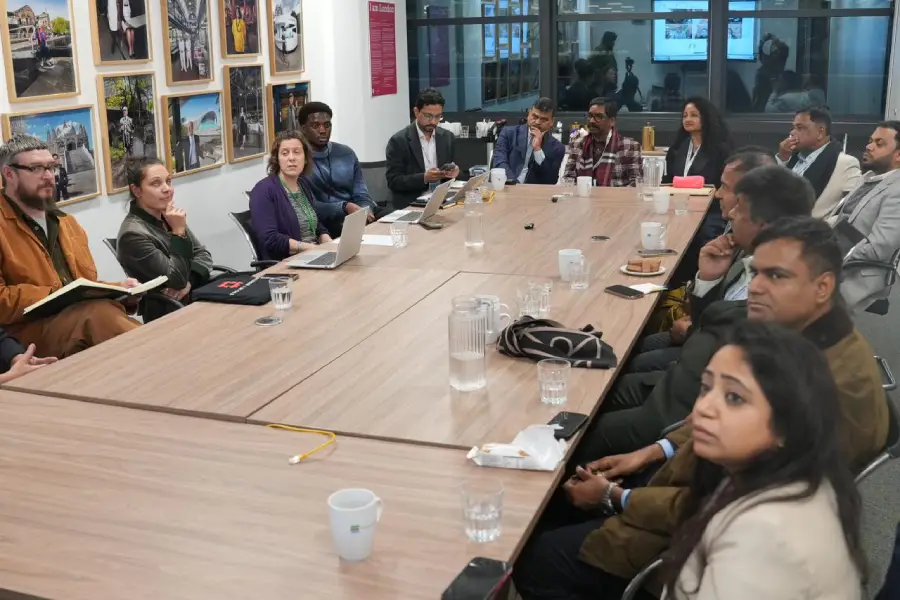
Jharkhand, one of the few regions in the world where megalithic traditions remain living cultural practices, has taken a major step toward global recognition of its ancient heritage through a series of high-level engagements in the United Kingdom. As part of the “Jharkhand @25” international outreach, a state delegation led by Chief Minister Hemant Soren met Historic England, the UK’s public body for heritage protection, to explore long-term collaboration on conservation, research, documentation, and international positioning of Jharkhand’s megalithic and monolithic landscapes.
The engagement placed Jharkhand’s tribal communities and their continuing relationship with megaliths at the centre of the discussion. Unlike many parts of the world where megaliths are treated solely as archaeological remains, Jharkhand’s stone structures continue to play an active role in the social, cultural, and spiritual life of indigenous communities, forming part of rituals, memorial practices, and collective memory. This living heritage dimension was highlighted as a distinctive global attribute of the state.
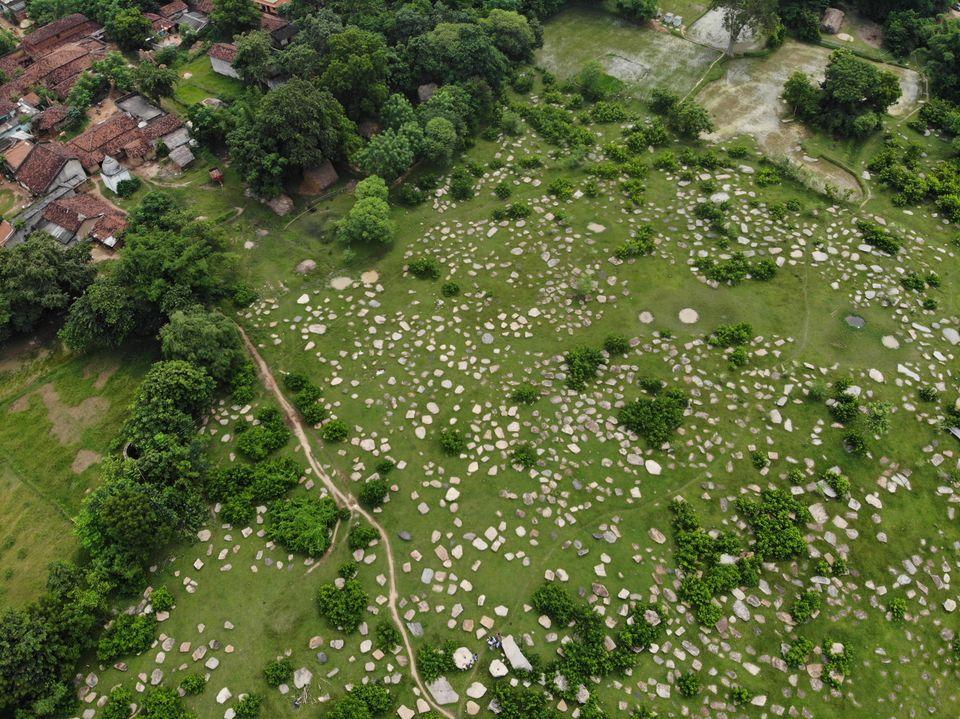
Discussions with Historic England focused on sharing best practices in the preservation of prehistoric landscapes, including site protection, scientific documentation, interpretation for public engagement, and balancing conservation with community access. Jharkhand sought to learn from the United Kingdom’s globally recognised conservation models, particularly those applied at sites such as Stonehenge and Avebury, while adapting them to local ecological and cultural contexts.
The visit aligns closely with the UK–India Heritage Conservation Agreement 2025, under which Jharkhand has emerged as a key state and among the first in India to actively operationalise the bilateral framework. The state aims to strengthen the documentation, preservation, and global positioning of its megalithic heritage, with a long-term vision that includes international academic collaboration and pathways toward global recognition.
As part of the exchange, the delegation received a special invitation to visit Stonehenge and Avebury on January 24, 2026, to study first-hand the scientific conservation, site management, and interpretation of prehistoric monuments. The learnings from these visits are expected to inform Jharkhand’s own conservation strategies, particularly for large megalithic clusters spread across forested and rural landscapes.
During the meeting, the delegation presented the coffee table book “Sentinels of Time”, which showcases Jharkhand’s megaliths, monoliths, and fossil landscapes. The publication introduces international audiences to the state’s ancient yet continuing civilisational legacy, emphasising the link between nature, stone, and community knowledge systems. The presentation was positioned as a cultural diplomacy tool to bring global attention to Jharkhand’s unique heritage narrative.
The meeting was attended by Claudia Kenyatta, Co-Chief Executive of Historic England, along with representatives from the Indian High Commission, the British Deputy High Commission in Kolkata, the English Heritage Trust, the National Trust, and Natural England, reflecting a shared commitment to heritage cooperation and institutional exchange.
Marking 25 years of statehood, Jharkhand used the engagement to underline its broader development philosophy—one that seeks to balance economic growth with ecological sensitivity, cultural continuity, and indigenous knowledge. The state’s leadership positioned heritage not as a static past, but as a living asset that can shape identity, tourism, education, and sustainable livelihoods.
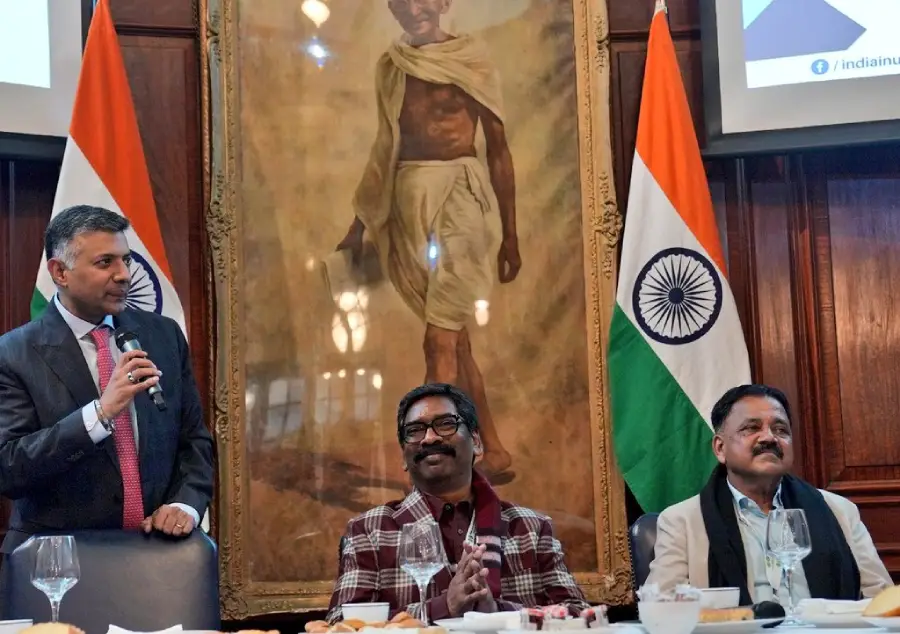
Beyond heritage, Jharkhand’s UK outreach included participation in a global dialogue on development opportunities at an official reception hosted by the Indian High Commission in London. During interactions with policymakers, experts, and representatives from several countries, the Chief Minister highlighted Jharkhand’s contribution to India’s overall development through its mineral wealth, industrial potential, natural resources, youth power, and cultural diversity.
The discussions explored opportunities for heritage conservation partnerships, as well as collaboration in higher education, skill development, sports, and critical minerals. The Chief Minister emphasised that international cooperation in these sectors could create global exposure and employment pathways for Jharkhand’s youth, while strengthening institutional capacity within the state. The dialogue aligned with the broader framework of the UK–India Strategic Partnership and ongoing bilateral cooperation.
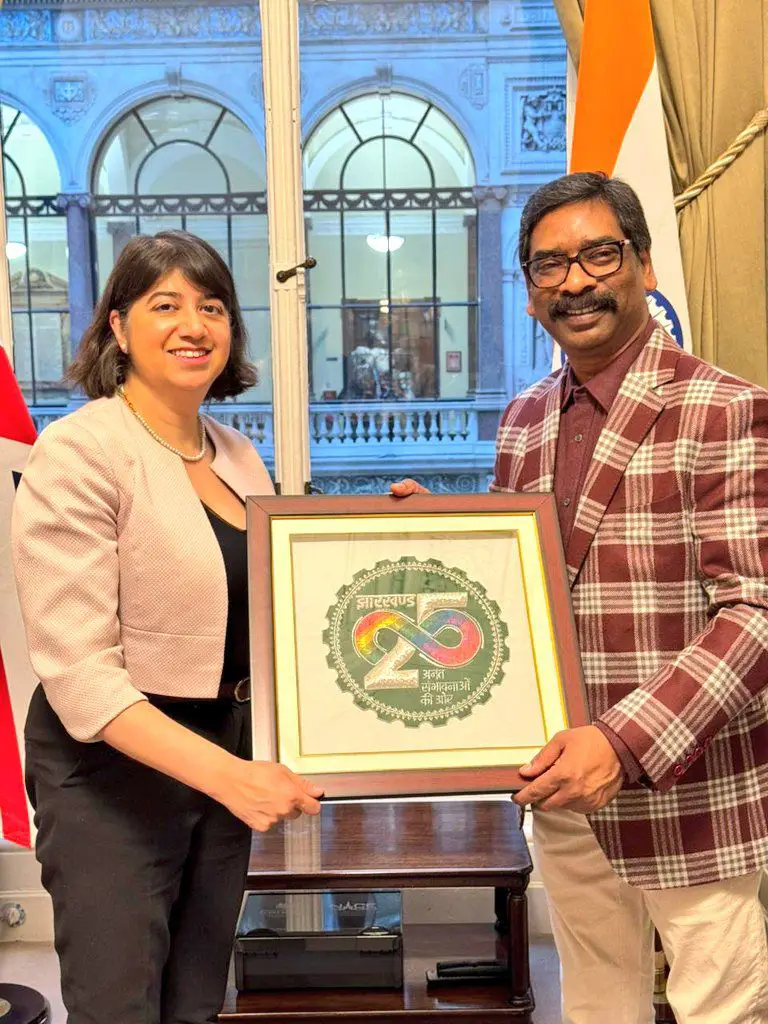
In a separate high-level engagement, the Chief Minister met Seema Malhotra, Parliamentary Under-Secretary of State (Minister for Equalities and Indo-Pacific), Government of the United Kingdom, to discuss deepening practical cooperation between Jharkhand and the UK. The discussions covered education, skills, responsible mining, climate transition, culture, and heritage, with an emphasis on translating intent into implementable partnerships.
The UK side appreciated Jharkhand’s Marang Gomke Jaipal Munda Overseas Scholarship and the Chevening–Marang Gomke Overseas Scholarship, describing them as living examples of the India–UK partnership. Over 100 students from Jharkhand have benefited from these scholarships over the last four years. Both sides expressed interest in exploring sustainability-linked scholarship pathways that connect overseas education with mentoring, internships, leadership development, and exposure to public service.
Discussions also focused on facilitating introductions with leading UK universities, skills bodies, and qualification authorities to establish institutional partnerships in mining technology, environment and sustainability, data and AI, governance, and public policy. Proposed areas of collaboration include joint academic programmes, faculty exchanges, applied research initiatives, and technical and vocational education and training (TVET) and apprenticeship pathways.
On economic and climate cooperation, Jharkhand proposed closer engagement with UK capability providers on responsible mining, including ESG systems, mineral traceability, mine safety, cleaner processing, and technology demonstration. Both sides discussed the creation of a Jharkhand–UK Working Track on Responsible Critical Minerals, linking standards, research and development, innovation ecosystems, and resilient supply-chain partnerships.
The meeting also explored collaboration with UK climate and finance institutions to structure transition finance for coal-region diversification, climate resilience, and worker and community support. Jharkhand was positioned as a potential pilot state for implementable “just transition” programmes, with urban mobility and climate financing identified as complementary areas of cooperation.
Cultural, sports, and heritage exchanges were identified as low-friction, high-impact avenues to strengthen people-to-people ties between Jharkhand and the UK. The Chief Minister sought UK cooperation under the India–UK Heritage Conservation Agreement to support the preservation of Jharkhand’s megaliths and monoliths, drawing on global best practices such as Stonehenge, with a long-term vision toward international recognition.
The Chief Minister invited Malhotra to visit Jharkhand to advance these discussions, an invitation that was received positively. During the UK visit, the delegation was also shown around the Foreign, Commonwealth and Development Office headquarters, reinforcing institutional engagement across sectors.
Together, the heritage, education, climate, and economic engagements underline Jharkhand’s effort to project itself as a state where ancient tribal traditions and modern development priorities coexist, offering a distinctive model of growth rooted in culture, community, and global cooperation.