









Ranchi/New Delhi
In a significant political move, the Jharkhand Mukti Morcha (JMM) on March 23 (Monday) announced its candidates on 21 seats for elections to the 126-member Assam Assembly, marking its most ambitious and politically consequential expansion attempt so far beyond its Jharkhand base.
Led by Hemant Soren, the party is seeking to position itself as a national tribal voice by tapping into Assam’s complex tribal demography—particularly the tea tribes. Interestingly, the JMM has chosen not to foray into West Bengal’s electoral arena.
JMM’s strategy is anchored in mobilising an estimated 60–70 lakh tea tribe (Adivasi) population in Assam comprising communities such as Santhal, Munda, Oraon and Kurukh, whose ancestors migrated from the Chotanagpur region during the colonial period. While these groups are recognised as Scheduled Tribes (STs) in states like Jharkhand, they are classified as OBCs in Assam, a political grievance JMM is attempting to convert into electoral capital.
Can JMM Win Any Seat?
A realistic electoral assessment suggests that JMM’s chances of winning seats are limited.
- The party lacks an organisational base in Assam
- It has minimal local leadership compared to entrenched players
- Assam’s contests are already bipolar or triangular between the Bharatiya Janata Party (BJP)-led NDA and the Congress-led opposition
Political observers say: “JMM is more likely to act as a vote-splitter or spoiler rather than a winner. In a few tea tribe-dominated constituencies, it may influence margins, but a breakthrough victory remains unlikely.”
But JMM General Secretary Vinod Pandey asserted: “Hemant Soren has emerged as a popular leader in the nationwide fight for the rights of tribals. He has earned the faith of the tea tribe community. Local tribal people in Assam also consider him a strong personality who can take up their cause and fight against injustice.”
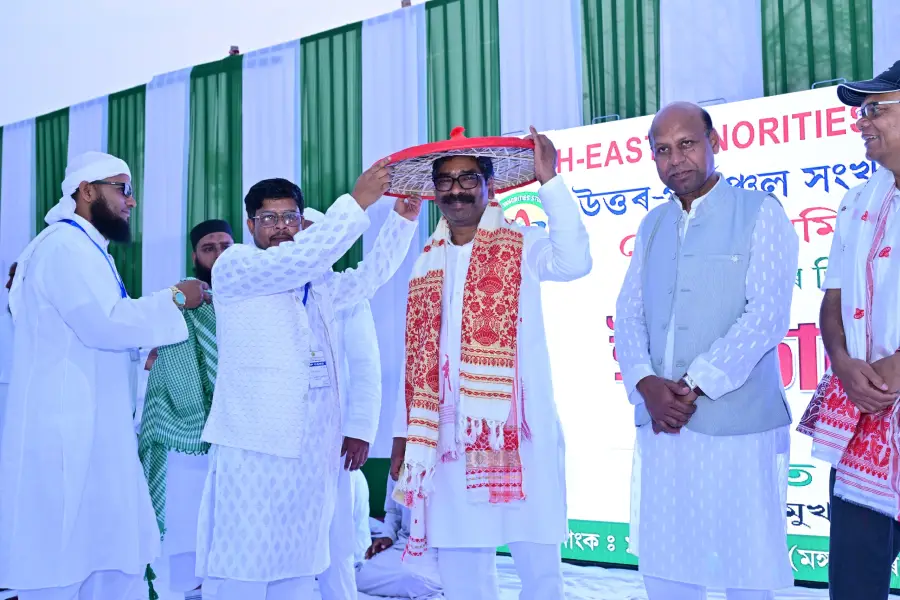
Soren has been visiting Assam and raising the issues of the tribals in the northeastern state since 2024 after leading the JMM to a successive win in Jharkhand.
The ST Factor
Assam has 19 ST-reserved Assembly constituencies out of 126. The seats JMM is contesting include both ST-reserved and general constituencies.
“Now it is up to the Congress to decide whether to announce candidates for seats where we are fighting or withdraw them. Our candidates will take on both the Congress and the BJP,” JMM spokesperson Supriyo Bhattacharya said.
The party has strategically chosen:
- Tea tribe-dominated general seats in Upper Assam
- Select ST-reserved constituencies
- Areas in and around Bodoland Territorial Region and tribal belts
Tribal Demography: Verified Data
- Total ST population (Census 2011): 38.84 lakh
- Share in population: 12.4% of Assam’s total population
Tea Tribes (non-ST in Assam):
- Estimated 60–70 lakh, forming one of the largest socio-political blocs
19 ST Seats: Population And Composition
Across the 19 ST-reserved constituencies:
- ST population typically ranges between 60% and 85% of the electorate
- Combined ST population across these seats is estimated at around 15–18 lakh voters (derived from constituency-level demographic patterns and electorate size averages)
Major tribes in these constituencies:
- Bodo
- Mising
- Karbi
- Dimasa
- Rabha
- Tiwa
- Deori
- Sonowal Kachari
These communities have strong ethnic-political alignments and are often influenced by regional parties and autonomous council politics, limiting JMM’s immediate appeal.
JMM’s Impact On Tribal Votes
1. On ST-Reserved Seats
- Limited impact expected
- Dominated by entrenched ethnic leadership and regional formations
- JMM lacks grassroots penetration among Bodo, Karbi or Mising voters
2. On Tea Tribe-Dominated Seats
- Potentially significant impact
- JMM’s narrative of identity, dignity and ST status may resonate
- Could attract a small but decisive vote share in close contests
Will JMM Help BJP And Its Allies?
Indirectly, yes—especially in closely fought seats.
- JMM is likely to cut into anti-BJP votes, particularly those of Congress
- Even marginal vote division can tilt outcomes in first-past-the-post contests
Political implication: The BJP-led alliance stands to gain in constituencies where opposition unity is crucial.
Congress-JMM Relations Under Strain?
JMM’s decision to go solo in Assam despite being in alliance with the Congress in Jharkhand highlights a shift toward state-specific alliances rather than national coherence.
- In Bihar, JMM was denied seats by the Rashtriya Janata Dal (RJD) forcing it to retreat
- In Assam, Congress did not accommodate JMM
- JMM thus responded by asserting its independent political identity
Jharkhand Finance Minister Radha Krishna Kishore said, “The Congress had offered seven seats to the JMM in Assam. JMM-Congress alliance is time tested but unfortunately, the JMM chose to ally with Assam’s local parties.”
Will It Impact Jharkhand Alliance?
Both parties have maintained communication and there are no visible strains in their relations in Jharkhand, where the two are in alliance and share power.
Short-term: No immediate threat
- JMM and Congress remain mutually dependent in Jharkhand governance
- The ruling coalition remains stable
Long-term: Potential friction
- Repeated exclusion in other states may create distrust
- Seat-sharing conflicts could emerge in future elections
However, for now, pragmatism outweighs friction.
The Larger Political Signal
JMM’s Assam entry is less about immediate electoral success and more about:
- Expanding beyond a regional identity
- Building a pan-tribal political narrative
- Positioning Hemant Soren as a national tribal leader
JMM’s foray into Assam is a high-risk, long-term political investment. While it is unlikely to win seats, its presence could reshape micro-level electoral arithmetic by fragmenting votes—especially among tea tribes.
The immediate beneficiary may well be the BJP in tightly contested constituencies, while the Congress faces the challenge of preserving its vote base. For JMM, however, the real objective lies beyond Assam’s results: to evolve from a Jharkhand-centric party into a national tribal force.
JMM’s Past Record
Jharkhand Mukti Morcha (JMM) has contested elections outside Jharkhand in the past, but its footprint beyond its home state has remained limited and largely unsuccessful. The party’s most consistent efforts have been in eastern India, particularly in states with tribal populations that share historical and cultural linkages with Jharkhand.
Its only notable success outside Jharkhand came in West Bengal, where JMM contested multiple assembly elections in tribal-dominated districts such as Purulia and Jhargram. The party managed to win one Assembly seat (Bandwan) in earlier elections (notably in the 2001–2006 period), but its influence has steadily declined since then, with negligible vote shares and no recent victories.
In Odisha, Bihar, and Chhattisgarh, JMM’s presence has been largely symbolic. It has fielded candidates in a limited number of tribal constituencies—usually fewer than 10 seats per election—but has failed to secure any wins, with vote shares typically remaining marginal. In Bihar, despite historical ties, the party has struggled to gain relevance and was recently denied seat-sharing space by ally Rashtriya Janata Dal.
The ongoing move in Assam marks a more structured and ambitious expansion compared to these earlier attempts. Backed by leadership figures like Hemant Soren, the party is trying to mobilise tea tribe communities with Jharkhand roots—something it had not pursued at this scale in other states.
The Groundwork
After Chief Minister Himanta Biswa Sarma took an aggressive political line during the Jharkhand elections—raising issues like infiltration and tribal identity—his Jharkhand counterpart Hemant Soren and the Jharkhand Mukti Morcha (JMM) responded by strategically shifting the battleground to Assam. Soren began framing the condition of tea tribes as a national tribal issue, directly countering Sarma on his home turf and attempting to reposition JMM as a pan-India tribal voice.
A key step was the Jharkhand government’s decision in November 2024 to set up a panel to study the socio-economic condition of Assam’s tea tribes. This administrative move gave political weight to JMM’s outreach, signalling that the party was willing to institutionalise its concern beyond rhetoric. Soren also formally wrote to the Assam government, raising the demand for Scheduled Tribe (ST) status for tea tribes, a long-pending and emotionally resonant issue.
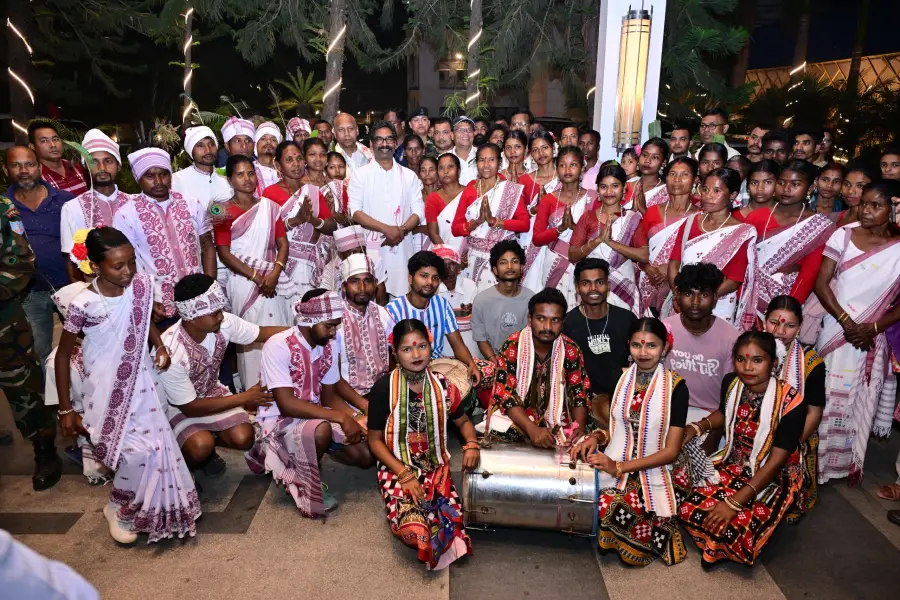
On the ground, Soren made multiple visits to Assam, engaging directly with tea garden workers and student bodies like AASAA. He consistently highlighted their historical roots in Jharkhand—Santhal, Munda, Oraon, Kurukh communities—and projected JMM as their natural political representative. His speeches emphasised dignity, identity, and alleged neglect, while also attacking the Assam government for treating tribal regions as zones of extraction rather than development.
Politically, JMM backed this narrative with organisation-building: announcing 21 candidates, deploying a list of star campaigners including Soren and Kalpana Soren, and opening channels with opposition leaders like Gaurav Gogoi.
The combination of sustained narrative-building, administrative signalling, and visible political investment has given JMM the confidence to test its strength on 21 seats even if the immediate goal is as much about establishing relevance as it is about winning.