

Itanagar/Jorhat
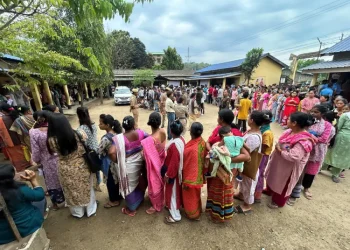
The Sherdukpen are a small indigenous tribal community inhabiting the West Kameng district of Arunachal Pradesh. This tribe is one of the six recognized tribal communities of the district, with the other five tribes being the Monpa, Sajolang (Miji), Hrusso (Aka), Bugun and Sartang.
The Sherdukpens are mainly concentrated in three villages, namely Rupa, Jigaon and Shergaon. One unique characteristic of this tribe is their dual religious practice. They have embraced Buddhism (Gelukpa sect of Mahayana Buddhism) while animistic aspects of their old tradition are also retained.
As a result, there seems to have developed in the Sherdukpen community a culture of dual faith as is evident in their manner, customs, festivals and various other cultural practices including their art forms. This article endeavours to explain an art form of the Sherdukpens, locally known as Bogre, that uniquely illustrates the blending of two cultures in determining the present-day identity of the tribe.
A Cultural Knapsack With Everyday Utility
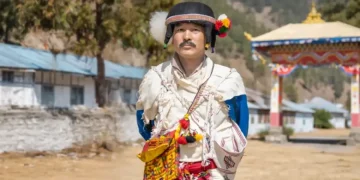
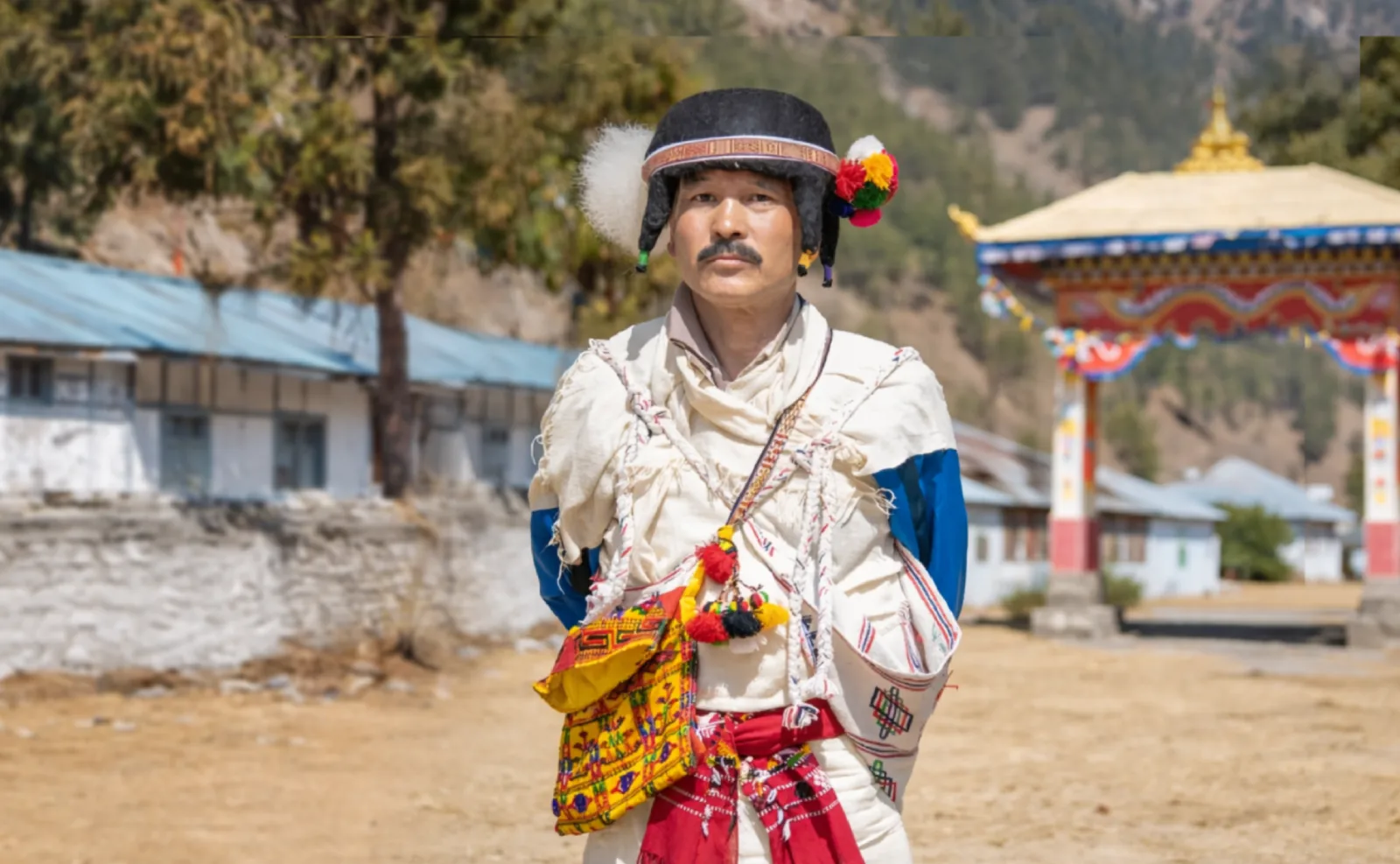
The Bogre is a specific type of knapsack typically designed to be worn across the body with the bag resting usually on the left of the back. It serves as an essential utility item for men to carry agricultural tools, lunch box, fruits, seeds etc.
Besides serving a functional purpose, the Bogre constitutes a significant and integral part of men’s costume, serving as a visible reflection of their cultural identity.
Traditionally woven by women, Bogre-making is a significant aspect of the handloom heritage of the Sherdukpens. The yarn used in weaving a Bogre is manufactured locally from the bark of plants known as hongchong and hongche.
The yarn so obtained is strong and durable enough and is also used for knitting fishing nets. Bogre weaving is a simple yet elegant art that employs a wide set of motifs inspired by nature and culture.
Motifs That Reflect Faith And Nature
One of the most important motifs of Bogre is the Swastika figure, called yumbroom, positioned in the centre around which are woven variegated geometrical patterns representing flowers, eyes of yaks or pigeons, the face of a sheep and Buddhist shrines.
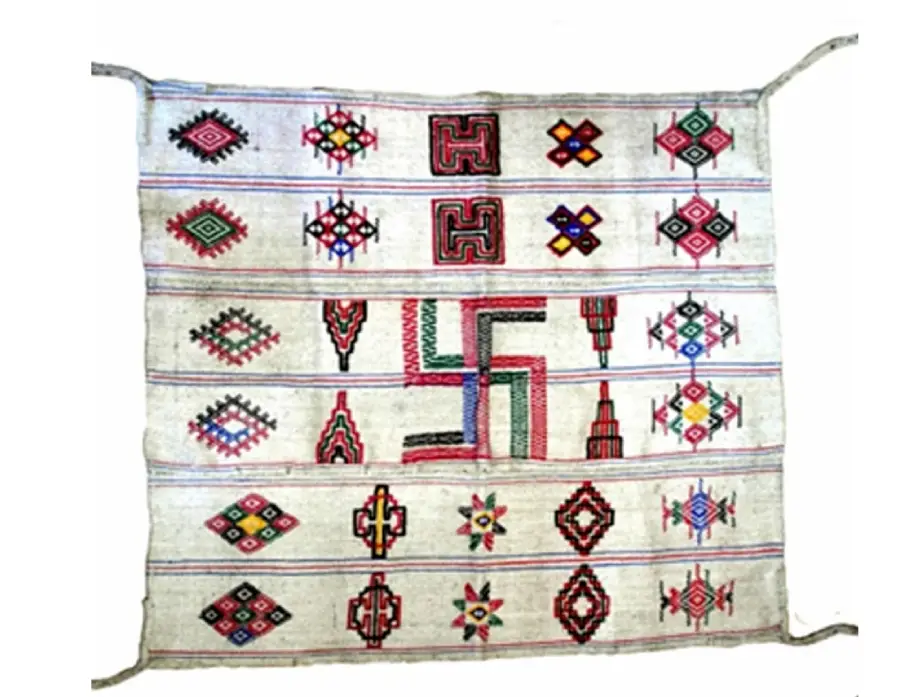
These motifs are recognized by individual names and are of great interest to the Sherdukpens. Bogres are still manufactured by skilled women due to their essential role in daily, cultural and socio-economic life, and as a symbol of identity and heritage as well.
Challenges And The Role Of Women Artisans
There is, however, a decline in traditional handloom weavers among the Sherdukpens today owing to economic and generational factors.
Under the circumstances, the local Self-Help Groups involving artisan women are seen to create a supportive environment to promote this art form, acting as a bridge between age-old tradition and today’s social demand. Based on high social demand, Bogres are often sold by them at a price ranging from Rs. 4,000/- to Rs. 5,000/- in the locality. It does not, however, have a market beyond Arunachal Pradesh.
Bogre As A Symbol Of Cultural Acculturation
Based on the motifs used, today the art of Bogre-making in the Sherdukpen community cannot be treated as an exclusive product of a single culture; it seems to have drifted away in some measure from a simple ecology-based culture of art to a complex integrated one.
Incorporating motifs like a Swastika and Buddhist shrines that signify spiritual purity and are widely used in Buddhist cultural tradition to mark auspiciousness, it represents two distinct traditions—indigenous and Buddhist. It also suggests an interaction between indigenous and outside traits via which the new motifs have become conventionalised.
Thus the present shape of Bogre art is heavily determined by the co-existence of old tradition and historically achieved Buddhist cultural elements, a phenomenon driven by acculturation. And it is this unique blend of expression in Bogre art that allows the Sherdukpens to maintain their age-old cultural identity while also being part of the wider Mahayana Buddhist tradition.