

New Delhi
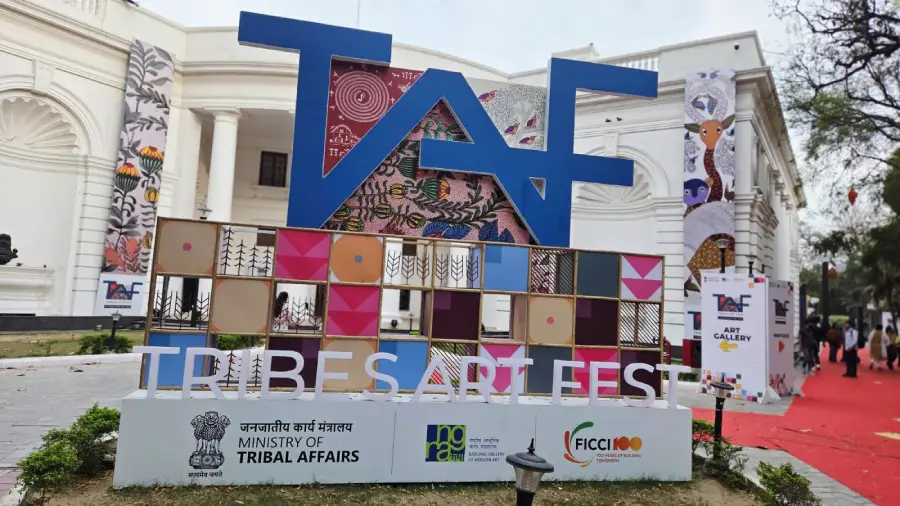
Curtains came down on Tribes Art Fest (TAF) 2026 here on Friday. Bringing together more than 70 tribal artists, over 30 distinct tribal art traditions and more than 1,000 artworks, the TAF created a rare convergence of indigenous creativity, contemporary art dialogue and public engagement.
Artists, students, collectors, cultural groups and art enthusiasts from across the country gathered in the national capital to witness and participate in a vibrant showcase of India’s indigenous artistic traditions.
The outcomes have been “remarkable”: More than Rs 1.25 crore worth of artworks were sold, over 10,000 visitors attended the exhibition and more than 800 artworks found buyers. For several artists whose monthly earnings typically remain modest, the festival presented an unprecedented economic opportunity.
The financial outcomes underscored the festival’s significance. While many tribal artists might ordinarily earn around Rs 25,000 per month, some participants returned home from the event with earnings reaching nearly Rs 7 lakh — a transformation that organisers believe illustrates the potential of structured cultural platforms, revealed Ranjana Chopra, Secretary, Ministry of Tribal Affairs.
Organised by the Ministry of Tribal Affairs, TAF closed with a grand valedictory ceremony at Travancore Palace on K.G. Marg, marking the culmination of what many organisers and artists described as a powerful moment for tribal art in the national cultural landscape.
“This has truly been a successful experiment. In the tribal context, there is a very fine line between livelihood and art and culture, because their art itself is a living expression of their identity and traditions,” said Chopra.
By bringing together the art gallery ecosystem, corporate buyers and institutional collaborations, she noted, the festival created a platform that both showcased tribal art and strengthened livelihoods for tribal artists.
A Cultural Festival With National Participation
The closing ceremony reflected the importance attached to the initiative at the national level. It was attended by Union Minister of Tribal Affairs Jual Oram as the Chief Guest, with Union Minister for Culture and Tourism Gajendra Singh Shekhawat, Delhi Chief Minister Rekha Gupta and Minister of State for Tribal Affairs Durgadas Uikey as Guests of Honour.
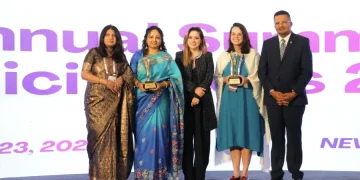
Artists were honoured for their contributions across several categories. Rajesh Chaitya Vangad received the Best Artist in Tribal Art award, while Dhaneshwar Dhurwey and Sudha Kumari were recognised as Young Achievers. Laishram Membi Devi was awarded for Innovation in Tribal Art, Balasubramani for Reviving Tribal Art traditions, and Smt. Putli Ganju for Lifetime Contribution to Tribal Art.
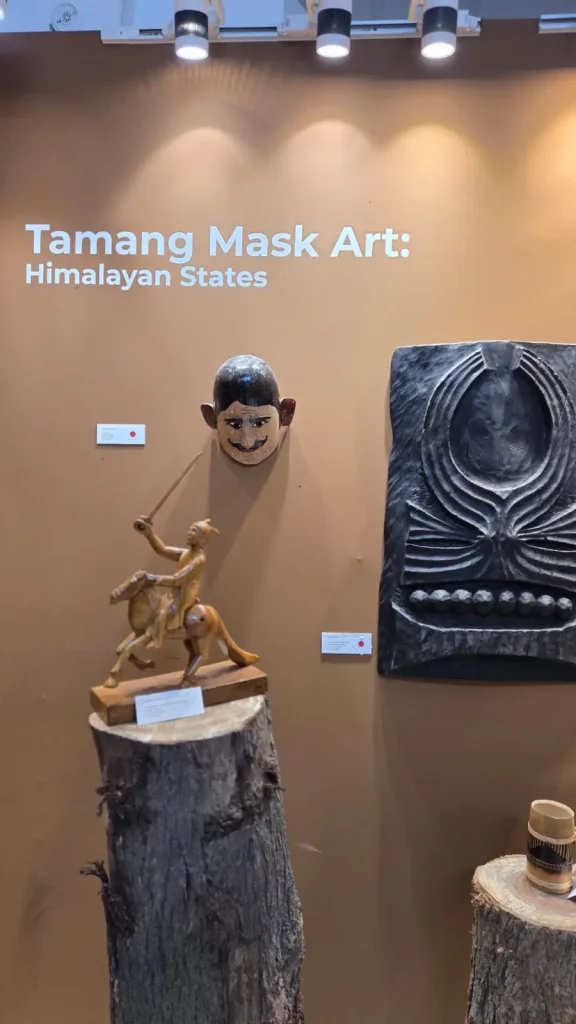
The recognition highlighted the diversity of artistic voices present at the festival, representing communities and regions across India.
Among the artists whose works attracted significant attention from collectors were Suresh Chandra Pungati, Rajesh Chaitya Vangad, Rajkumar Sodi, Mangala Bai, Bhuri Bai, Anil Chaitya Vangad, Kingson Swargiari, Ram Singh Urveti, Venkat Raman Singh Shyam and Sukhnandi Vyam.
Their artworks — ranging from intricate paintings to sculptural pieces and traditional craft forms — drew sustained interest from both individual collectors and institutional buyers.
Art As Cultural Memory And Living Knowledge
Speakers at the ceremony emphasised that tribal art carries significance far beyond aesthetic appeal.
“India’s tribal communities possess an extraordinary wealth of art, culture, heritage, culinary traditions, and traditional knowledge systems that are truly unmatched. These living traditions reflect a deep connection with nature, community, and wisdom passed down through generations,” said Oram. His deputy Uikey highlighted how tribal artistic traditions reflect the deep relationship between communities, nature and cultural memory.
Shekhawat echoed this sentiment, describing tribal paintings and craft traditions as living archives of knowledge, memory and community narratives. “These expressions are not merely visual forms,” he said. “They carry ecological knowledge, spiritual imagination and the stories of communities.”
Emphasizing the inclusive spirit of the city, Gupta said the national capital will always welcome artists and cultural practitioners who enrich Delhi with their traditions, stories, and artistic expressions.

The suggestion that such festivals could be organised annually reflected a growing recognition that tribal art is increasingly entering the mainstream cultural conversation.
A Palace Turned Cultural Landscape
Long before the final ceremony, the spirit of the festival had already taken hold across the corridors and courtyards of Travancore Palace.
Located in the heart of New Delhi, the historic building — originally built as the residence of the princely state of Travancore — had been transformed into an expansive gallery space celebrating indigenous creativity.
Its stately halls, once symbols of royal patronage and elite cultural production, became a meeting ground for artistic traditions rooted in village life, forests and community memory.
The juxtaposition carried symbolic meaning. Historically, tribal art evolved outside the formal institutions and courts that shaped the idea of “high art.” By placing these traditions within a former royal residence, the festival subtly challenged long-standing cultural hierarchies and expanded the narrative of Indian art.
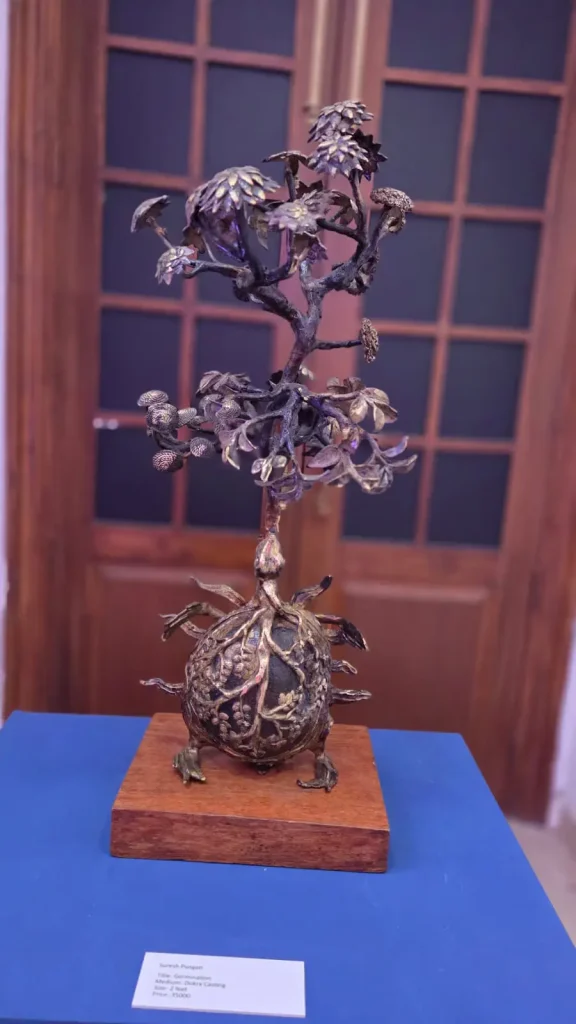
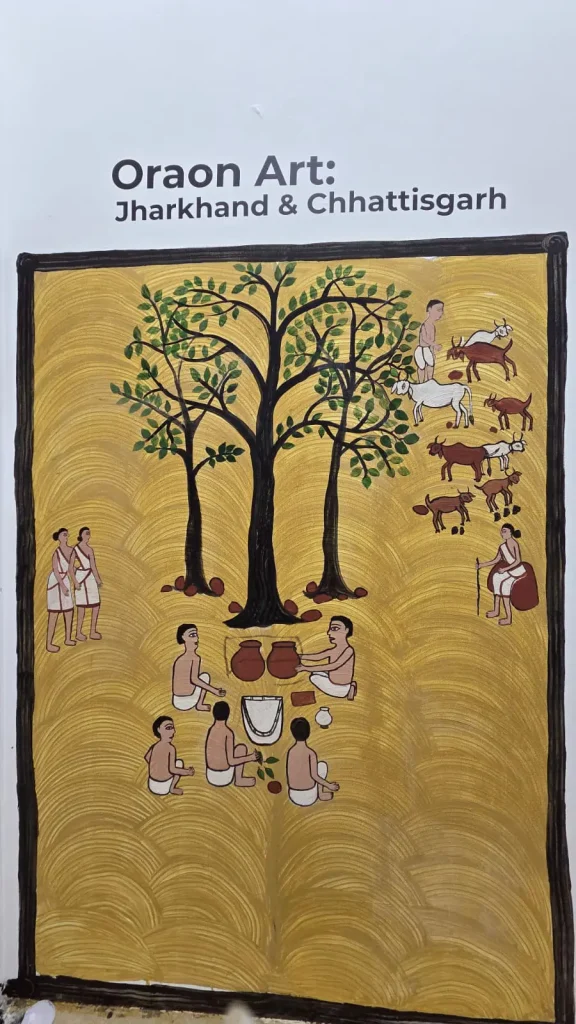
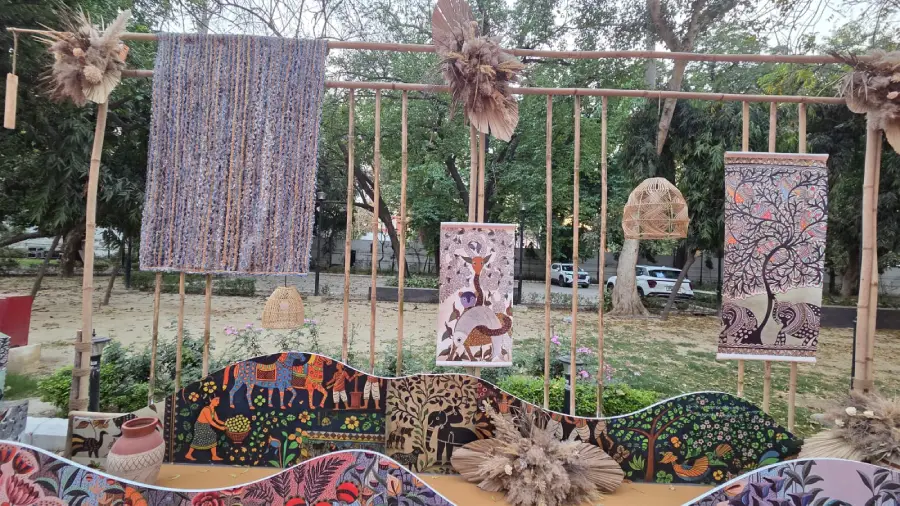
Inside the palace galleries, visitors encountered a remarkable diversity of artistic traditions. The minimalist white figures of Warli painting depicted village life through geometric forms. Bhil paintings, composed of thousands of coloured dots, created vibrant landscapes of animals, spirits and mythological motifs.
Elsewhere, sculptures crafted through the ancient Dokra metal-casting technique demonstrated one of the subcontinent’s oldest metallurgical traditions, preserved across generations of artisans. The exhibition also showcased Sohrai murals from Jharkhand, Saura paintings from Odisha, Mandana art from Rajasthan, Godna traditions from Bihar and bamboo crafts from the North-East, alongside artistic expressions from communities such as the Bodo, Oraon, Kurumba and Koya.
Together, these works revealed a vast constellation of visual languages shaped by geography, ecology and cultural belief systems.
A Living Festival, Not Just An Exhibition
What distinguished Tribes Art Fest from a conventional art show was the emphasis on interaction and participation.
Throughout the 12 days, artists conducted live painting demonstrations that allowed visitors to watch creative processes unfold in real time. Workshops encouraged students and art enthusiasts to engage directly with traditional techniques, turning passive viewing into collaborative learning.
Panel discussions explored themes such as cultural preservation, indigenous aesthetics and sustainable creative economies. Illustrated talks and storytelling sessions examined the myths, histories and ecological philosophies embedded within tribal art traditions.
One of the festival’s most thoughtful initiatives involved more than one hundred tribal students studying art across India. Through curated walkthroughs and mentorship sessions with senior artists, the event created opportunities for intergenerational knowledge exchange.
These interactions transformed the festival into a space not merely for exhibition but for transmission — where traditions were shared, debated and reinterpreted.
Women Artists And Cultural Continuity
Another notable highlight was Project Khum – Rooted in Creativity, a collaborative installation involving tribal women artists.
The word Khum, meaning flower in the Kokborok language of Tripura, symbolised growth and creative blossoming. The installation invited women artists to contribute motifs, colours and forms drawn from their own traditions to a shared visual composition.
Presented around International Women’s Day, the project emphasised the central role women play in sustaining artistic traditions within many tribal communities.
In villages across India, it is often women who paint murals during festivals, transmit motifs to younger generations and preserve visual traditions within domestic spaces. The installation brought this frequently unseen cultural labour into public view.
The Growing Importance Of Platforms Like This
For decades, tribal art was frequently categorised as craft or folklore rather than recognised as a significant artistic tradition. Yet these forms contain sophisticated symbolic systems, ecological knowledge and narratives that reflect deep relationships between communities and landscapes.
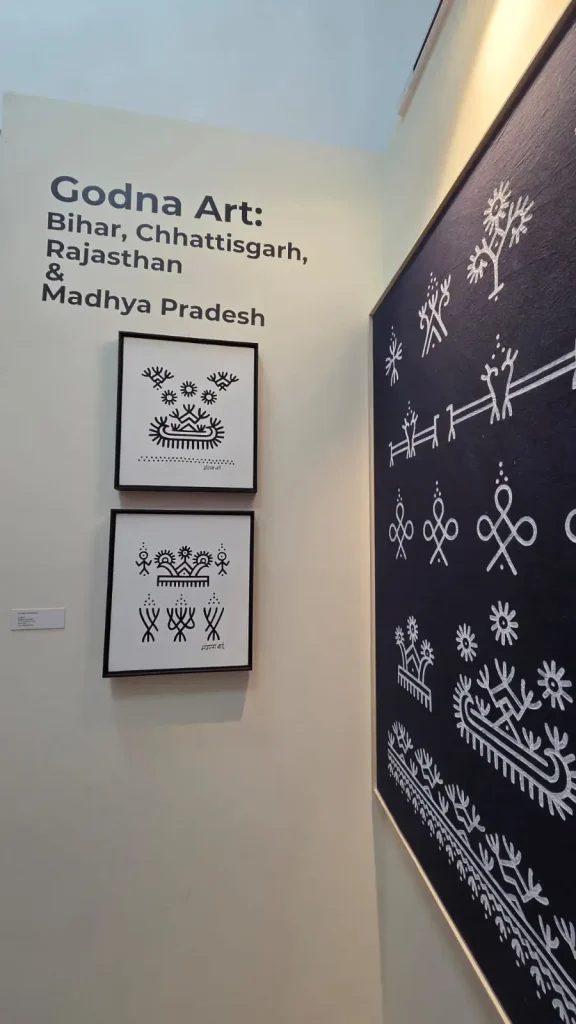
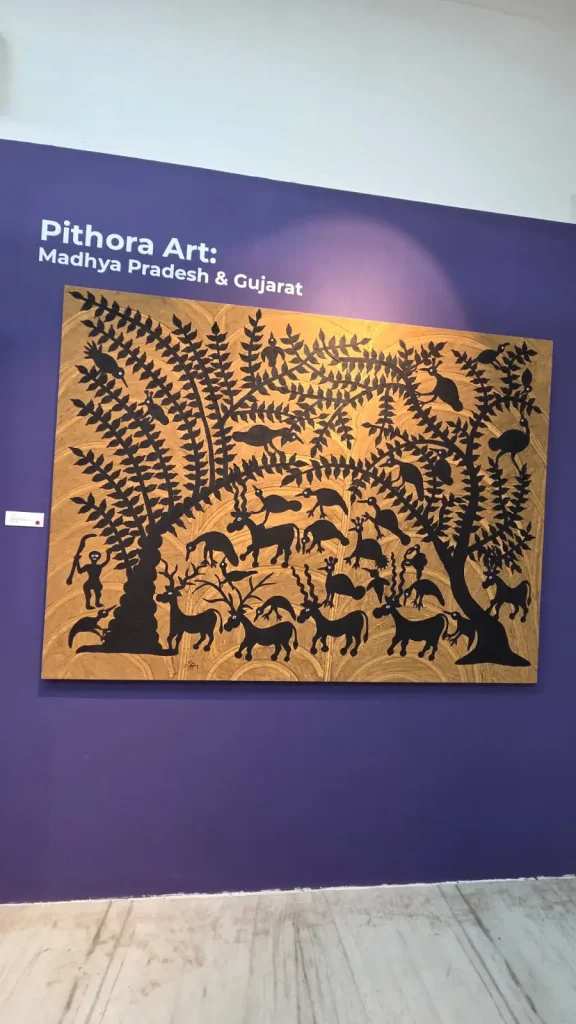
Festivals such as Tribes Art Fest are gradually reshaping that perception.
By bringing tribal artists into direct contact with collectors, galleries, design institutions and corporate buyers, such platforms help create sustainable economic pathways while expanding the visibility of indigenous art forms. The finances apart, more importantly, the festival showed how cultural heritage can translate into tangible livelihood opportunities.
A Cultural Moment With Long-Term Possibilities
India’s tribal communities represent some of the oldest continuous cultural traditions on the subcontinent. Their artistic practices preserve memories of forests, rivers, rituals and cosmologies that have evolved across centuries.
Yet for much of modern history, these voices remained on the margins of institutional cultural spaces.
Tribes Art Fest 2026 signalled a shift.
By bringing more than 70 artists and thousands of visitors together in the national capital, the festival demonstrated how indigenous art traditions can occupy centre stage in India’s cultural narrative.
Inside the halls of Travancore Palace, tribal art was not presented as a relic of the past but as a living, evolving creative force.
And as the festival concluded with record participation, strong sales and new collaborations, it left behind a larger message: that the story of Indian art is far richer when the voices of its oldest communities are given space to be seen, heard and celebrated.