



Jagdalpur/New Delhi
The closing ceremony of Bastar Pandum 2026 on Monday became more than the finale of a cultural festival. It emerged as a political, social, and security statement on Bastar’s transformation.
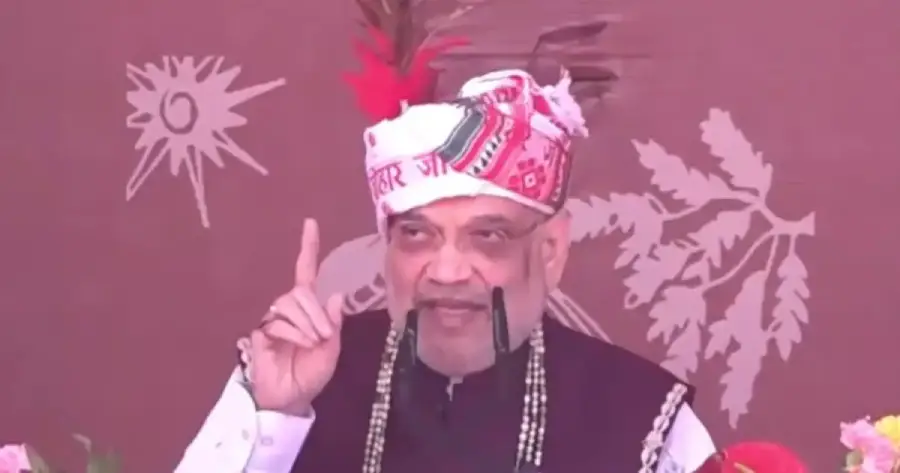
Addressing thousands of tribal participants and local residents, Union Home Minister and Minister of Cooperation Amit Shah framed the festival as proof that Bastar is shedding decades of fear and reclaiming its civilisational identity through culture, development, and governance.
Shah said Bastar’s identity should never again be linked with gunpowder (barood) and violence, but with its ancient traditions, art forms, cuisine, and collective memory. He underlined that the scale of participation in Bastar Pandum—55,000 tribal people across 12 cultural categories—was itself evidence that the region is moving away from the shadow of Naxalism.
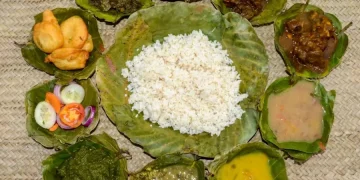
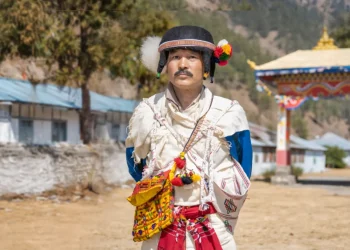
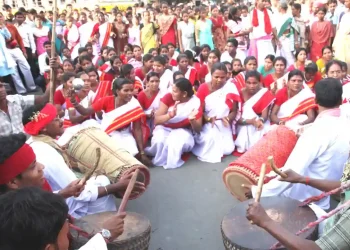
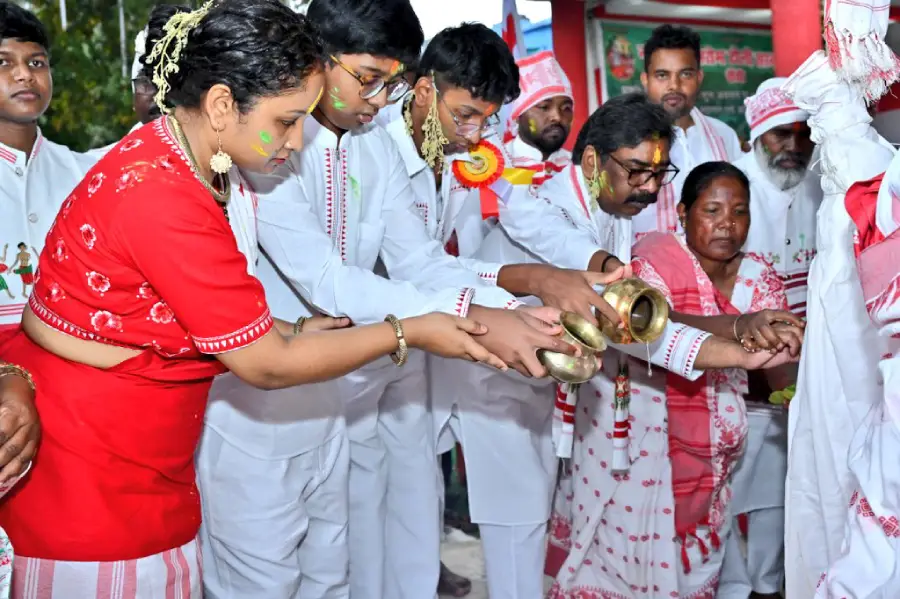
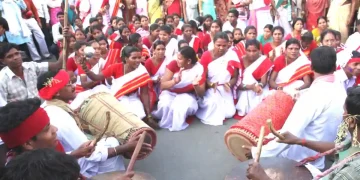
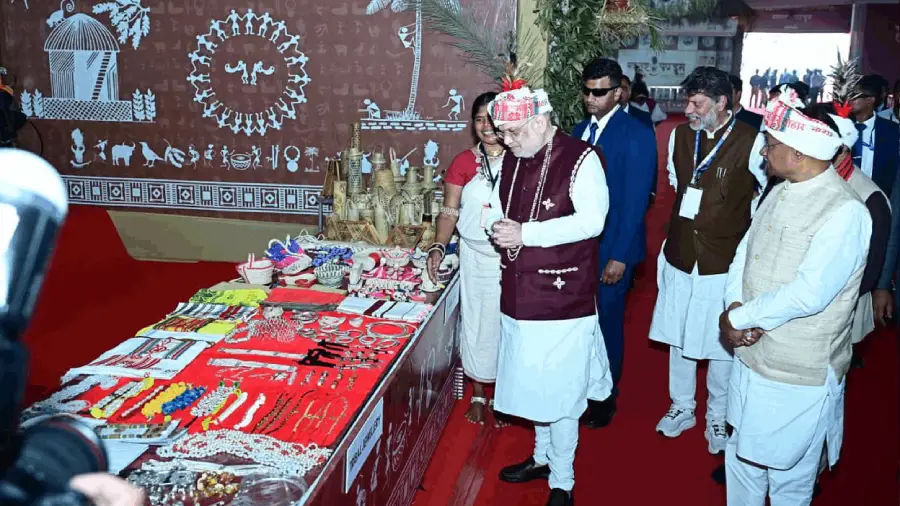
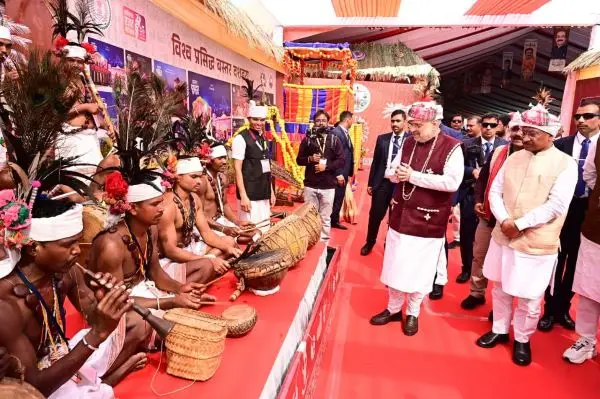
The festival, organised across seven districts, 1,885 gram panchayats and 32 block headquarters, showcased Bastar’s cuisine, folk songs, traditional dances, drama, attire, forest-based medicine, and rituals. Shah noted that while earlier editions of Bastar Pandum were limited in scope, this year’s expansion into 12 categories reflected the state government’s intent to institutionalise tribal culture rather than treat it as a symbolic event.
According to Shah, culture has become a tool of confidence-building in a region once paralysed by fear. He recalled how Bastar, until a few years ago, lived under the constant threat of mortar shells, gunfire, and IED blasts. Against that backdrop, he said, the sight of thousands of tribal families celebrating their heritage openly was a “historic psychological shift.”
Calling Bastar’s tribal culture unparalleled, Shah said its songs, dances, and traditions are not only the pride of the region but also a vital part of India’s cultural wealth. He stressed that preserving this heritage for future generations is as important as infrastructure development. The festival, he added, has helped take Bastar’s art forms to national platforms and will soon find global recognition.
Linking culture with political vision, Shah said Prime Minister Narendra Modi believes history is not limited to textbooks but lives in people’s traditions and memories. He said the central government’s approach to tribal welfare is rooted in respect rather than charity, citing the declaration of Bhagwan Birsa Munda’s birth anniversary as Tribal Pride Day and his 150th birth anniversary as the Year of Tribal Pride.
Shah highlighted efforts to mainstream tribal products by promoting branding and marketing of forest produce, handicrafts, and traditional cuisine. He said around five lakh forest-based products and crafts have been brought under organised marketing systems, creating income opportunities while preserving indigenous knowledge.
Shah said that Pandit Ram Mandavi of Narayanpur, Hemchand Manjhi, Ajay Kumar Mandavi of Kanker, and Bhudhari Dati of Dantewada have been honoured with Padma awards in the fields of art, health, and education, thereby gaining recognition across the country. He added that Prime Minister Narendra Modi has launched a comprehensive programme to honour more than 700 tribal communities. The Prime Minister initiated the Tribal Museum with a cost of Rs 200 crore, which preserves the memories of all tribal leaders who participated in the freedom struggle.
Thanking the President of India for attending the inauguration of Bastar Pandum, Shah announced that winners from all 12 cultural categories would be invited to Rashtrapati Bhavan, where they would present their art and share a meal. He described the gesture as symbolic recognition of Bastar’s cultural dignity at the highest constitutional level.
A significant portion of Shah’s address focused on the fight against Naxalism, which he described as inseparable from the protection of tribal lives. He said the real victims of Naxal violence are tribal farmers, children, and women, pointing out the cruelty of planting IEDs in fields and village roads.
Shah made a clear distinction between surrender and violence. He appealed to the remaining Naxalites to lay down arms, assuring them of dignified rehabilitation under an attractive state package. Special emphasis was placed on encouraging women and young girls to surrender, with Shah stating that their futures should not be destroyed by conflict.
At the same time, he issued a firm warning that armed violence would be met with force. Those who attack villages, destroy schools and hospitals, or disrupt communication infrastructure would not be spared, he said, reinforcing the government’s dual approach of rehabilitation and decisive security action.
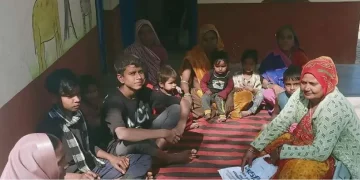
Shah said Bastar is now emerging as a national brand, citing the reopening of schools that had remained shut for nearly four decades. He questioned how Naxalism benefited tribal communities by denying generations access to education, healthcare, and mobility.
Outlining a development roadmap, Shah promised that Bastar would become the most developed tribal region in the country within the next five years. He announced the revival of primary health centres, construction of new schools and colleges, expansion of mobile connectivity, and improved road infrastructure connecting remote villages.
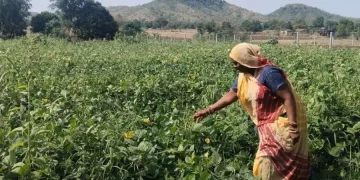
He said every village would soon have reliable connectivity, with post offices or bank branches within a five-kilometre radius. Tribal farmers, he added, would receive fair prices for paddy, free monthly rice, gas connections, and tap water under welfare schemes.
Tourism emerged as a key pillar of Bastar’s future economy. Shah said that once Naxalism is fully eliminated, the region will see the growth of adventure tourism, homestays, canopy walks, and glass bridges, creating local employment while preserving ecological balance.
On the industrial front, Shah announced the development of a new industrial area and auto gig hub spread over 118 acres, aimed at generating jobs for tribal youth. He also spoke about the Raoghat–Jagdalpur rail project, river-linking initiatives, new irrigation and power projects, and vocational training for over 90,000 young people.
Describing the change in everyday life, Shah said Bastar no longer witnesses curfew-like conditions. Instead, cultural dances can now be seen in villages at night—an indicator, he said, of restored normalcy and confidence.
He concluded by thanking security forces for their role in combating Naxalism and paying tribute to personnel who lost their lives. Shah asserted that Bastar would become completely Naxal-free within the stipulated timeframe (March 31, 2026) and said the success of Bastar Pandum symbolised the irreversible direction of change.
As the festival closed, Bastar Pandum 2026 stood not just as a cultural celebration, but as a declaration that Bastar’s future narrative will be written in rhythm, tradition, and opportunity—not fear.