


Jagdalpur/New Delhi
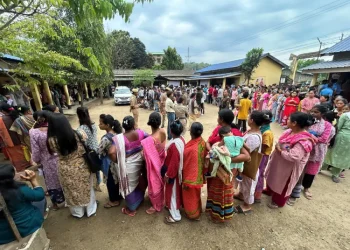
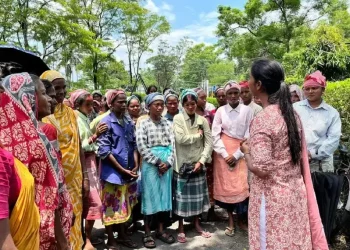
The sun rose gently over Jagdalpur on Sunday, the second day of Bastar Pandum 2026, casting light on bamboo pavilions, handwoven textiles and earthen vessels simmering with age-old recipes. A steady stream of visitors, locals, officials, students and tourists, moved through the festival grounds, pausing to taste tribal food, watch folk performances and speak to artisans who have travelled from deep forest villages to be part of Bastar’s largest cultural gathering.
Organised by the Chhattisgarh government, Bastar Pandum has quickly grown into a defining cultural platform for the region since it was first launched in 2024. Conceived as a celebration of tribal identity and living traditions, the festival has also, over the years, acquired a deeper meaning: it mirrors Bastar’s journey from being a Maoist hotbed to a region tentatively but confidently embracing peace and development.
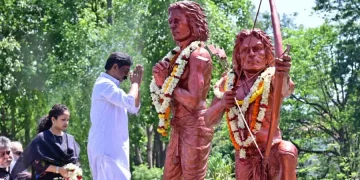
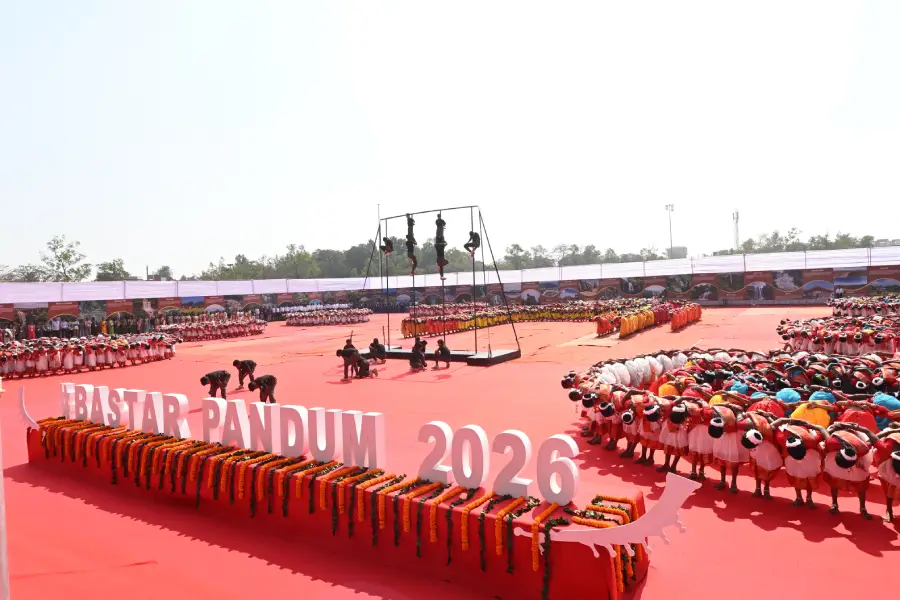
The 2026 edition was inaugurated a day earlier by President Droupadi Murmu, whose presence itself carried strong symbolism. On Day 2, that symbolism translated into lived experience—children attending workshops on tribal painting, women demonstrating traditional food preparation, and folk artists reclaiming space that once felt inaccessible due to insecurity.
Divisional-level competitions will be held till February 9, during which more than 700 artists from 84 teams will present performances in 12 cultural disciplines.
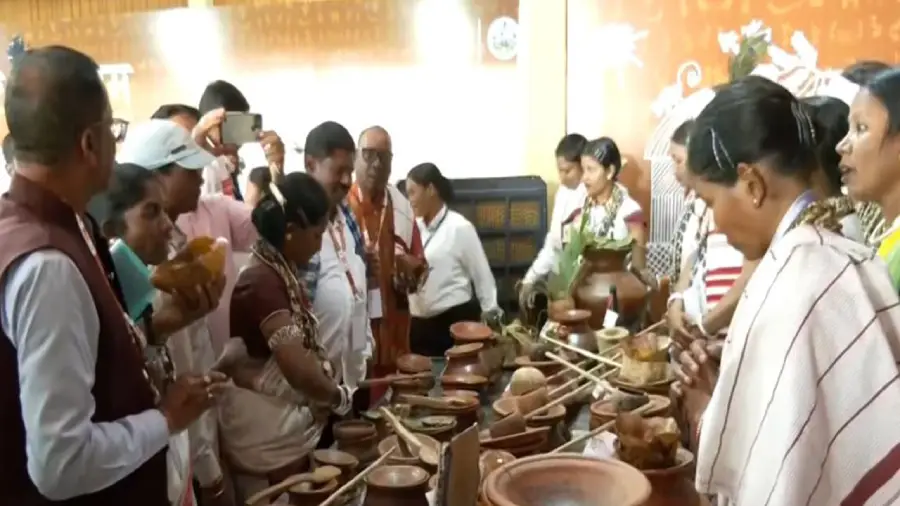
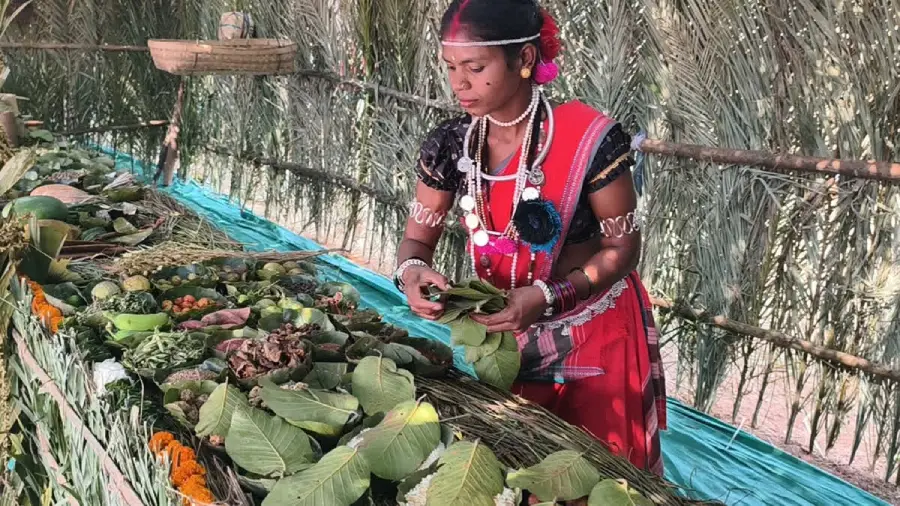
At the heart of the festival is Bastar’s culinary memory. Rows of stalls showcased dishes rarely seen outside village kitchens—fermented rice drinks, oil-free preparations flavoured only with salt, chilli and tamarind, and porridges made from forest produce and native grains. Members of the judging panel meticulously evaluated authenticity, preparation methods and cultural relevance, underlining the festival’s focus on preservation rather than commercialisation.
Food participants explained that many of these recipes had survived only through oral tradition. Some were once everyday staples that faded as markets and packaged foods entered rural life, while others nearly disappeared during years when conflict disrupted normal village routines. Bastar Pandum, they said, has become a rare opportunity to bring those tastes back into public memory, with support from district authorities and the state government.
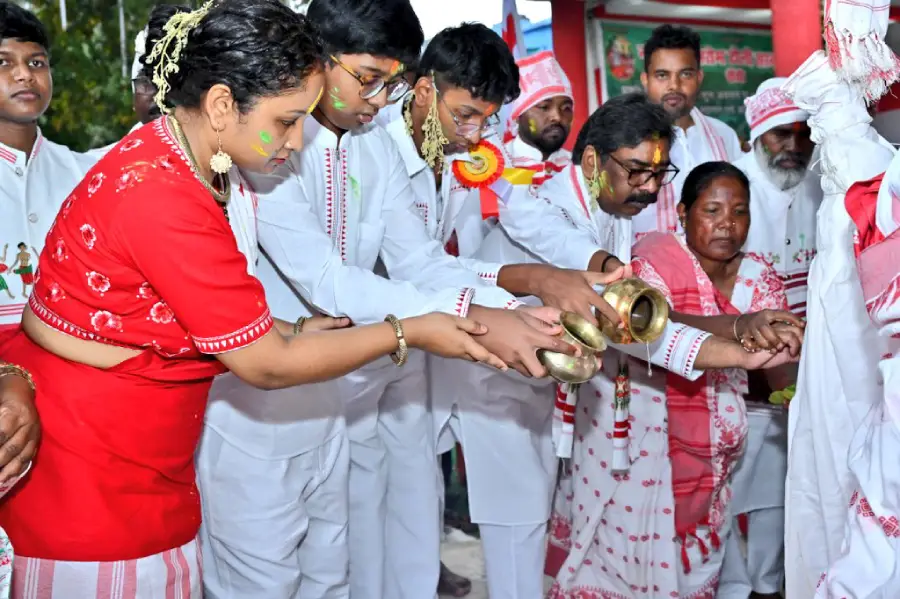
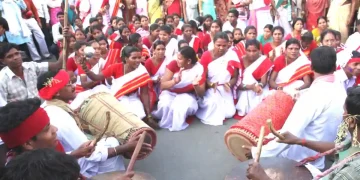
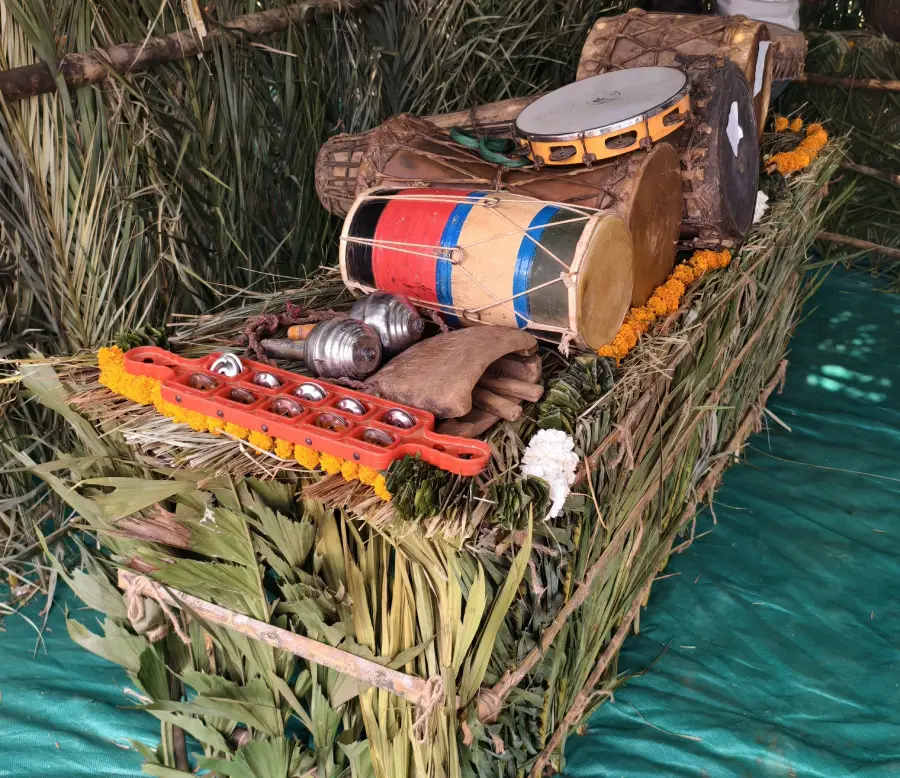
Beyond cuisine, the festival grounds resonated with music and movement. Folk artists from across Bastar divisions performed devotional invocations to local deities, seasonal songs and community dances that marked harvests and festivals such as Chherchera. Each performance, though brief, carried layers of history—rituals shaped by forests, agriculture and collective living.
For many performers, appearing before the President on the inaugural day was a milestone that reaffirmed the value of traditions often dismissed as peripheral. Artistes spoke of a renewed responsibility to protect ancestral customs, traditional attire and musical forms so future generations understand life as it existed before roads, mobile towers and outside influences reshaped the region.
The cultural assertion on display also stands in contrast to Bastar’s not-so-distant past. For nearly four decades, large parts of the region were trapped in a cycle of Maoist violence, fear and mistrust. Villages were cut off, schools shut down, and cultural gatherings became difficult, if not impossible. The silence that conflict imposed extended beyond security—it threatened to erode community practices passed down over centuries.
That context loomed large in the President’s address at the inauguration, where she linked Bastar’s cultural vitality with its resilience. Reflecting on the region’s worldview, she remarked that in Bastar, every stage of life is celebrated as a festival—from sowing seeds in fertile soil to the arrival of mango season—adding that there is much the rest of the country can learn from this way of life.
The President’s broader message underscored the changing security landscape. With sustained action against Maoist violence, the atmosphere of fear that once defined Bastar is steadily receding. Large numbers of former Maoist cadres have surrendered, and efforts are underway to reintegrate them into society through welfare and livelihood schemes. The emphasis, she noted, is on restoring normalcy and dignity, not just ending violence. The Centre has fixed March 31 this year to ensure a Maoist-free India.
This shift is increasingly visible on the ground. Roads and electricity have reached villages that were once inaccessible, drinking water facilities are expanding, and schools closed for years are reopening. Children attending classes again has become one of the most tangible signs of change. State initiatives such as the Niyad Nellanar Yojana, alongside central schemes focused on tribal welfare, are being credited with accelerating this transition.
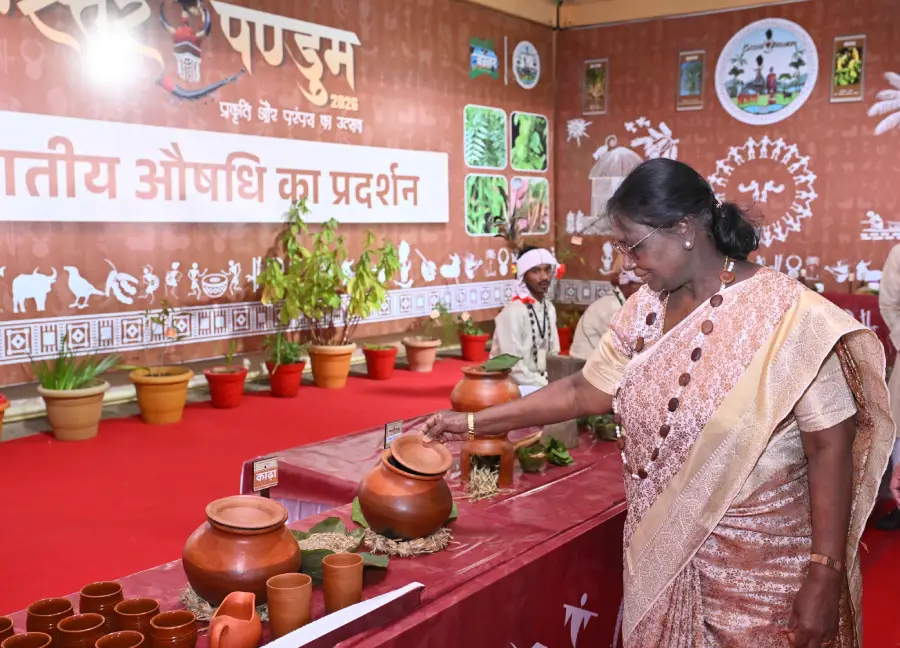
Bastar Pandum fits squarely into this larger narrative. While it is a cultural festival at its core, its timing and scale signal confidence—confidence that people can gather freely, perform publicly and celebrate identity without fear. Officials say the festival also aims to create economic opportunities for artisans and performers by connecting them with wider audiences.
Education and youth engagement featured prominently in conversations around the festival. With Eklavya Model Residential Schools expanding access to quality education in tribal areas, community leaders stressed that cultural pride and modern education must go hand in hand. Preserving heritage, they argued, does not mean resisting progress but shaping it on local terms.
The presence of the Chhattisgarh Governor, the Chief Minister and Union Ministers at the inauguration reinforced the political importance being attached to Bastar’s transformation. Their participation signalled alignment between cultural revival and governance priorities aimed at inclusive development.
As evening fell on Day 2, lamps flickered across the festival grounds and the rhythm of drums echoed through Jagdalpur. Visitors lingered longer, sampling one last dish or watching a final performance. For many locals, Bastar Pandum is no longer just an event—it is a statement that Bastar’s identity will no longer be overshadowed by its years of conflict.
From a once Maoist-dominated landscape to a stage filled with song, food and shared memory, Bastar Pandum reflects a region redefining itself. In celebrating what endured through decades of hardship, Bastar is also quietly announcing what lies ahead: peace rooted in culture, and development that does not erase identity but amplifies it.
Alongside Bastar Pandum, the Bastar Olympics has emerged as another powerful symbol of Chhattisgarh’s turnaround story, using sport as a tool for healing, confidence-building and reintegration in a region long scarred by insurgency. Launched to draw youth away from isolation and fear, the Bastar Olympics has seen thousands of young participants from remote, once Maoist-affected villages compete in athletics and indigenous games, many for the first time on an organised platform.