










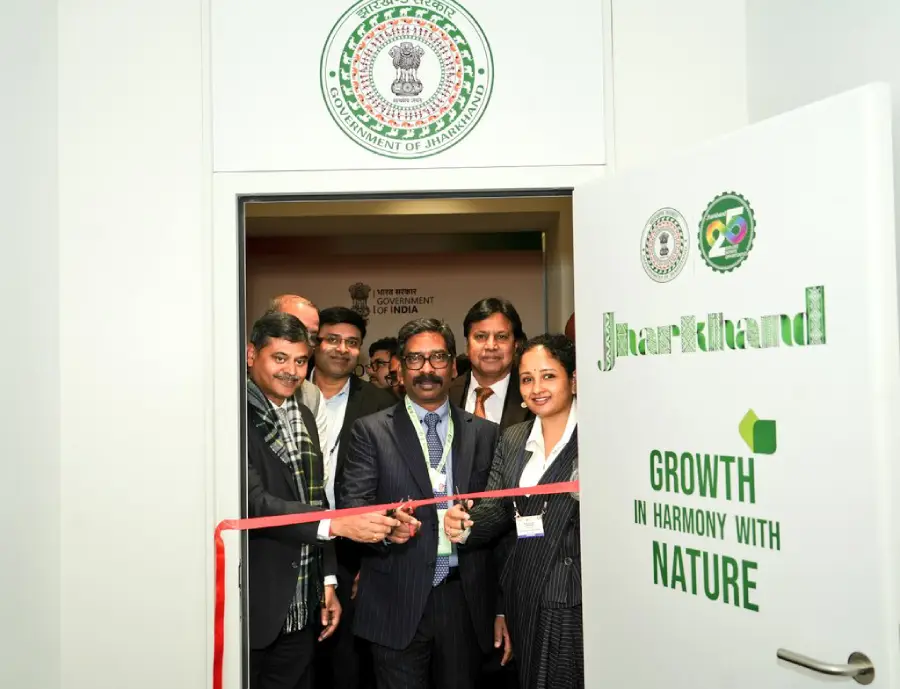
Ranchi
The Jharkhand Government on Tuesday asserted that Chief Minister Hemant Soren-led delegation’s engagements in Davos and the UK have led to the State securing Rs. 1.27-lakh crore of investment proposals entailing over 46,500 jobs across steel, energy, manufacturing and infrastructure sectors.
According to the Government, the proposed investments, finalised through Memoranda of Understanding and Letters of Intent during the World Economic Forum in Davos and a subsequent visit to the United Kingdom, amount to Rs. 1,27,055 crore and are expected to generate 46,555 direct and indirect employment opportunities across Jharkhand.
Chief Minister Hemant Soren said that the Davos and UK engagements have accelerated Jharkhand’s transformation into a future-ready industrial state. “These partnerships go beyond investment; they bring technology, jobs, and long-term economic resilience. Our focus remains on sustainable growth, employment generation, and making Jharkhand a preferred destination for global industry.”
The Government will work closely with investors to ensure speedy clearances, infrastructure support, and time-bound project implementation, he added.
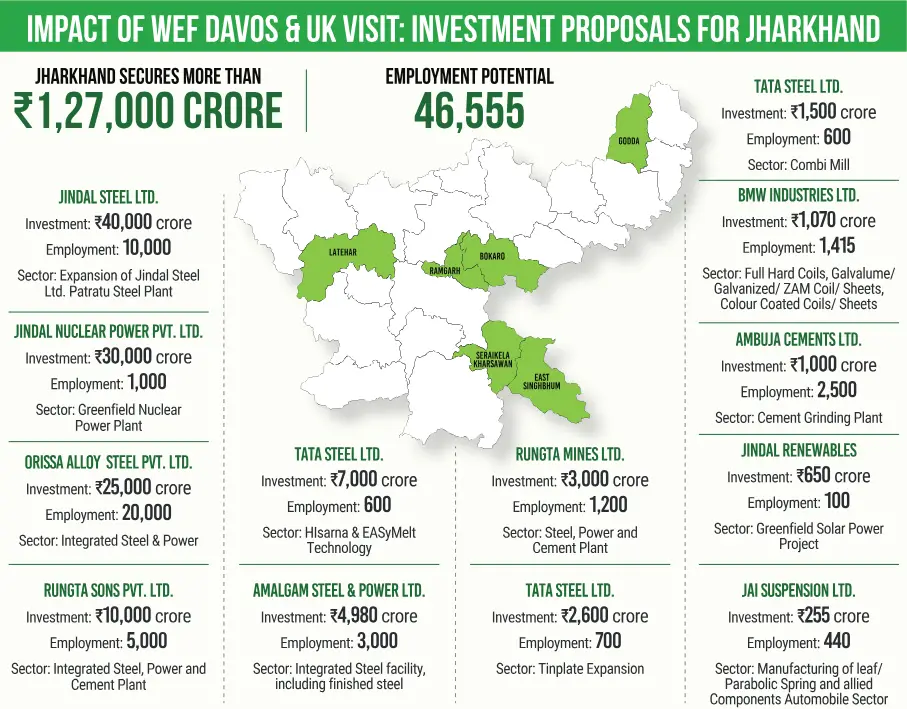
The Government released proposal-wise details, indicating that the investments are concentrated in advanced steel manufacturing, power generation, cement, automotive components, nuclear energy and renewable power, with an emphasis on low-carbon and efficiency-driven technologies.
The primary objective of these investments is to achieve zero-carbon goals and manufacture high-quality finished products, the Government said adding the State is no longer merely a source of raw materials; it is now prepared to supply the world with clean steel and smart auto components through cutting-edge technologies.
On the directions of the Chief Minister, the Government said, efforts are being made to promote balanced development across all districts of the State. “Tata Steel, Jindal and other industrial groups have emphasised the adoption of some of the world’s most advanced technologies in Jharkhand. Technologies such as EASyMelt, which use electrical energy and syngas, are expected to reduce carbon emissions by 50 per cent. The HIsarna technology can cut emissions by up to 80 per cent by utilising locally available low-grade iron ore.” the Government stated in its communique.
While the Opposition has attacked the Government over the outcome of the foreign visits, the Hemant dispensation has sought to highlight how it is a first for a tribal Chief Minister’s outreach at a global economic forum to seek investments for a State like Jharkhand.