







Ranchi
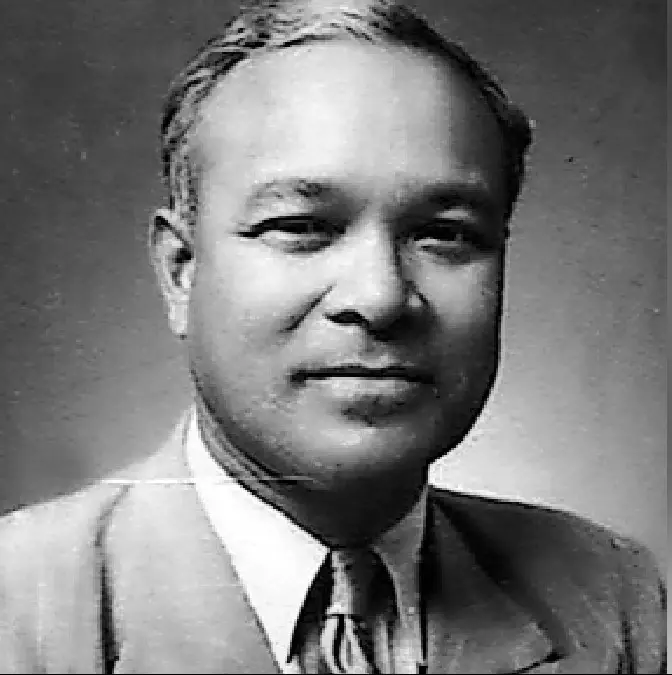
Born Pramod Pahan to Amru Pahan on January 3, 1903, in a Munda Adivasi family in the Khunti subdivision of Ranchi district in the then Bihar Province (located in present-day Jharkhand), he became Jaipal Singh Munda after his family converted to Christianity. His childhood was shaped by stories of land loss, forced labour and broken treaties, memories that circulated in village conversations long before he learned the language of law or politics.
Education
Despite economic constraints, his sharp intellect stood out early. Missionary schools exposed him to English education, but they could not detach him from his roots. Even as a student, he carried an acute awareness of identity—who he was, where he came from, and why his people remained invisible in systems that governed them.
He was initially educated locally in the village school run by missionaries, and at St. Paul’s School, Ranchi, run by the Anglican SPG (Society for the Propagation of the Gospel, which had strong links with Oxford). He was sent to Oxford by the SPG.
At St. John’s College, Oxford, Jaipal Singh Munda studied History and stood out not only for academic excellence but for his refusal to assimilate quietly. He was among the very few tribal Indians to reach such an institution during colonial rule.
He also excelled as a hockey player, a sports writer, and a president and secretary the Debating Society. He quickly established himself as an irreplaceable member of the University hockey team and would eventually become the first Indian student to be awarded an Oxford Blue in hockey
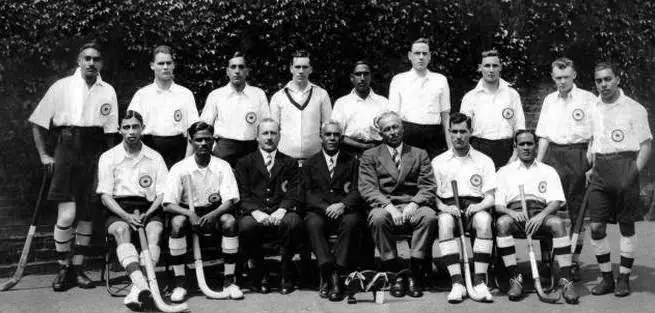
One of his former classmates once said he “walked into English society with dignity, but never with surrender”. He read voraciously—history, anthropology and political philosophy—always with one question in mind: how knowledge could be turned into justice.
British historian Verrier Elwin, who later worked closely with tribal communities in India and knew Jaipal Singh personally, observed that Jaipal Singh “carried his people with him into every room he entered, even the most elite ones”.
Elwin noted that Jaipal Singh was deeply disturbed by the way tribal societies were discussed as anthropological subjects rather than living communities with rights and agency. He was deeply uncomfortable with being showcased as an “exceptional native”.
At Oxford, he also developed a lifelong habit of reading political philosophy late into the night, a routine he continued even in his later political life.
Hockey And Leadership Beyond Field
Sports brought Jaipal Singh Munda international recognition. A natural athlete, he excelled in hockey and captained the Indian team at the 1928 Amsterdam Olympics, where India won its first-ever Olympic gold medal in hockey.
Hockey historian K. Arumugam later wrote that Jaipal Singh’s leadership was “quiet, disciplined and commanding, driven by example rather than instruction”.
Jaipal Singh himself once remarked, in later reflections to teammates, that the victory mattered because it disproved colonial assumptions about Indian and tribal inferiority, not merely because it brought a medal.
What is rarely spoken about is that Jaipal Singh saw sports as a political tool. He believed physical excellence challenged colonial stereotypes of tribal communities as “primitive” or “weak”. Even after retiring from competitive sport, he followed international hockey closely and often mentored young tribal athletes informally, urging them to see sports as a path to confidence and dignity.
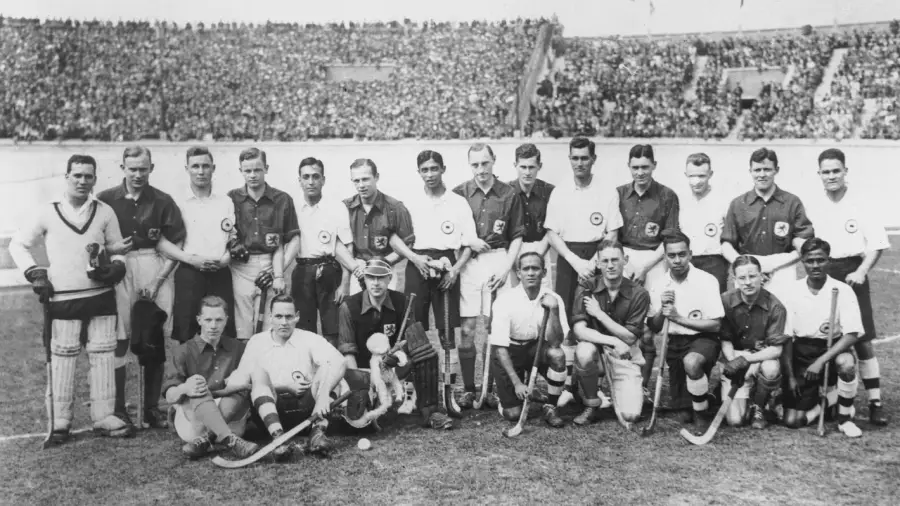
Although he never played hockey for India again after the 1928 triumph, he established Mohun Bagan hockey club in 1929 and lead the team to several honours. He also served as the secretary of the Bengal Hockey Association.
Leaving ICS: A Moral Break
Jaipal Singh Munda cleared the highly competitive Indian Civil Services examination with distinction, topping the interview round and earning a place among the most promising officers of his time. In 1928, while undergoing probationary training in England, he received an unexpected call to lead the Indian hockey team at the Amsterdam Summer Olympics. The colonial administration refused him special leave to attend the team’s preparations. Undeterred, he took a decisive call walking away from the civil service without hesitation and choosing to represent India on the world stage.
On his return to England, Singh was allowed to rejoin the ICS training, but he chose to quit the services and joined Burmah-Shell – a multinational oil company – serving as its senior executive between 1928-32. It made him the first Indian to hold the position of a covenanted mercantile assistant in a Royal Dutch Shell Group.
Political scientist S.K. Chaube, who studied tribal movements extensively, wrote that Jaipal Singh saw the ICS as “an instrument incapable of delivering justice to Adivasis, regardless of who operated it”.
This decision marked his full transition from personal success to collective struggle.
Political Journey
Jaipal Singh Munda’s formal political journey began in the early 1930s, when he returned to India after completing his studies and resigning from the Indian Civil Service. By 1930–31, he had begun engaging actively with tribal issues in Chotanagpur, especially land alienation caused by colonial laws, moneylenders and forest regulations.
During this period, he emerged as a sharp critic of both British administrators and Indian political elites who treated tribal regions as peripheral. Unlike many contemporaries, Jaipal Singh did not initially align himself fully with the Indian National Congress, believing that tribal concerns were being overshadowed by mainstream nationalist priorities.
Formation Of Adivasi Mahasabha
A defining moment came in 1938, when Jaipal Singh Munda founded and took leadership of the Adivasi Mahasabha in the Chotanagpur region. The organisation was created to politically mobilise tribal communities across present-day Jharkhand, parts of Odisha, Chhattisgarh and West Bengal.
Under his leadership, the Mahasabha articulated clear demands: protection of tribal land, recognition of customary laws, education in tribal areas, and political self-representation. This marked the first sustained attempt to create an independent, issue-based Adivasi political platform in eastern India.
Negotiating Nationalism And Autonomy
Between 1939 and 1945, Jaipal Singh Munda walked a careful line between supporting the freedom struggle and asserting tribal autonomy. He cooperated with national leaders on the goal of independence but remained openly critical of what he saw as the Congress’s centralised vision of India.
During World War II, he became increasingly vocal about the exploitation of tribal labour and resources for the war effort. His speeches from this period reveal a deep anxiety that independence, if achieved without safeguards, would merely replace British rule with internal colonialism.
Powerful Voice In Constituent Assembly
Jaipal Singh Munda entered the national political stage in 1946 as a member of the Constituent Assembly of India, representing tribal interests. He was one of the few independent candidates to have been elected to the Constituent Assembly. This phase remains the most documented and impactful period of his political life.
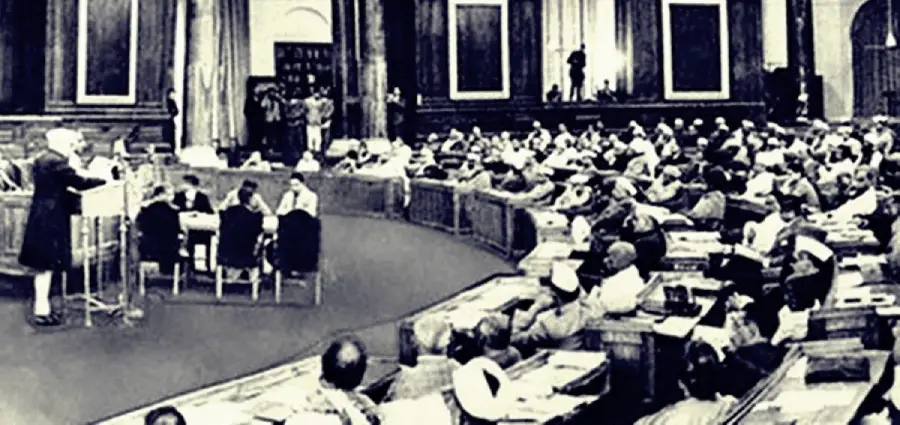
Between 1946 and 1949, he emerged as the most articulate Adivasi voice in the Assembly. He forcefully argued for constitutional protections for Scheduled Tribes, safeguards over land and forest rights, and respect for tribal identity. His speeches were notable for their emotional honesty, as he repeatedly reminded the Assembly of historical injustice suffered by Adivasis.
Though many of his demands were diluted, his interventions contributed to the inclusion of protective provisions for Scheduled Tribes in the Constitution, including safeguards related to administration of tribal areas.
B.R. Ambedkar, according to Assembly colleagues, listened attentively to Jaipal Singh’s interventions, recognising him as one of the few members who spoke not for an interest group but for an entire civilisational community.
In one of his most cited statements, Jaipal Singh reminded the Assembly that Adivasis were not minorities but the original inhabitants of the land, warning that freedom without justice would only change rulers, not realities.
Political theorist Christophe Jaffrelot later wrote that Jaipal Singh “introduced the moral vocabulary of indigenous rights into India’s constitutional discourse long before the term existed”.
Marang Gomke
Jaipal Singh Munda came to be known as “Marang Gomke”, meaning Great Leader in several Adivasi languages, as a mark of collective respect rather than a self-assumed title. The name emerged organically in the late 1930s and 1940s, when tribal communities began addressing him as Marang Gomke in recognition of his leadership of the Adivasi Mahasabha and his uncompromising stand on land, identity and self-rule.

His ability to articulate Adivasi concerns at provincial and national levels—particularly during the Constituent Assembly debates—gave him a stature that transcended formal political positions. The title reflected not authority bestowed by an institution, but moral legitimacy granted by the people, acknowledging him as a unifying leader who spoke for Adivasis in their own voice.
Electoral Politics
With the adoption of the Constitution, Jaipal Singh transitioned into electoral politics. In 1951–52, he contested and won the first general election, becoming a Member of Parliament in the Lok Sabha from Khunti.
This phase exposed him to the realities of parliamentary democracy. While he raised tribal issues consistently, especially land displacement and industrial projects, he often found himself isolated. Parliamentary politics, driven by party numbers and alliances, frustrated his principled approach.
Idea Of Jharkhand Is Born
The Adivasi Mahasabha made way for Jharkhand Party in 1949 under his leadership as a political expression of long-standing Adivasi aspirations for a separate state. Emerging from the organisational base of the Adivasi Mahasabha, the party articulated a clear demand for “Jharkhand” as a homeland for tribal communities spread across present-day Jharkhand and adjoining tribal-dominated regions. For Jaipal Singh, the party was not merely an electoral vehicle but a constitutional means to protect land, culture and self-governance within the Indian Union.
Consolidation
In the early 1950s, the Jharkhand Party quickly transformed into a formidable political force in Bihar’s tribal belts. Its message of identity and self-rule resonated deeply, translating into impressive electoral gains. In the 1952 Bihar Assembly elections, the party emerged as the principal opposition, winning 30 seats. It also won 4 Parliamentary seats. Jaipal Singh Munda’s leadership gave the party moral authority and intellectual clarity, allowing it to challenge entrenched political formations despite limited resources.
The party’s influence continued through the 1957 election. It won 34 Assembly and 5 MP seats. From 1957-62, he remained as MP from Khunti. In the 1962 election, Jharkhand party won 22 MLAs and 5 MPs, including him.
Merger With Congress & Disillusionment
In 1963, on the insistence of Pt Jawaharlal Nehru, Jaipal Singh took the controversial decision to merge the Adivasi Mahasabha with the Indian National Congress. He believed this would give tribal issues greater national visibility and access to power.
However, by the late 1960s, he realised that tribal concerns were frequently subordinated to electoral calculations.
His Words That Still Resonate
Among Jaipal Singh Munda’s most enduring statements was his warning that independence must not result in the continuation of colonial exploitation under Indian rule. He cautioned lawmakers that taking tribal land, culture and autonomy would amount to a betrayal of freedom itself.
Another of his core beliefs, repeated across speeches and writings, was that self-respect must precede development, and that economic schemes without dignity would fail the Adivasi people.
The Man At Home
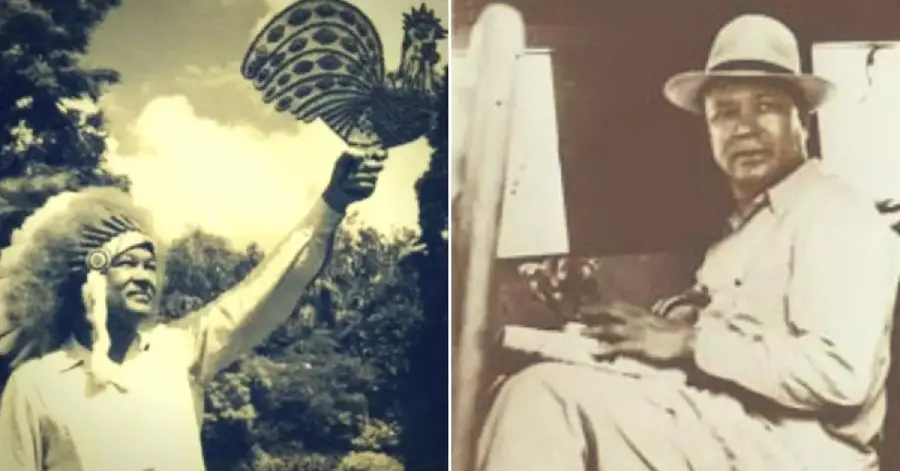
Jaipal Singh Munda’s children have described him as gentle, reserved and intensely principled. They recalled that he spoke little at home about politics, but insisted on discipline, reading and self-respect. Family members have shared that he loved gardening and walking in silence, finding solace in nature rather than social gatherings. Indigenous plants, in particular, held symbolic meaning for him—rootedness without rigidity.
Death & Legacy
Jaipal Singh Munda died on March 20, 1970. His passing received limited national attention, a fact many scholars see as reflective of the discomfort his politics caused.
Jaipal Singh Munda was not merely a tribal leader; he was India’s earliest indigenous statesman. He forced the nation to confront questions it still struggles to answer—about land, consent, dignity and belonging. Those who knew him remember a man of restraint and resolve.
Those who study him today recognise a voice that remains unfinished. India may have moved on, but Jaipal Singh Munda is still waiting to be fully heard.
Anthropologist Verrier Elwin, writing shortly after Jaipal Singh’s death, described him as “a man too honest for easy remembrance”.