






New Delhi/Hyderabad
In the dense expanse of the Nallamalla hill ranges, a quiet transformation is reshaping the relationship between people, forests, and wildlife.
At the Nagarjunasagar-Srisailam Tiger Reserve — India’s largest tiger habitat — over 250 youths from the Chenchu tribe are no longer hunters of the forest but its protectors, forming the frontline of anti-poaching operations and tiger tracking efforts.
The Nagarjunasagar-Srisailam Tiger Reserve situated in the forested Nallamalla hill ranges of Andhra Pradesh is the largest one in India, covering 3,728 sq km. Here, the Chenchu tribe, who were once traditional hunters and gatherers, have been given protection jobs to make them conservation partners. In India, the Chenchus are categorized under the category of the Particularly Vulnerable Tribal Groups or PVTGs.
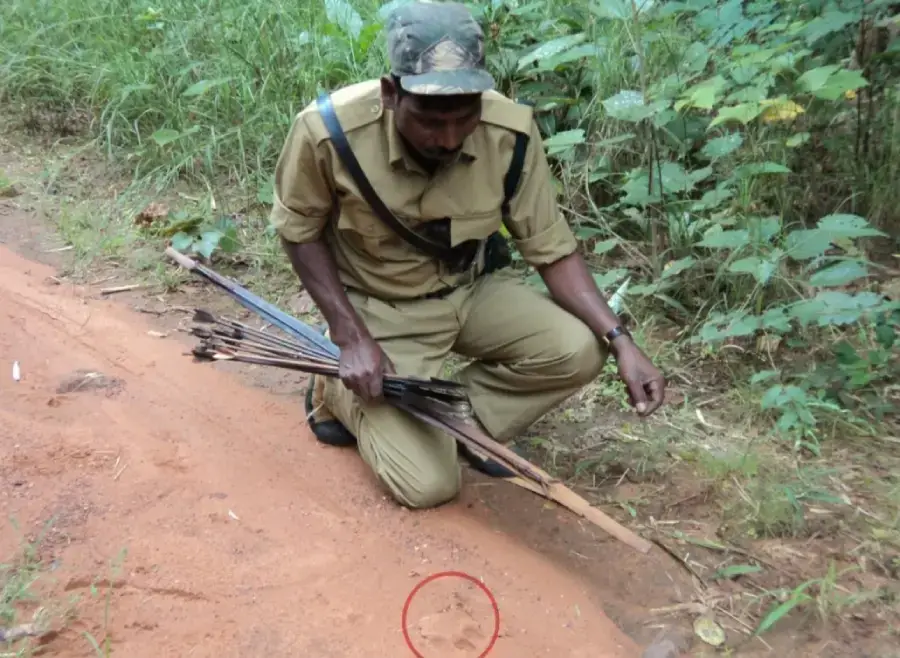
According to the tiger reserve management information, over 250 Chenchu youths are engaged as protection watchers in the anti-poaching camps where they work along with the forest department staff. They are also involved in tiger tracking using pugmarks and camera traps.
“When the Srisailam Dam was constructed by the irrigation department, a small Chenchu village was relocated outside the tiger reserve way back in the 1980s. But other Chenchu hamlets, some 21 in number (1500 families), are still in the core or the critical habitat area of the tiger reserve. In the buffer area, there are 32 villages,” B Vijaya Kumar, an Indian Forest Service officer and Field Director of Project Tiger at the Nagarjunasagar-Srisailam Tiger Reserve, told The Indian Tribal.
Nagarjunasagar-Srisailam attained the status of a tiger reserve in 1983. The Srisailam dam built across the Krishna River for irrigation and hydroelectricity is situated in the Nallamalla hills, a mountain range which lies in the Eastern Ghats and runs parallel to the Coromandel coast.
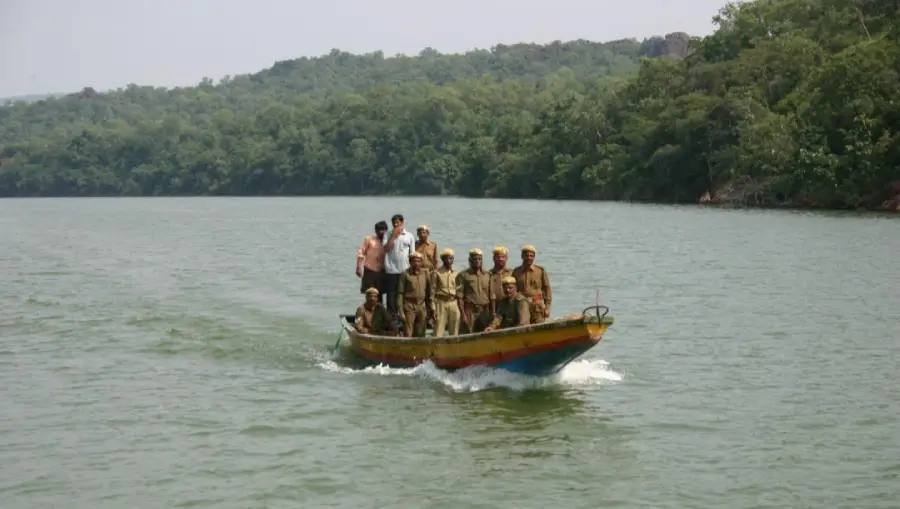
As protection watchers, a Chenchu youth earns Rs 15,000 per month and an additional Rs 2,100. “Many are working for a decade now in our base camps. They use the Android app M-Stripes (Monitoring System for Tigers – Intensive Protection and Ecological Status) to track tigers.” At the time of the conservation, the Nagarjunasagar-Srisailam Tiger Reserve management was conducting the phase three of the All-India Tiger Estimation.
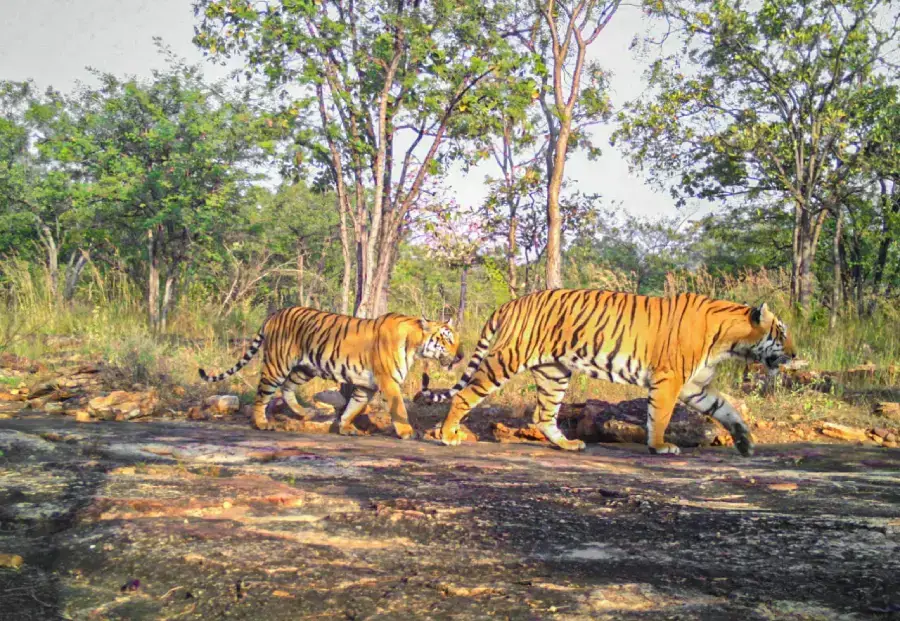
According to the 2022 National Tiger Conservation Authority report, India has an estimated 3,682 tigers. There were 63 tigers in Nagarjunasagar-Srisailam, according to the 2022 tiger report. The aim to reach around 90 in the awaited 2026 report which will be out somewhere around August.
Deputy Director of the Nagarjunasagar-Srisailam Tiger Reserve Vignesh Appavu G said that it was a win-win situation for both the forest department and the Chenchus. “We call them the son of the Nallamalla, as they know the Nallamalla forest and its terrain very well. The concept of anti-poaching base camps came into the picture from 2009 onwards. The Chenchus once hunted animals but now they are into conservation.
As the management started increasing the number of base camps, the Chenchus were deployed for work. Each camp has five protection watchers.” There are 63 base camps in the tiger reserve according to the website.
Yet, beneath this success story of conservation lies a more complex reality of transition and survival. Sources said that the Chenchus struggled to survive after their displacement from Nallamala. The forest is part of the Nagarjunasagar-Srisailam Tiger Reserve. Narasimha Reddy, who runs the Village Renewal Organisation located in the Nandyal district of Andhra Pradesh, primarily works with the Chenchu tribal community.
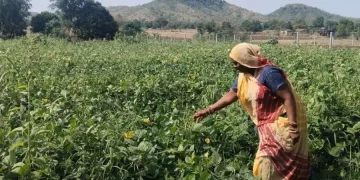
Reddy said he had worked on an agro-foresty model in four villages of Nandyal covering 250 acres which benefitted the Chenchus under a CSR project. It started in July 2022 and closed in December 2025. “Those who live outside now depend on labour works for livelihood. The collection of honey and herbs from the forest has come down at present. They struggle a lot as they are not into full-time farming due to the lack of knowledge as well as inputs. A few of them who try to farm always depend on the rains and cultivate pulses,” Reddy said.
Neeraja Pasupuleti, a Professor of Botany at the Cluster University in Kurnool district of Andhra Pradesh, documents the traditional knowledge of the Chenchus as an ethno-botanist. “The tiger reserve interfered with their lifestyle as they depended on forest produce for survival. They still prefer to live inside the forest. The Chenchus have always lived in harmony with the nature and the tiger. Those who still live inside the tiger reserve love to collect honey for which they can walk up to 30 km. The Chenchus have rich traditional knowledge.”
The Professor also shared the mythological story of the Narasimha avatar of Vishnu who married Chenchu Lakshmi, a woman from the Chenchu tribe, after killing Hiranyakashipu. The wedding took place in the Nallamalla forest.
Just like the Chenchus who have been employed in Nagarjunasagar-Srisailam, local youths are also working in Rajasthan’s Sariska Tiger Reserve as tiger trackers. As at present, relocation has to happen on a voluntary basis, discussions and awareness camps are being organised in strategic Chenchu villages where people have shown an inclination towards relocation. The lifestyle of the Chenchus has always been in tune with the forest but now it is gradually changing. Kumar assured the relocation process has to follow all legal procedures and cannot be a quick task. There is always a mixture of feelings concerning relocation and so a cautious approach is needed, he added.
In the shifting landscape of conservation, the Chenchus stand at a crossroads — embodying both the promise of community-led wildlife protection and the challenges of adapting to a rapidly changing forest economy.