

Raipur/New Delhi
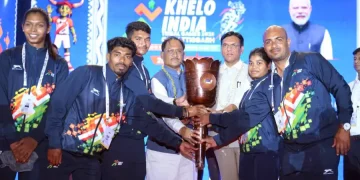
On a stage designed to spotlight India’s emerging tribal athletes, two stories rose above the rest—distinct in their struggles yet united by an unbreakable will to endure. At the ongoing Khelo India Tribal Games (KITG) 2026, gold medals were not merely won, they were wrested from circumstances that might have ended many sporting journeys before they truly began.
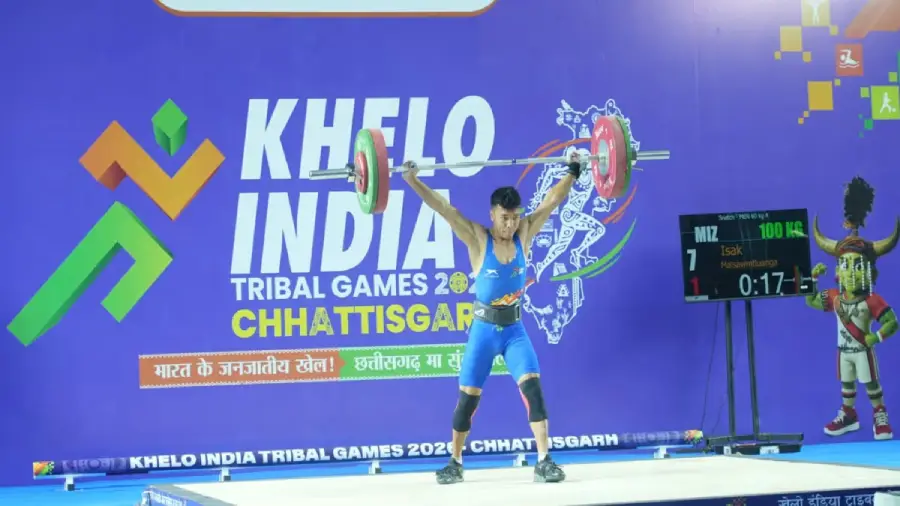
For Isak Malsawmtluanga, an 18-year-old from Mizoram, the path to the top of the podium in the men’s 60kg category was shaped by grief long before it was defined by strength. Orphaned before he turned 16, Isak had once stood at the edge of giving up weightlifting altogether. The loss of both parents—his father in a road accident and his mother after a prolonged illness in a span of just 2 years—left him emotionally shattered and financially uncertain, forcing him to confront responsibilities far beyond his years.
“Losing both my parents broke me completely from inside,” he said, recalling a period when the sport that had once given him direction began to feel meaningless.
Yet, what followed was not withdrawal but quiet rebuilding. His childhood coach, Soma, refused to let him drift away from the sport, repeatedly urging him to continue. At the same time, his aunt and uncle stepped in, providing him a home in Aizawl and ensuring his training and studies remained uninterrupted despite limited means. Their small eatery became, in many ways, the foundation of his comeback.
Training later at the Sports Authority of India’s National Centre of Excellence in Imphal, Isak began to stitch together a career through perseverance, first a silver at the Youth National Championships, then podium finishes at junior and senior national events. But even as his form improved, setbacks persisted. A troubling back injury in the lead-up to the KITG nearly forced him out of contention.
Ignoring advice to sit out, he chose instead to compete. Trailing after the snatch, Isak delivered a decisive clean and jerk lift to seal gold with a total of 235kg—his finest performance yet. The moment that followed said as much about his journey as the medal itself. His uncle, who had travelled with him as he always does, rushed forward and lifted him in an embrace that carried years of shared struggle.
“My uncle always travels with me for competitions since my father passed away,” Isak said. “As soon as I won, he lifted me in his arms. At that moment, I realised how happy he was.”
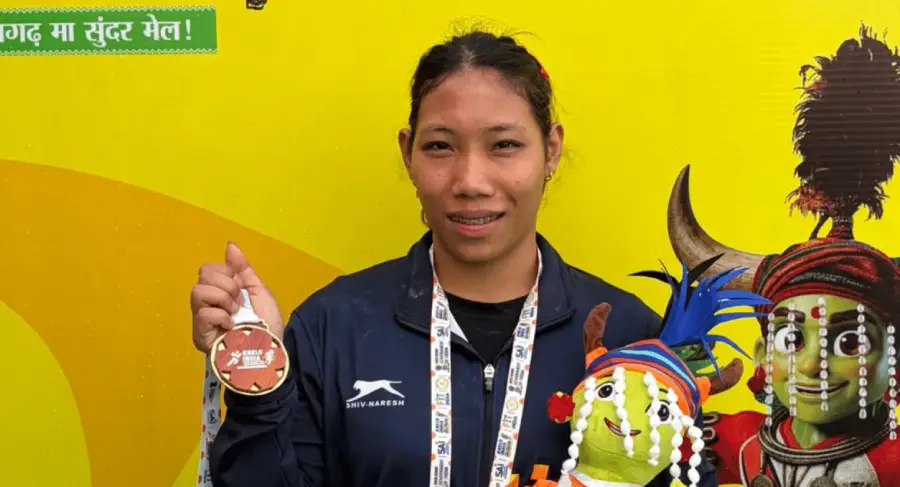
If Isak’s story is one of loss and recovery, Anai Wangsu’s journey is defined by persistence in the face of a body that often refuses to cooperate. The 21-year-old from Arunachal Pradesh arrived in Raipur carrying not just expectations but the burden of a chronic gastric condition that has troubled her since 2019. The illness strikes unpredictably, draining her strength and leaving her dehydrated—an especially daunting challenge in a sport that demands peak physical stability.
Days before the competition, her condition worsened to the point that she had to be hospitalised and put on intravenous fluids. Participation itself seemed uncertain. Yet, almost immediately after discharge, she returned to training, determined not to let another opportunity slip away.
Her career until then had been marked by near-misses. Medals had come—bronze at youth nationals, silver at multiple Khelo India events, including the university games—but gold had remained elusive. One memory, in particular, lingered: missing the top spot at a national event because the clock ran out before she could complete a decisive lift.
“I cried a lot that day. It felt like all my hard work had gone to waste,” she recalled.
In Raipur, she ensured there would be no repeat. Competing in the women’s 58kg category, Anai produced a composed and determined performance to finally claim gold—an achievement that carried meaning beyond personal validation. It was also the fulfilment of a dream nurtured by her elder brother, a former national-level weightlifter who first introduced her to the sport and pushed her to pursue it seriously.
“I had won bronze and silver medals in the past, and everyone in my family kept asking me when I would win a gold medal. Now, everyone is happy that I have finally achieved that goal,” she said.
Her journey has been shaped as much by circumstance as by ambition. Growing up in the Wangcho tribal community, she initially dreamt of becoming a boxer, inspired by popular culture, before being guided towards weightlifting. Selection to a national training centre in Lucknow marked a turning point, but the COVID-19 pandemic disrupted that progress, forcing her back home where limited nutrition and facilities worsened her health condition.
“I work very hard, but sometimes my health suddenly deteriorates. I don’t understand why my body stops supporting me,” she said, a reflection of the uncertainty she continues to battle.
What binds Isak and Anai is not just their medals but the nature of their journeys—both shaped by forces beyond their control, both sustained by support systems that refused to let them falter, and both culminating in moments of redemption on the same platform.
Their victories also signal a broader shift. The Northeast, long known for its sporting culture, is steadily asserting itself in disciplines like weightlifting, backed by grassroots structures and institutional support. Athletes from remote and tribal communities are not only participating but excelling, often against odds far greater than those faced by their peers elsewhere.
In Raipur, amid the cheers and celebrations, these two stories stood as reminders that sport is rarely just about competition. For some, it becomes a means of survival, a way to process loss, to fight limitation, and to reclaim agency over one’s life.
As the lights dimmed on another day of competition, the gold medals around Isak and Anai’s necks glimmered not just as symbols of victory, but as markers of journeys that refused to be defined by hardship.