

Banswara
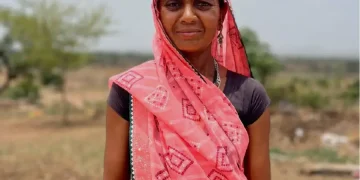
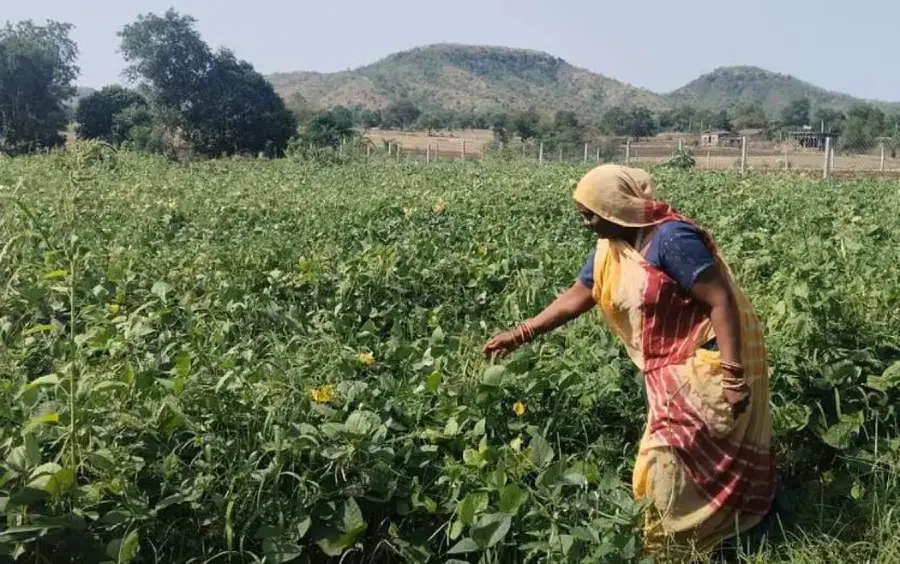
Taku Devi’s story is a story of seeds and tradition. Fifty-five-year-old Taku lives with her husband Laluram and son Sunil. Like many women in the region, her life was once limited to household responsibilities and subsistence farming. But today she is known as a custodian of indigenous seeds and a strong voice for traditional agriculture.
Taku’s journey began in 2019 when she joined the SAKSHAM group of Vagadhaara. Through regular meetings and discussions, she understood the importance of traditional farming, indigenous seeds, and biodiversity conservation. These learnings touched her heart, as they helped her reconnect with her ancestors’ agricultural traditions and knowledge. Over time, she also became an active member of the Agriculture and Tribal Swaraj Organization.
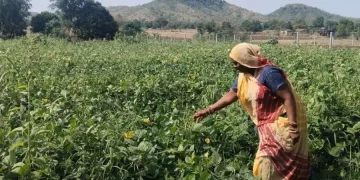
After gaining new confidence, Taku started collecting and preserving indigenous seeds such as wheat, maize, kuri, kodra, kang, and other millets that her family had grown for generations. Initially, she obtained seeds from elders in her family. Later, through Vagadhaara, she received new varieties which she successfully cultivated on her land. She carefully stores these seeds at home and uses them every year, ensuring their continuity.
Along with farming, Taku has planted ten to fifteen types of fruit-bearing plants around her home, including mango, guava, and lemon. Recently, she cultivated moong and earned nearly twenty thousand rupees from it, making a significant contribution to her family’s income. Surplus grains and produce are either sold in the local market or shared with other women in the village.
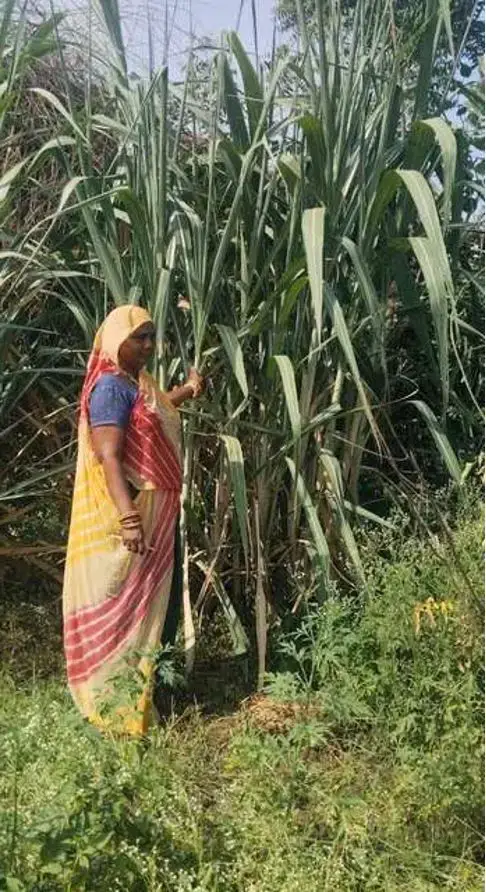
Most importantly, Taku does not keep this knowledge to herself. She shares her learnings with women who are unable to attend group meetings and encourages them to adopt indigenous seeds and traditional farming practices. Through her efforts, she is contributing to reviving biodiversity, improving nutrition, and strengthening livelihoods — one seed at a time.
Taku’s story reminds us that when women receive knowledge and community support, they become powerful agents of sustainable change for their families and villages.
The story of Meera Devi, a resident of Jajor Kanta village, is one of resilience. Meera has been engaged in farming for the past three decades. Born into poverty, she lost her mother in childhood and never had the opportunity to attend school. She started farming at a very young age and has remained connected to her village throughout her life.
Now in her mid-fifties, Meera lives with her two grandsons. Her son passed away years ago due to alcohol addiction. After his death, her daughter-in-law returned to her parental home and has not maintained contact with the family since. Because of this, it became difficult for Meera to access government schemes, as many of them require the mother’s consent or thumb impression.
Understanding government procedures is not easy for anyone, especially for someone who never learned to read or write. But Meera did not give up. She gradually learned how to obtain essential documents such as Aadhaar cards and ration cards, how to collect forms from the tehsil office, and how to get signatures from the local sarpanch.
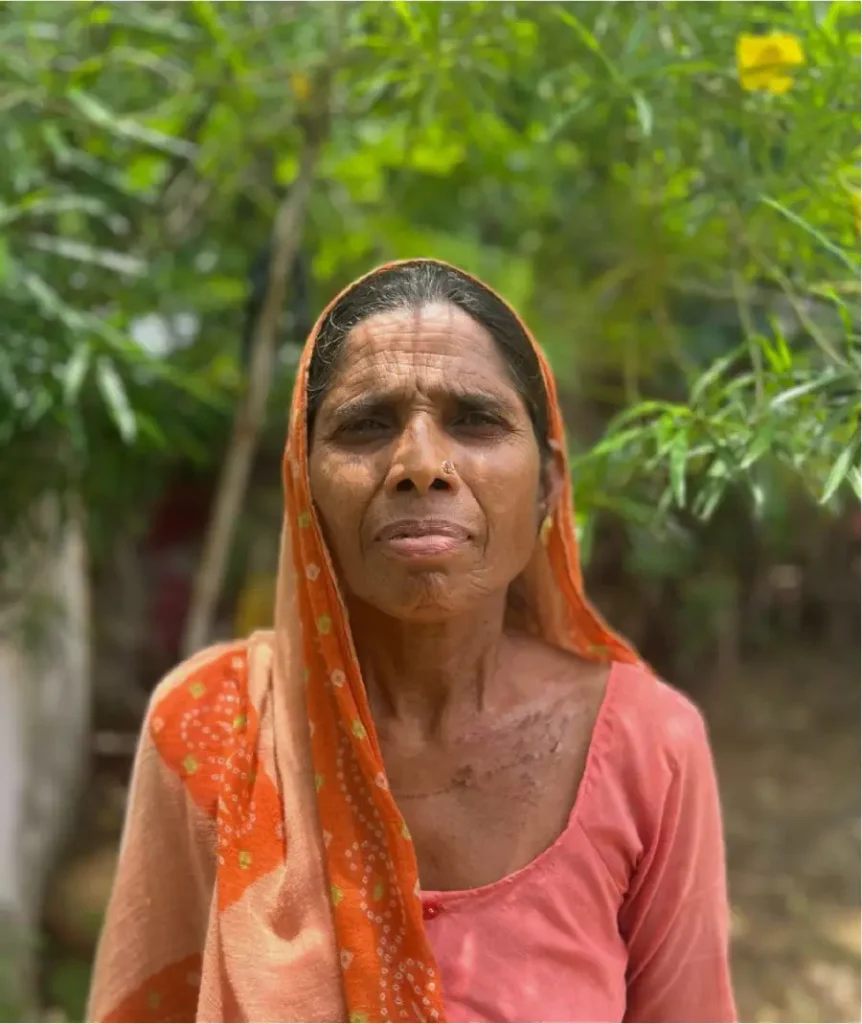
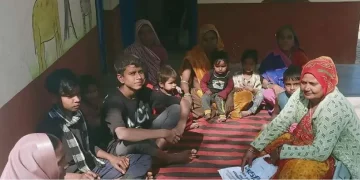
The knowledge she gained through struggle is now shared with others in her village. She goes door-to-door, explaining necessary documents and processes in simple language. Although she could not secure benefits under the Palanhar Yojana for her own grandson due to her daughter-in-law’s absence, she continues to work tirelessly for other children.
Recently, Meera helped a family whose children lost their father to suicide. With Meera’s guidance, the family received benefits under the Palanhar Yojana, and the children began receiving regular assistance. Through word-of-mouth and community participation, Meera has become a strong link for the Palanhar Yojana in her village. Her vocal leadership ensures that vulnerable and needy children are not forgotten. Driven by her life experiences and compassion, her work is helping deliver government assistance to those children who need it most.
Girida Ninama of Kanela village says, “The work these women have done is no less than that of a government employee. The panchayat now considers them motivational workers at the village level.”
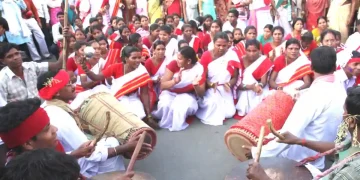
“Women like Indra Devi, Mani Devi, Meera Devi, and Taku Devi are not just beneficiaries for us, but leaders of community transformation. The objective of Vagadhaara is that tribal women should determine the direction of their own development. These women have shown that when leadership emerges from within the community, change becomes sustainable and self-reliant,” says Paramesh Patidar, a senior functionary of Vagadhaara.
(Vikas Meshram is a social development worker and writer)