




Bastar/New Delhi
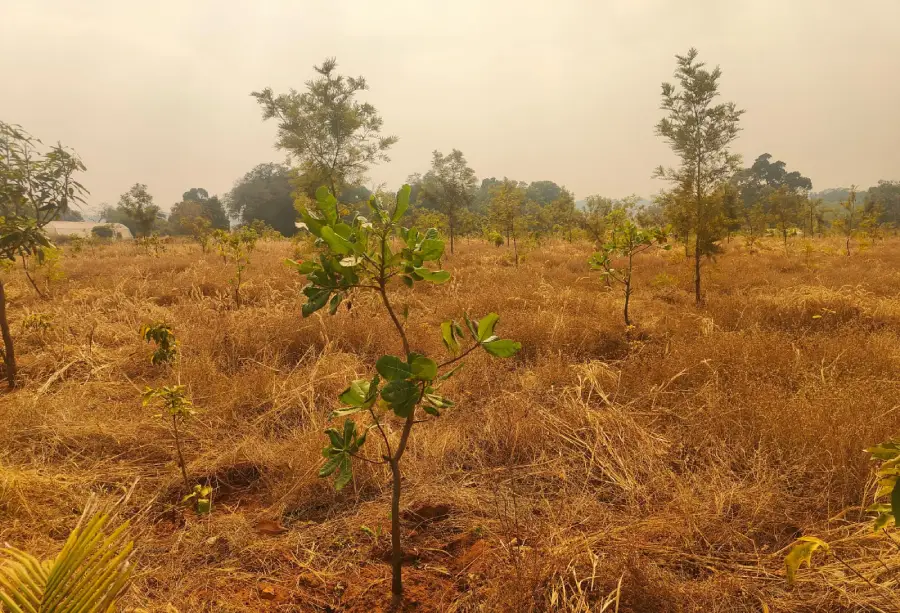
Coffee, one of the world’s most traded tropical commodities, is now part of an ambitious experiment unfolding in the tribal heartland of Bastar in Chhattisgarh. Even as the district explores premium branding and niche markets for “Bastar coffee”, the ground reality in villages like Dilmili tells a more complicated story — one of ecological limits, water scarcity and uneasy crop transitions.
According to the Food and Agriculture Organization of the United Nations, coffee is the most widely traded tropical product in the world, with nearly 25 million farming households contributing about 80 percent of global output. While production remains concentrated in developing countries, demand is strongest in Western markets.
In India, coffee cultivation is largely associated with regions such as Coorg in Karnataka, Koraput in Odisha and Araku in Andhra Pradesh. Bastar, however, represents a relatively new and indigenous entry into this landscape.
Coffee In Insurgency-Impacted Bastar
Coffee production in Bastar began around 2018 as an effort to enhance the incomes of small and marginal farmers. The crop was first introduced in Darbha block across nearly 20 acres. Subsequently, Dilmili and Mundagarh villages were included under experimentation and extension activities led by the College of Horticulture and Research Station, Jagdalpur.
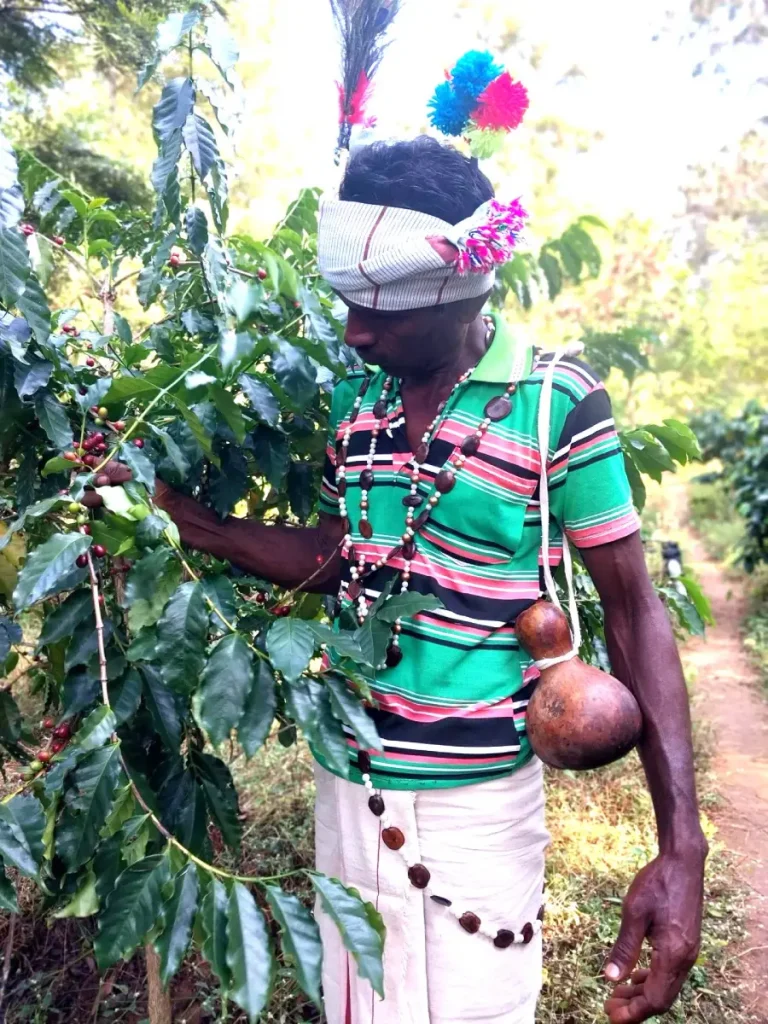
Geographically, Bastar appeared promising. The district lies around 600 metres above mean sea level, while Dilmili sits even higher at about 750 metres — an elevation considered suitable for coffee plantations. Initial soil tests and slope assessments were encouraging. But as the project progressed, water scarcity emerged as a major obstacle, particularly in Dilmili.
Lack Of Water: Where The Experiment Faltered
“As part of the coffee production exercise, initial soil tests proved that the village was suitable. Its slope was also ideal. But as the project progressed, in Dilmili, water shortage was noticed. This is not the case in Mundagarh village though, as it is a forested area with good water availability,” Durjan Kashyap, former sarpanch of Dilmili Gram Panchayat, told The Indian Tribal.
Kashyap pointed out that Dilmili, located about 40 km from Darbha, is largely rocky terrain. “Rainwater does not infiltrate into the ground. That is why bores have failed,” he said.
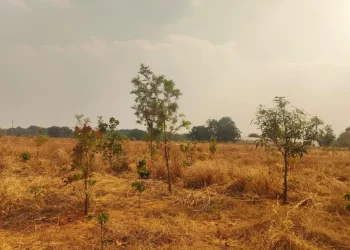
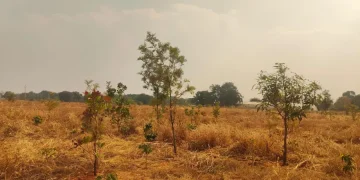
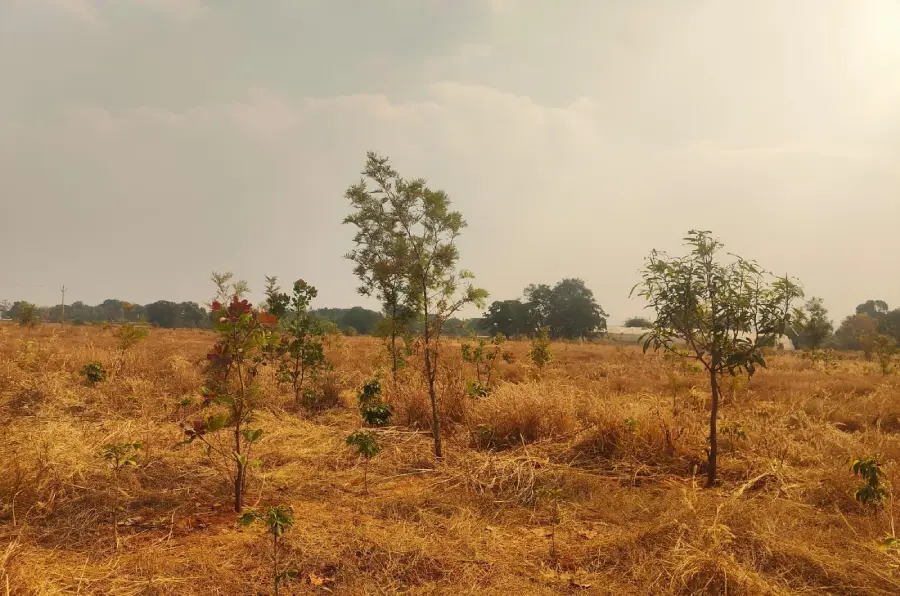
Coffee plants typically start yielding from the fourth year after plantation. In Dilmili, planting began around 2022, but nearly 25 percent of the plants have already died or turned yellow due to water stress. Kashyap said traditional crops may have been a better fit. “Farmers here have traditionally cultivated kosra, a little millet. Perhaps millets would have been better suited.”
Collective Farming, Limited Water
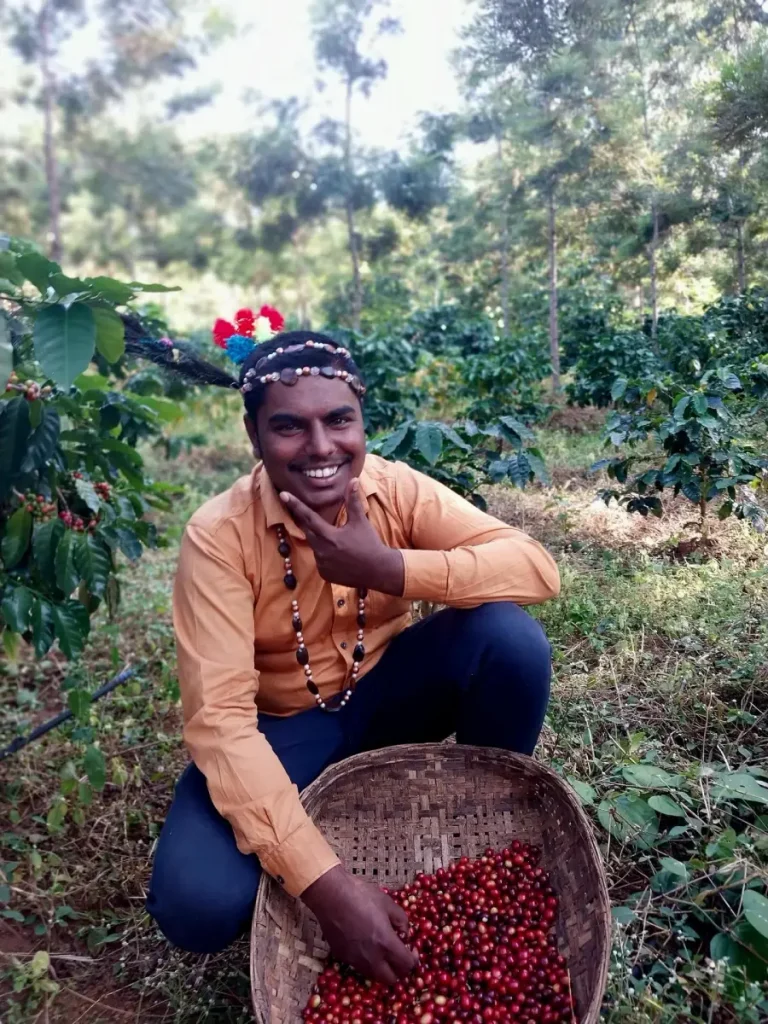
In Dilmili, coffee cultivation is being undertaken by a samuh (group) called the Baghel Krishi Kalyan Samiti. The group comprises 33 farmers from the same extended family, collectively farming about 100 acres of contiguous land. The entire area is under coffee, interspersed with silver oak (Grevillea robusta), black pepper and fruit trees such as mango, aimed at income diversification.
Kulay Joshi, who manages the plantation in Dilmili, said fruit trees have been planted at intervals of ten metres. “Silver oak is a hardy species and that is why it has survived. But the weak species are having difficulty,” he told The Indian Tribal, adding that while borewells initially yielded water, further drilling failed even at depths of 600–700 feet. “The underground water table is falling, mostly driven by overextraction,” he said.
Searching For Solutions
To address the crisis, a proposal for lift irrigation has been submitted to the zilla and janpad panchayats. The plan involves drawing water from the nearby perennial Koichimari nullah, located about two kilometres away, which flows into the Kanger Valley National Park.
GP Nag, head of the horticulture department in Bastar, admitted that the initial site selection had shortcomings. “Even at 800 feet, water was not available for borewells, although initially it was. At that time, the site selection proved to be wrong. The borewells failed as adequate tests weren’t carried out,” he said.
Currently, water is being supplied through tankers in an effort to keep the plantations alive. However, Kashyap said the lift irrigation project appears uncertain due to unreliable power supply. Although an engineer surveyed the site in November last year, no progress has been made since. “Solar power may also not work due to inadequate pressure,” he added.
Farmers Hedge Their Bets
For farmers like Jalnu Baghel, the shift to coffee has been fraught with uncertainty. “The plantation happened four years back but still there is no yield despite bores. It has not been a success. The farmers can only depend on monsoon showers,” he said. “Coffee plants in shady areas survive, but others turn yellow.”
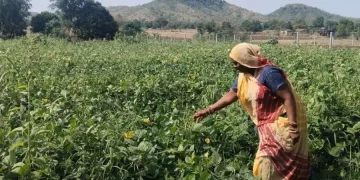
To sustain his family, Baghel has turned to rose cultivation on about two acres, supplying flowers to Jagdalpur. “All of us have to do some kind of work for survival,” he said. Some members of the samiti now earn modest wages by maintaining the coffee plantation, cleaning fields and tending trees.
During his tenure as sarpanch, Kashyap said check dams were constructed across nullahs under MGNREGA to improve water retention. “In hilly areas, rainwater just flows down as runoff and does not stop. That is why the water level has gone down,” he said. Kashyap himself now cultivates palm oil, supplying produce to southern India.
Ecological Concerns Beyond Bastar
The expansion of coffee plantations is not without environmental consequences. In Karnataka, conservationists point out that abandoned and fenced coffee estates are disrupting elephant corridors. “In Hassan district, many coffee plantations have solar-powered fences around the estates which obstruct the movement of elephants and push them to new areas. It is a kind of displacement,” said conservationist Ananda Kumar, adding that elephants often seek tree cover within coffee estates.
According to the international non-profit Rainforest Alliance, coffee’s role in forest landscapes is complex. “While coffee production has contributed to deforestation in certain regions and over some periods, it can also be part of forest protection and resilient farming systems when produced responsibly,” the organisation said in an email response.
The Alliance noted that shade-based agroforestry systems can retain tree cover, support biodiversity and store carbon. “The real risk today is not coffee itself, but how and where agricultural expansion happens, and whether farmers have the incentives and support to protect forests and diversify livelihoods,” it said.
Premium Branding Amid Production Limits
Despite limited production, the Bastar administration is exploring the creation of a dedicated market for Bastar coffee through a proposed Memorandum of Understanding. Plans include launching a dedicated website for premium branding and marketing, along with Bastar turmeric. Products such as coffee jars and pour-over kits are also being envisaged.
For now, however, Bastar coffee remains far from mass production. Whether Dilmili can overcome its water challenges and emerge as a viable coffee-growing hub remains uncertain. As the horticulture department continues to monitor the situation, the experiment raises a larger question — whether crops like coffee and palm oil are appropriate for tribal regions traditionally suited to millets and diverse food systems.