



New Delhi/Jalpaiguri
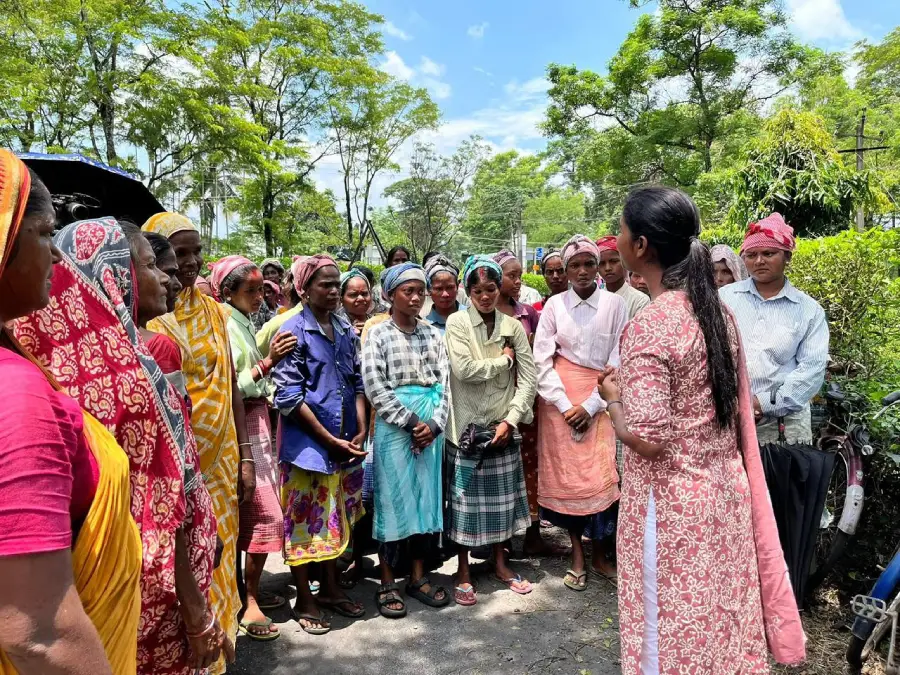
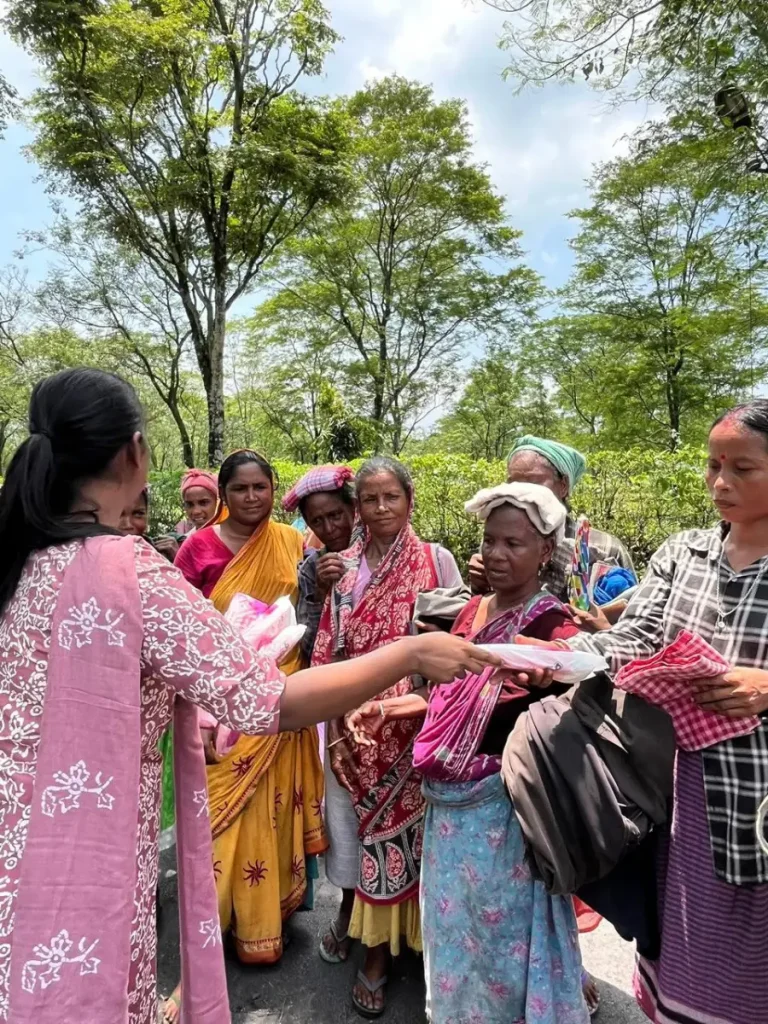
Armed with pads, Priti Minz, who belongs to the Oraon tribal community, visits the tea gardens of Jalpaiguri district in West Bengal. Famous for its tea gardens since colonial times, this district, situated in the northern part of West Bengal, has around 185 gardens. But due to the absence of toilet facilities in most of them, women workers who pluck tea leaves work for long hours from morning till late afternoon. This gives rise to major health issues when they undergo menstruation every month, as there are often long gaps when they go without using urinals.
“During my visits to the tea gardens, I found that women workers lack awareness about health issues, especially those related to menstrual health and hygiene. As they cannot afford to buy pads due to low wages, women often use dirty cloth pieces and suffer from infections and cervical cancer. Most are also casual in their approach towards periods. Sometimes, the cloth pieces are used for a long time. As part of my social work, I have submitted requests that common bathrooms be opened in the gardens, at least for women’s use during menstruation,” Minz told The Indian Tribal.
Minz, who is in her late 20s, started working with two non-profits around 2013–2014. This made her both knowledgeable and confident. Initially, she started with an environmental NGO based in Oodlabari town of Jalpaiguri. At that time, she had no idea how to stand by common people and raise their issues. Her experience with the NGO through awareness meetings on human–wildlife conflict, which is very high across North Bengal, made her confident. The NGO also conducts annual camps on river rafting. After that, she joined another NGO in Oodlabari that worked on human trafficking and child rights.
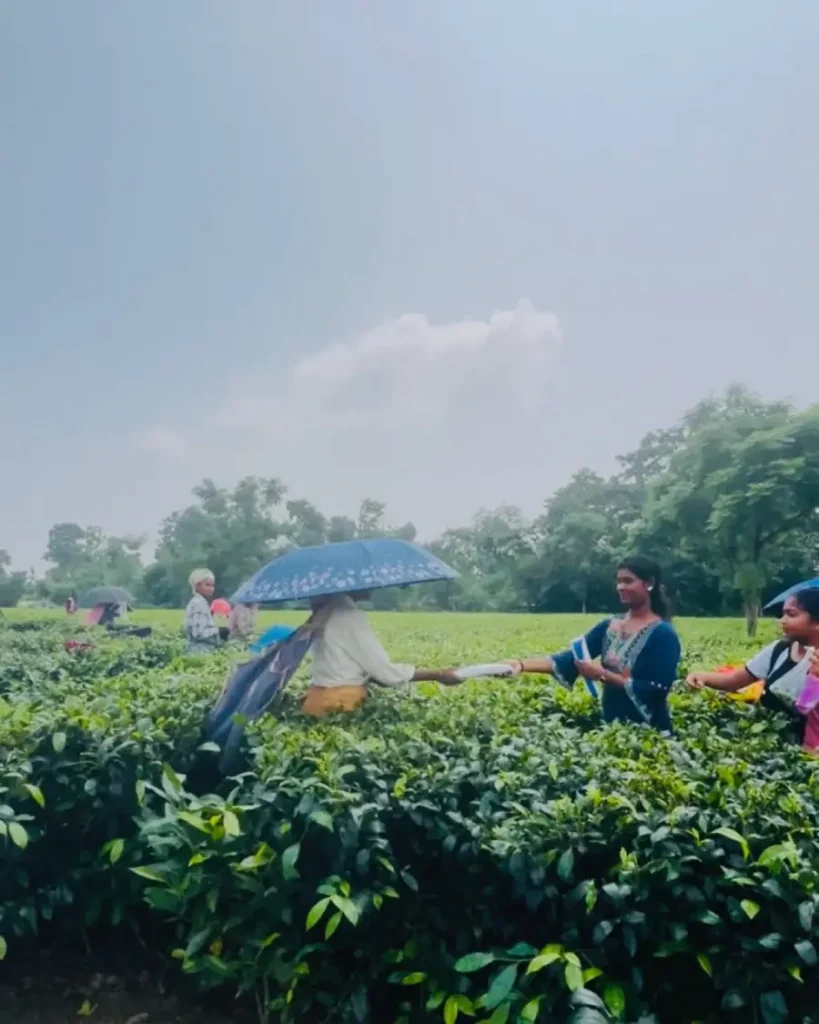
“When a few researchers from TISS (Tata Institute of Social Sciences) visited the tea gardens of Jalpaiguri to study the trafficking issue in 2015, I was selected for a survey in 18 tea gardens out of 1,000 people and received a certain amount for the work. This motivated me to start my own work individually from 2016 onwards,” Minz said.
Fighting Menstrual Taboo
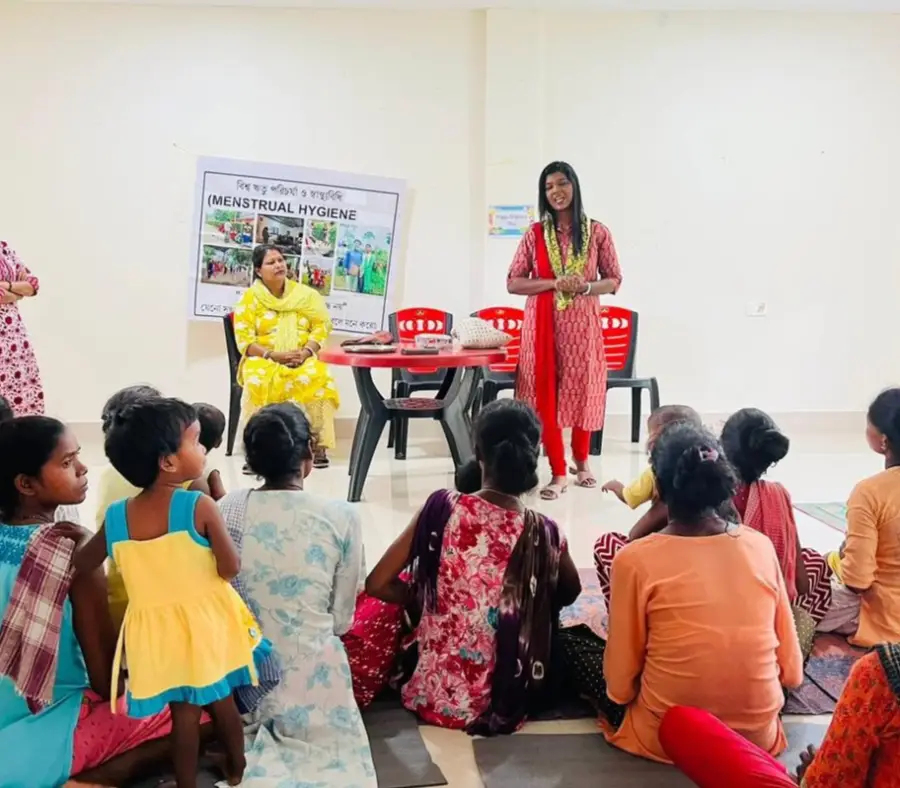
As Minz began visiting tea gardens to study trafficking, she gradually realised that the lack of awareness about menstruation was also a huge problem that impacted women’s health but was rarely talked about. Once, she came across a woman who could not get out of bed or walk due to a vaginal infection.
“I wanted to make women aware about menstrual hygiene, a topic that is still taboo in society. I thought of distributing sanitary pads because going and talking to these women empty-handed made no sense. I wanted to work with a friend, but the person later backed out. So, I was on my own in this journey,” she said.
Continuing to purchase pads has not been easy. Monthly expenses come to around Rs 3,000 for three to four visits to the gardens. Her job as a classical dance teacher at a Bengali-medium private school called Shishu Shopan, which is up to Class 5, helps to an extent. Sometimes, she gets pads at lower rates—around Rs 6 per piece—from ICDS (Integrated Child Development Services) centres and ASHA workers who distribute pads at subsidised rates.
“As my work has gained traction on social media, I now receive assistance from people through my posts on Facebook. Support arrived in 2025,” she said.
Future Vision
Threats and non-cooperation, especially at the beginning of her journey, have not deterred Minz, who holds a diploma in civil engineering. She has faced resistance mostly from tribal groups. However, there has also been a noticeable change in people’s attitudes.
“At present, many men come forward and want me to spread awareness,” she said.
A passionate dancer, Minz does not limit herself to her work at Shishu Shopan. She is also a make-up artist and teaches dance free of cost to those who cannot afford to pay. At her home-run centre, Jhumur Nrityagan, there are 42 such students.
“Most Bengalis prefer Rabindra Nritya (Tagore dance), but I also try to nurture tribal dance forms, especially the Oraon dance, which is a bit different from that of the Santhali tribe,” she said.
For her work, Minz was invited to Lakh Takar Lokkhi Labh, a Bengali game show for women aired on the Sun Bangla channel. In the future, she wants to set up pad-making machines for single mothers so that they can earn a livelihood and support their children.
On February 10, the West Bengal government honoured her in recognition of her decade-long work. Minister Bulu Chik Baraik handed over a certificate on behalf of Chief Minister Mamata Banerjee to Minj at her residence in Odlabari of Jalpaiguri district.