


New Delhi
Nagaland
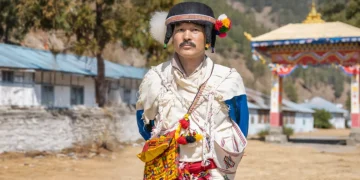
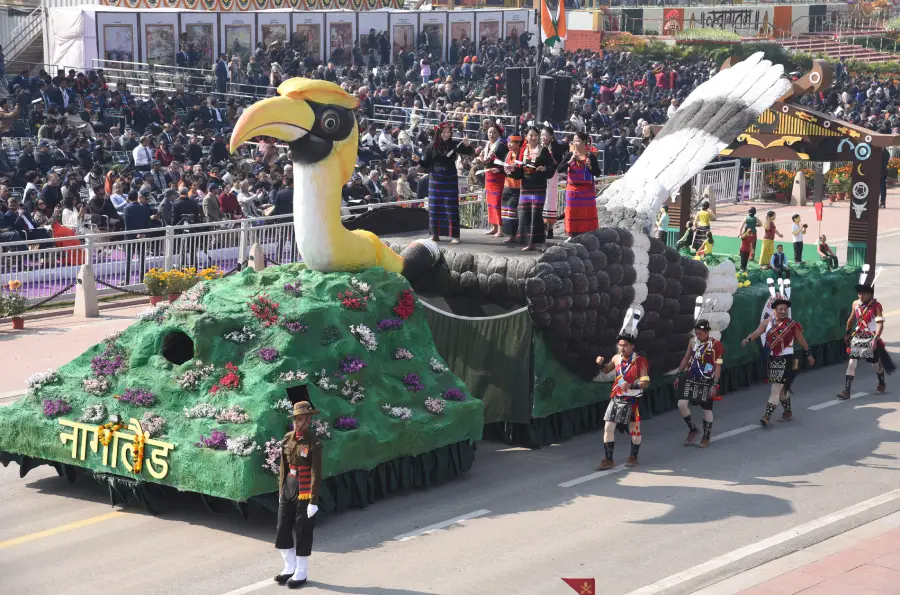
Nagaland made a striking return to the Republic Day parade after 14 years with a tableau centred on the Hornbill Festival, projecting it as a powerful symbol of culture-led development. The display brought together traditional Naga architecture, colourful tribal attire and dance forms to underline the state’s rich ethnic diversity. By foregrounding the Hornbill Festival, Nagaland showcased how indigenous traditions can drive tourism, livelihoods and global cultural recognition.
The tableau linked ancestral customs with contemporary aspirations, presenting self-reliance not merely as economic growth but as pride in identity. It reflected how community participation, local crafts and cultural knowledge are being positioned as engines of sustainable development, aligned with the broader national vision of Atmanirbhar Bharat while remaining deeply rooted in tribal heritage.
Chhattisgarh
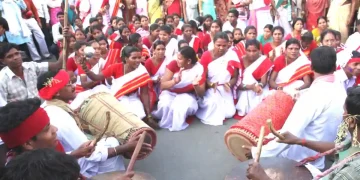
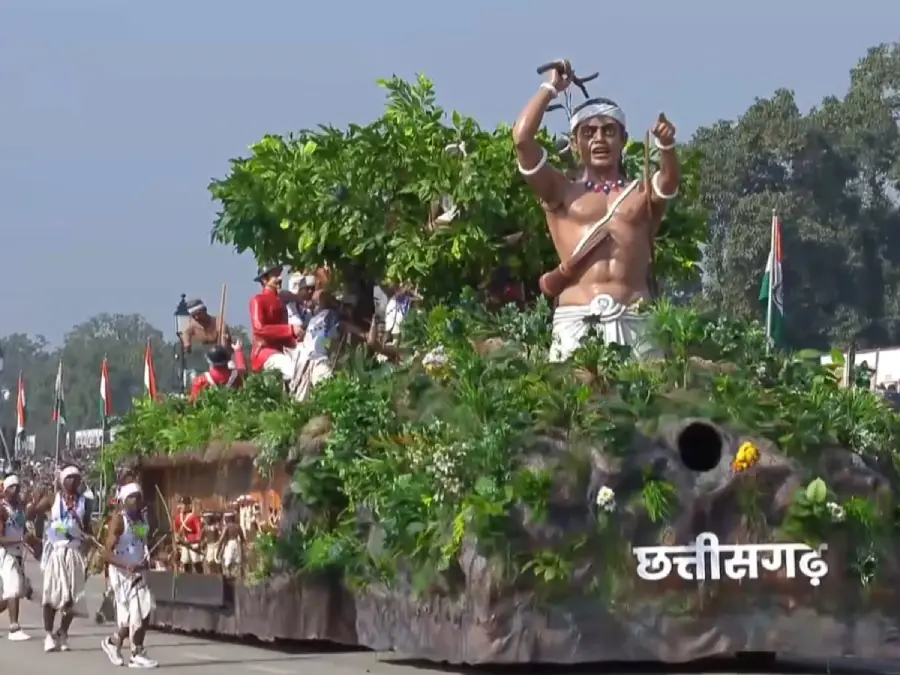
Chhattisgarh’s tableau carried a strong historical and tribal assertion through the theme “Vande Mataram – The Mantra of Freedom.” It highlighted the state’s proposed tribal digital museum, envisioned as a space to document and honour tribal uprisings against colonial rule. Central to the depiction were legendary figures like Veer Gundadhur of the 1910 Bhumkal rebellion and Shaheed Veer Narayan Singh, portrayed as symbols of sacrifice and resistance.
Folk artistes from the Dhurwa community added movement and emotion, reinforcing the living nature of tribal history. The tableau positioned technology as a tool to preserve memory and educate future generations, blending modern digital storytelling with the legacy of tribal courage and collective struggle.
Odisha
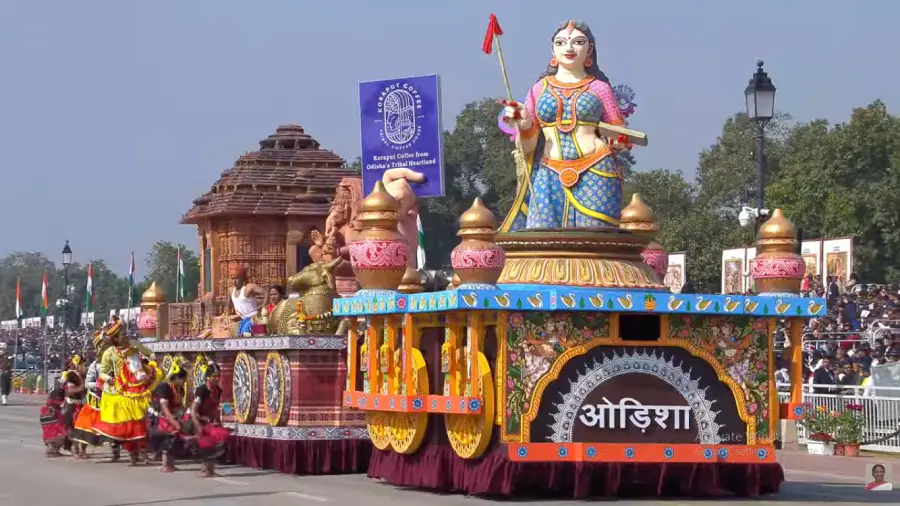
Odisha’s “Soil to Silicon” tableau seamlessly connected tribal roots with innovation-driven growth. The display celebrated traditional livelihoods such as handloom weaving, handicrafts and indigenous produce, while simultaneously highlighting the state’s growing role in technology and skilled human capital. Tribal empowerment featured prominently through symbols like Koraput coffee and folk art, representing sustainable, community-based economies.
Cultural motifs, including the Konark Sun Temple replica, Pattachitra art and the Jagannath chariot wheel, anchored the tableau in Odisha’s civilisational heritage. Folk dancers performing the Chaiti Ghodaa dance added vibrancy. Overall, the tableau conveyed a narrative where tribal knowledge, women-led development and modern industry coexist, shaping an inclusive and self-reliant future.
Manipur
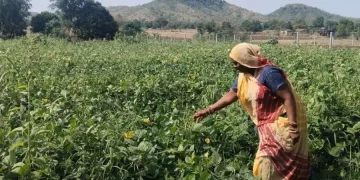
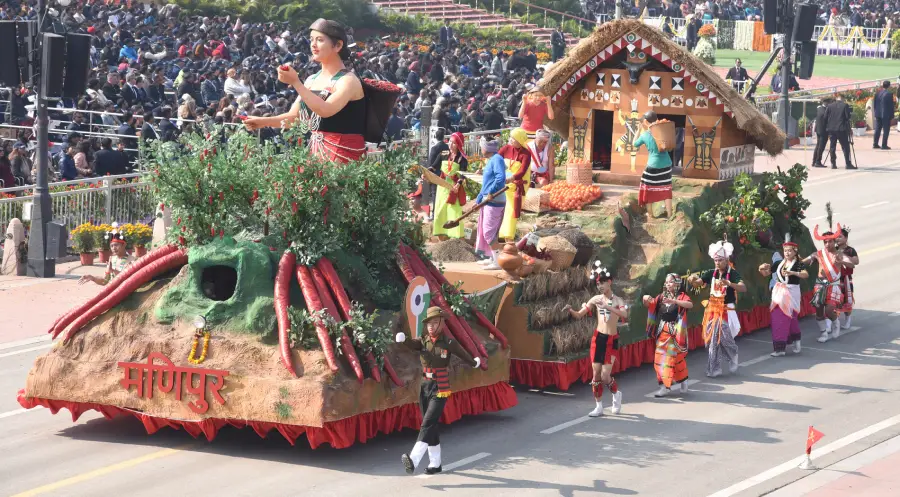
Manipur’s tableau told a story of indigenous agriculture reaching global markets, with a strong tribal and ecological focus. At the forefront was the Sirarakhong Hathei chilli from the Ukhrul hills, symbolising women’s participation and grassroots empowerment. The central section highlighted Chak-Hao, Manipur’s aromatic black rice, shown through traditional processing methods and its journey to international markets.
The rear showcased the Tamenglong Orange against a traditional hill house, reinforcing links between land, culture and livelihood. GI tags and organic certification symbols underscored value addition and farmer self-reliance. Completing the narrative were depictions of local biodiversity, presenting Manipur as a state where tribal traditions, nature and modern markets are in harmony.