




Ranchi
On the second day of the World Economic Forum Annual Meeting at Davos, Switzerland, Jharkhand continued its active engagement in high-level global dialogues centred on energy transition, sustainable growth and the role of regional leadership in shaping resilient economies.
And Chief Minister Hemant Soren became the first tribal elected leader from India to take part in the prestigious global forum. He was presented with the WEF White Badge. He also led his delegation to a series of interactions with international policymakers, investors and global institutions, reinforcing Jharkhand’s emerging presence in global economic and sustainability conversations.
The white badge is the highest-level official WEF badge that grants access to the Congress Centre, official sessions, and most restricted areas. Senior delegates such as heads of state may have additional holographic markers. Today, several world leaders, including US President, Donald Trump, and heads of other nations, are scheduled to participate in sessions at the WEF Congress Centre.

Responding to the honour, Hemant said that the recognition belongs to the people of his state and to Jharkhand itself. He described it as a matter of pride for Jharkhand and extended heartfelt congratulations to the people of the state.
Sharing his thoughts on his X handle, Hemant Soren wrote that he had come to the World Economic Forum in Davos, Switzerland, with the aim of fulfilling the dreams of Jharkhand’s ancestors and Baba Dishom Guruji. He said the purpose of his visit to Davos is to make Jharkhand a leading state driven by its youth and to promote foreign investment in the state from the global platform of the World Economic Forum.
He added that when Jharkhand progresses, its people will progress as well. He noted that positive discussions have already taken place with representatives of various companies regarding investment in Jharkhand, and that further interactions with several global leaders on investment opportunities in the state are expected during the forum.
Meetings have already been held with the leadership of Tata Steel, Hitachi, Schneider Electric, Infosys, Welspun, AB InBev, Bloomberg, Tech Mahindra, Alfanar, Ramco Group, Everstone Group, as well as heads of global business councils and institutions from Sweden, the United States and Europe. These meetings focused on investment opportunities in Jharkhand across sectors such as sustainable industries, green energy, critical minerals, modern infrastructure, digital technologies and climate-resilient industrial development.
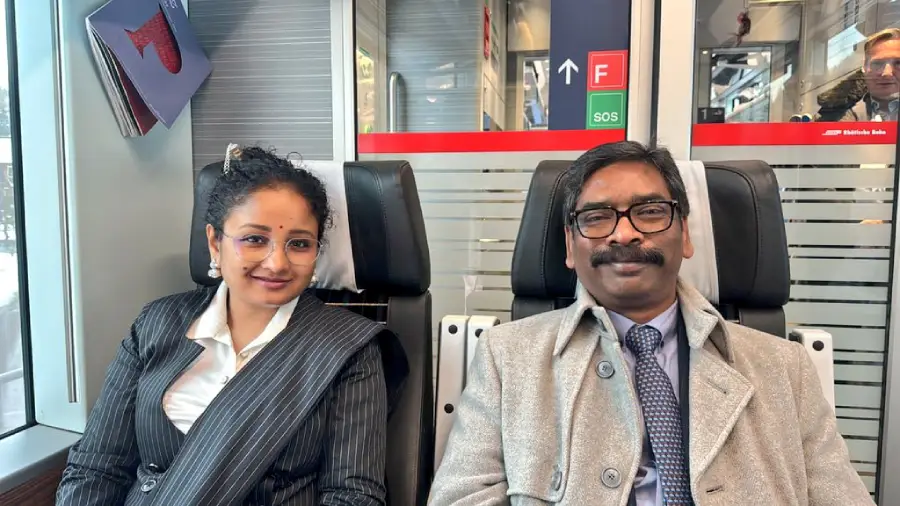
Chief Minister Hemant Soren and Kalpana Murmu Soren, Chairperson of the Women and Child Development Committee of the Jharkhand Legislative Assembly and MLA, are on a visit to Davos, Switzerland, along with a delegation of senior Jharkhand government officials to explore possibilities for foreign investment in the state.
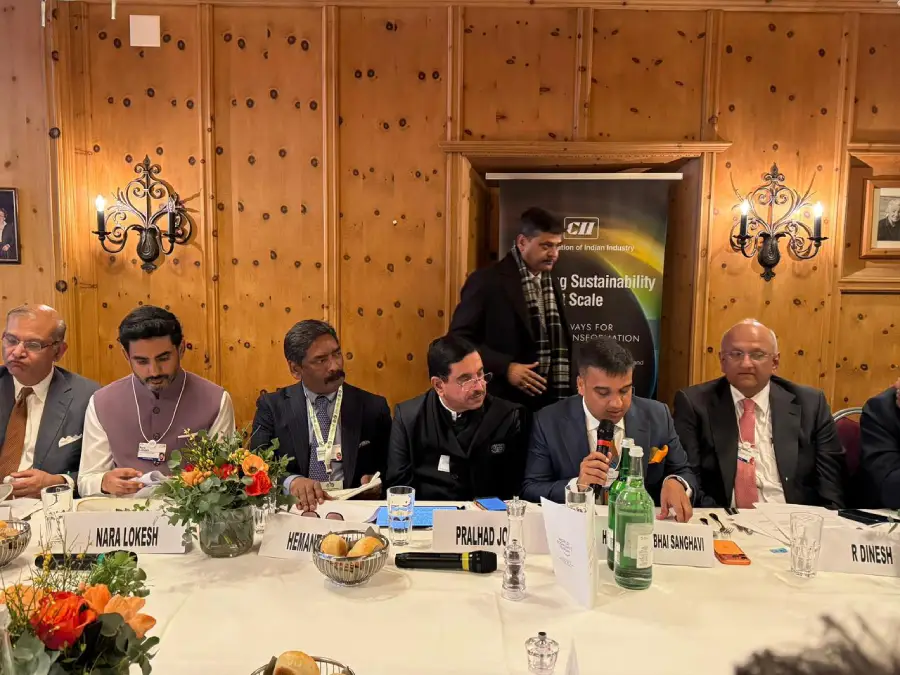
The Chief Minister participated in a CII-organised Global Sustainability Roundtable titled “Delivering Sustainability at Scale: Pathways for Global Transformation,” held on the sidelines of WEF.
Addressing senior policymakers, global industry leaders and institutional investors, he asserted that Jharkhand does not intend to remain merely an exporter of raw minerals. Instead, the state aims to move decisively towards value addition, sustainable industrialisation and inclusive growth that directly benefits its people.
“The objective is not only to utilise our natural resources, but to do so responsibly and in a manner that creates employment and long-term prosperity,” he said, stressing that sustainability must translate into jobs, skill development and social well-being, particularly for local and tribal communities. He highlighted the government’s focus on downstream mineral-based industries, renewable energy, green technologies and strengthening human capital through targeted skill development.
The Chief Minister also drew attention to Jharkhand’s untapped tourism potential, noting that eco-tourism, nature-based tourism and cultural tourism could emerge as key pillars of sustainable development. He said tourism can generate local employment while preserving the state’s rich ecological and cultural heritage.
Reiterating Jharkhand’s long-term development vision, Hemant Soren invited global investors and partners to collaborate in areas such as responsible mining, sustainable manufacturing, renewable energy and tourism infrastructure. Jharkhand’s engagements on Day 2 of WEF 2026 underline the state’s commitment to a balanced, future-ready and sustainable growth pathway, aligned with global sustainability goals while rooted in local development priorities.
A key engagement of the day was the Chief Minister’s address at the Inter-Ministerial Dialogue at WEF 2026, held alongside Vazil Hudák, former Minister of Finance and Minister of Economy of Slovakia, and other global leaders. The dialogue focused on strengthening global cooperation frameworks to enable sustainable and inclusive economic growth. Following the address, an interactive discussion took place on renewable energy development, opportunities in heavy vehicle manufacturing and the adoption of sustainable practices in horticulture, highlighting areas of shared interest and potential collaboration.
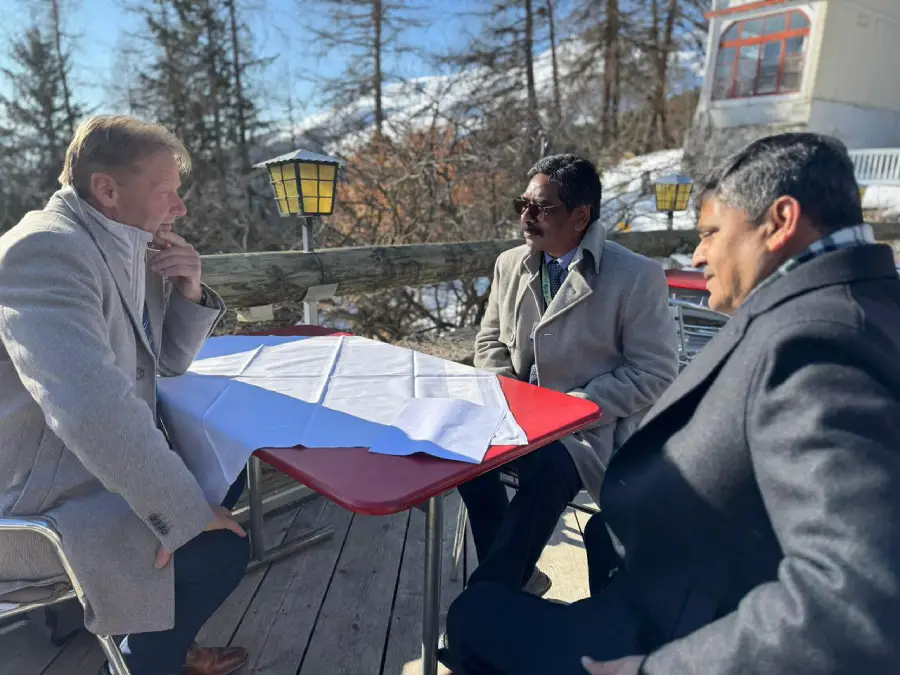
The Chief Minister also participated in a high-level panel discussion titled “Capital in Action: Scaling Energy Systems Through Policy, Finance & Regional Leadership.” The panel explored how policy alignment, innovative financing mechanisms and sub-national leadership can accelerate the transition to clean energy systems while building resilient economic models.
Strategic Energy And Infrastructure Partnership Talks With Hitachi
The meeting with Bharat Kaushal, Regional Head of Hitachi, and senior company representatives focused on deepening cooperation in power systems, power transmission technologies, advanced infrastructure and high-end skill development, all seen as critical to Jharkhand’s long-term growth. Hitachi highlighted its strong track record in India, including management of power systems for multiple metro rail networks, and pointed to its existing centre in Dhanbad as evidence of its familiarity with Jharkhand’s industrial ecosystem.
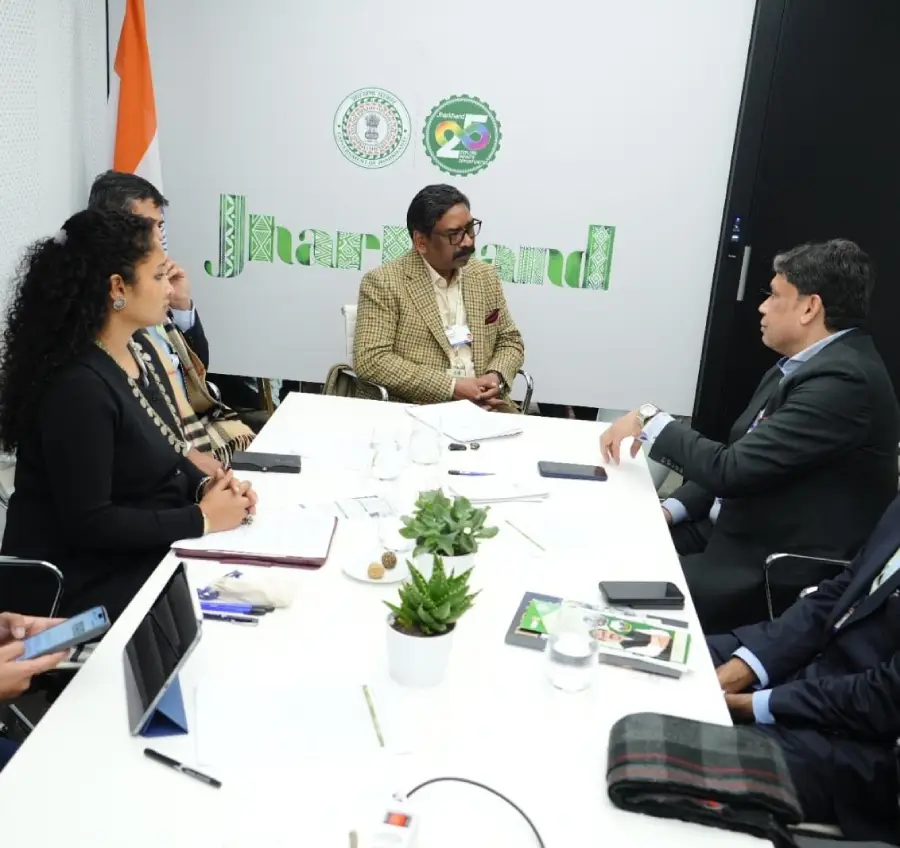
A major issue discussed was land availability for power transmission projects. Hitachi outlined advanced transmission technologies that significantly reduce land requirements, offering practical solutions for densely populated or environmentally sensitive areas. The company expressed readiness to deploy these technologies in Jharkhand to strengthen grid resilience and energy security.
Hitachi invited the Chief Minister to visit its manufacturing facility and proposed joint meetings during February–March with its manufacturing units in India and Jharkhand, along with other Japanese companies, to identify short- and long-term projects.
The talks also included proposals in heavy vehicle-related sectors, notably the establishment of a high-skilled heavy vehicle training institute to enhance youth employability and support industrial growth, which the state government welcomed as part of its broader push for global technology partnerships.
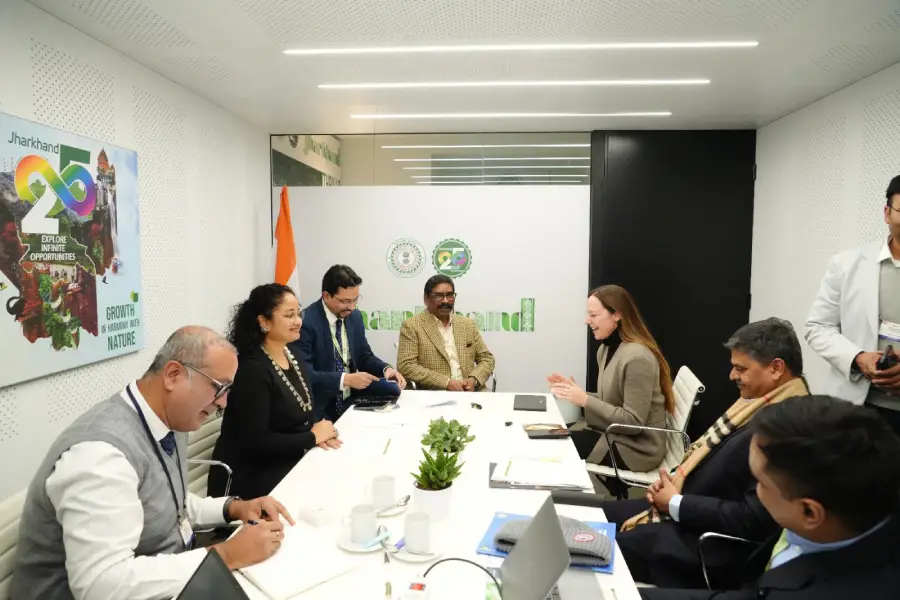
Sweden–India Business Council: Urban Mobility And E-Bicycle Feasibility
Discussions with Cecilia Oldne, Chief India Representative of the Sweden–India Business Council, centred on strengthening Jharkhand–Sweden business cooperation, with a particular emphasis on urban development and mobility. Oldne conveyed the Council’s strong interest in expanding trade and investment ties with Jharkhand, noting that over 50 Swedish companies already operate in India and that Jharkhand holds potential as a new investment destination for Swedish enterprises.
Building on the Chief Minister’s visit to Sweden last year and earlier engagements with companies such as Volvo, both sides agreed to organise a dedicated roundtable meeting in April. The proposed roundtable will take forward identified action points and focus on urban mobility, including financing solutions for urban transport systems.
A key proposal discussed was Jharkhand’s annual bicycle distribution programme for lakhs of government school students. The Chief Minister requested the Sweden–India Business Council to prepare a feasibility report on bicycle usage in the state and assess the potential introduction of e-bicycles for schoolchildren, examining affordability, accessibility and sustainability, particularly for rural and semi-urban areas.
The meeting was seen as a step towards translating diplomatic and business engagement into practical collaboration in clean mobility and urban solutions.

Tech Mahindra Proposes AI, Data Centres and Global Capability Centre
Jharkhand’s push towards digital transformation featured prominently in discussions with global IT major Tech Mahindra, which hosted the state delegation at the Tech Mahindra Lounge during WEF. Led by Sahil Dhawan, Head and President of the IMEA Division, the talks focused on strengthening Jharkhand’s IT and digital ecosystem and positioning the state for future-ready investments.
Tech Mahindra proposed investments in artificial intelligence, data centres and emerging technologies, noting that Jharkhand is moving towards becoming an energy-surplus state—an important advantage for energy-intensive digital infrastructure. The company expressed interest in collaborating with the state on advanced energy solutions, including underground energy storage, to support such facilities.
The company also showed interest in partnering to strengthen the proposed IT Park in Jharkhand and explored the establishment of a Global Capability Centre that would handle global operations across IT services, research and development, mining research, finance, customer service and digital innovation using local talent. Tech Mahindra further proposed collaboration on skill development, scholarships and employment-oriented training, while the Chief Minister sought the company’s support in making ITIs more market-driven, underlining the role of strong industry–academia partnerships in preparing youth for future workforce needs.
India Pavilion And Jharkhand’s Global Vision
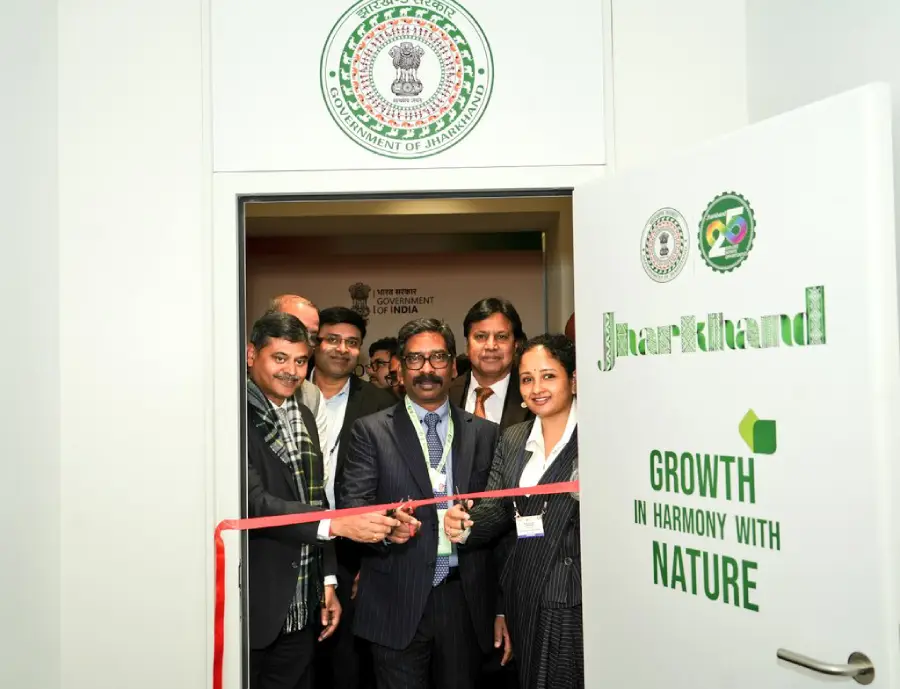
Chief Minister Hemant Soren also participated in the inauguration of the India Pavilion at Davos, attended by representatives of the Government of India and several states. Addressing the gathering, he described Jharkhand’s participation at WEF as a moment of pride and an opportunity to present the state’s evolving economic narrative to the world.
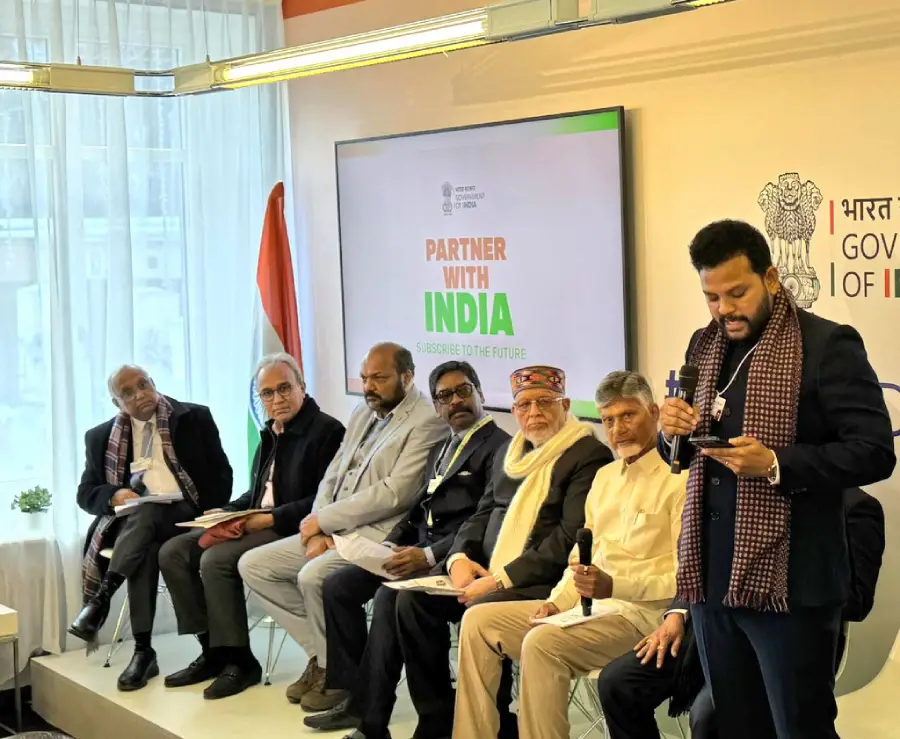
He highlighted Jharkhand’s rich natural resource base and its rapid progress in areas such as green energy and sustainable development. Reiterating the goals of Developed India 2047 and Prosperous Jharkhand 2050, the Chief Minister expressed confidence that meaningful discussions with global leaders, countries and corporations at Davos would accelerate the state’s development and investment efforts.
Thanking participants and stakeholders, he underlined Jharkhand’s readiness to engage with global partners and transition towards a diversified, technology-driven and sustainable growth model.