




Ranchi
A series of high-level engagements, including structured interactions aimed at strengthening long-term international partnerships and investment pathways, marked the opening day for Jharkhand at the World Economic Forum Annual Meeting 2026 in Davos.
The Chief Minister Hemant Soren-led delegation started off with a key meeting with the leadership from Tata Steel, reaffirming Jharkhand’s historic role in India’s industrialisation and its evolution toward advanced and sustainable manufacturing.
Engagements with Hitachi India focused on opportunities in infrastructure development, energy systems, and technology-driven solutions, while discussions with Tech Mahindra highlighted Jharkhand’s interest in digital transformation, innovation ecosystems, and future-ready skills.
Interactions with representatives from Bloomberg APAC, the Sweden India Business Council, and the U.S.-India Strategic Partnership Forum (USISPF) explored avenues for investment facilitation, global market integration, and cross-border collaboration. The delegation also engaged with senior representatives of the World Economic Forum.
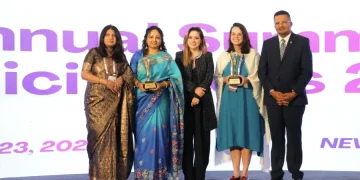
An engagement with the Women Political Leaders network underscored the State’s emphasis on inclusive leadership and gender-responsive development as integral to economic growth and governance.
This apart, visits to global technology pavilions on the opening day offered exposure to emerging innovations and future-facing solutions, supporting Jharkhand’s efforts to align industrial growth with sustainability and technological advancement.
Jharkhand Beckons
From responsible mining and green energy to indigenous culture, tourism, and women-led entrepreneurship, Jharkhand is showcasing what a resource-rich, tribal-majority State can offer a changing world.
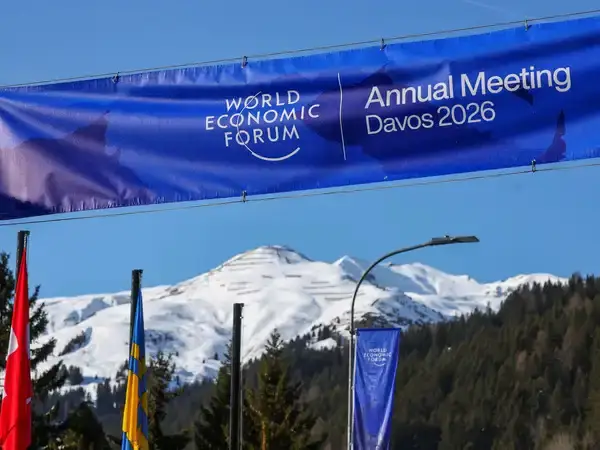
In its 25th year of formation this year, the milestone is being marked not just with retrospection at home but with a global debut abroad. For the first time since its creation in 2000, Jharkhand is participating officially in the World Economic Forum (WEF) Annual Meeting 2026 at Davos (from January 19-23) positioning itself as “a young State with an old civilisational wisdom and a future-facing development vision”.
Led by Chief Minister Hemant Soren, the Jharkhand delegation will, thereafter, head to the United Kingdom till January 25. Hemant’s Oxford address at the Blavatnik School of Government will form a key highlight of the visit.
Jharkhand’s presence is symbolically and politically significant. It brings together three converging narratives: a silver jubilee year of Statehood, the global search for sustainable and inclusive growth models, and the emergence of a tribal leader articulating an alternative path of development anchored in what is called ‘Growth in Harmony with Nature’, officials said.
At least four union ministers and five other chief ministers from Andhra Pradesh, Telangana, Maharashtra, Assam and Madhya Pradesh comprise India’s delegation led by National Security Advisor Ajit Doval at Davos.
What Jharkhand Is Showcasing At Davos?
At Davos, Jharkhand is not merely presenting itself as a mineral-rich State seeking investment. Instead, it is attempting to reframe its global identity — from a hinterland of extraction to a partner in sustainable manufacturing, green energy, responsible resource governance, and people-centric growth.

A dedicated Jharkhand Pavilion at Davos is serving as the focal point of this outreach. Through policy presentations, curated meetings, and sector-specific discussions, the State is highlighting investment opportunities in renewable energy, critical minerals, value-added manufacturing, clean technologies, digital services, infrastructure, and tourism. The pitch is clear: Jharkhand offers land, minerals, skilled youth, policy stability, and a governance framework that increasingly aligns economic growth with ecological limits.
Chief Minister Hemant Soren, participating in high-level dialogues and closed-door meetings, has emphasised that sub-national governments like States are where global ambitions on climate, supply chains, and inclusive growth are ultimately implemented. “Development cannot be separated from nature and people,” Hemant has said at multiple interactions, underlining that Jharkhand’s priorities lie in balancing industry with forests, jobs with dignity, and investment with community welfare.
A Tribal Leader’s Global Pitch
As a tribal leader, Hemat’s message to global investors and policymakers is that sustainability is not an abstract concept for Jharkhand, but a lived reality shaped by forests, rivers, land rights, and community traditions.
Alongside him, his MLA wife Kalpana Soren’s engagement has added another dimension to Jharkhand’s pitch. Her focus on women-led entrepreneurship, grassroots livelihoods, and social inclusion reflects the State’s emphasis on investing in people, not just markets — a theme that aligns closely with the broader questions shaping global dialogue at WEF 2026.
“Together, their presence projects Jharkhand as a State where economic policy intersects with social justice, gender equity, and indigenous knowledge systems. It is an attempt to show that tribal societies are not obstacles to development, but carriers of sustainable solutions,” officials maintained.
Energy Transition: From Legacy To Leadership
Energy forms a central pillar of Jharkhand’s Davos narrative. Historically, the State has been one of India’s powerhouses, with coal, steel, and thermal power plants forming the backbone of national industrialisation. Cities such as Bokaro, Patratu, and Chandrapura symbolise this legacy.
At Davos, Jharkhand is acknowledging this history while presenting a balanced transition strategy. The State is engaging global energy companies, technology providers, and financiers to explore renewable energy, grid modernisation, energy storage, clean fuels, and industrial decarbonisation. The emphasis is on a “just transition” — ensuring that workers and communities dependent on conventional energy are not left behind.
Jharkhand is also positioning its mineral wealth as a strategic asset in the global energy transition. Minerals critical for renewable technologies, batteries, and transmission infrastructure place the State at the heart of future supply chains. The message is that responsible mining, coupled with environmental safeguards and local value addition, can support both climate goals and economic resilience.
Tourism, Culture And A New Growth Engine
Beyond industry and energy, Jharkhand is using Davos to highlight tourism as a future-facing growth engine. The State is presenting itself as a nature–culture destination, rooted in forests, waterfalls, indigenous festivals, and living traditions. From Hundru and Dassam waterfalls to sacred sites like Baidyanath Dham and Rajrappa, Jharkhand’s landscapes are being showcased as opportunities for eco-tourism, heritage travel, and adventure experiences.
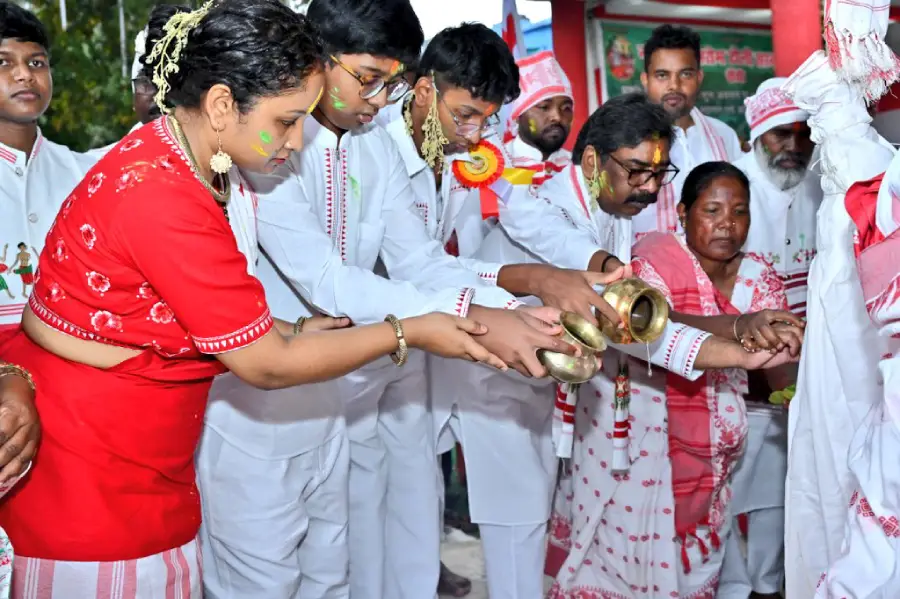
With a little over one-fourth of its population belonging to indigenous communities, Jharkhand’s cultural capital is central to this pitch. Festivals such as Sarhul and Karam, art forms like Sohrai and Paitkar painting, and heritage sites including Maluti temples and McCluskieganj are being positioned as part of a tourism model that values continuity, not commodification.
As the State invites investment into eco-tourism, hospitality, and community-led travel, it is stressing sustainability, cultural sensitivity, and local livelihoods — reinforcing its broader development philosophy.
What Is Davos And Why It Matters?
The World Economic Forum Annual Meeting at Davos brings together political leaders, business heads, civil society, and thinkers from across the world to discuss global challenges and future pathways. In simple terms, Davos is where conversations happen on how the world’s economy, technology, environment, and societies should move forward together.
In 2026, global discussions are being shaped by questions around cooperation in a fractured world, future growth, investment in people, responsible innovation, and respecting planetary limits. Jharkhand’s participation places it directly within these debates, allowing the State to align its priorities with global concerns.
India At WEF: The Larger Picture
Jharkhand’s debut also feeds into India’s broader engagement at Davos. India’s presence at WEF reflects its ambition to position itself as a growth engine, manufacturing hub, digital leader, and climate partner. Indian States are increasingly seen as drivers of reform, investment, and innovation.
Within this framework, Jharkhand’s participation adds diversity to India’s global story — highlighting that development pathways from resource-rich, tribal-majority regions are equally relevant to global transformation.
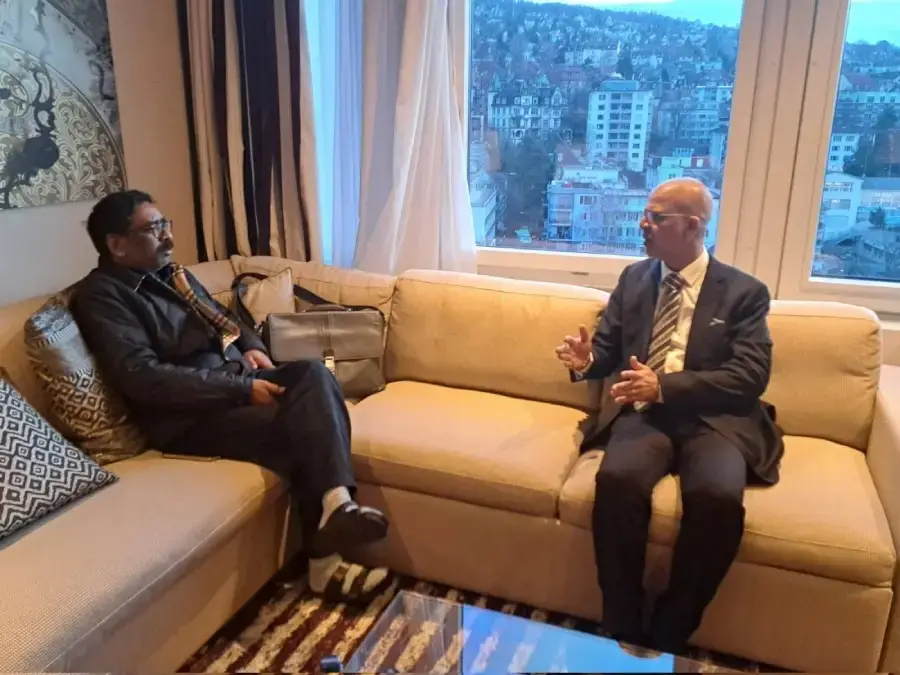
Ambassador Mridul Kumar, briefing the Chief Minister ahead of the event, noted that Jharkhand’s participation aligns closely with the WEF 2026 focus on sustainable growth, resilience, and long-term economic transformation.
25-Year-Old State Looks Ahead
As Jharkhand looks toward 2050, its first-ever appearance at Davos marks more than a diplomatic milestone. It signals a shift in self-perception — from the margins of national policy to the centre of global conversations on sustainability and inclusion.
“This is not just about investment numbers,” Hemant Soren has remarked, “it is about defining a development path that respects nature, values people, and prepares our youth for the future.”
At 25, Jharkhand is telling the world that its next chapter will be written not only in balance sheets, but in forests protected, communities empowered, and growth achieved in harmony with nature.
Hemant In The United Kingdom
During his visit to the United Kingdom, the Jharkhand Chief Minister will focus on advancing international partnerships that support the State’s long-term vision of sustainable and inclusive development. His engagements will centre on clean energy collaboration, climate finance, technology transfer, and responsible industrialisation, with meetings planned with UK-based investors, policy institutions, and clean-tech stakeholders.
The discussions aim to explore pathways for renewable energy deployment, industrial decarbonisation, green manufacturing, and skill development, ensuring that Jharkhand’s transition toward a low-carbon economy remains just, job-oriented, and economically resilient.
A key highlight of the UK visit will be Hemant Soren’s address and public conversation at the Blavatnik School of Government, University of Oxford. Aligning with Jharkhand’s philosophy of “Growth in Harmony with Nature,” the interaction will focus on how an indigenous-majority, resource-rich State can pursue green industrialisation, responsible mineral-based manufacturing, and inclusive, investment-led growth. The Oxford address positions Jharkhand not only as an investment destination but as a case study in global policy debates on sustainability, indigenous governance, and sub-national leadership in addressing climate and development challenges.