








Jamshedpur/Ranchi
In a landmark ruling, the Supreme Court of India directed the Jharkhand government to officially declare 31,468 hectares (314.68 sq km) of the ecologically critical Saranda forest as a wildlife sanctuary. The court’s order, issued on November 13 this year, imposes a three-month deadline for the State to notify the sanctuary and explicitly bars mining in the earmarked area.
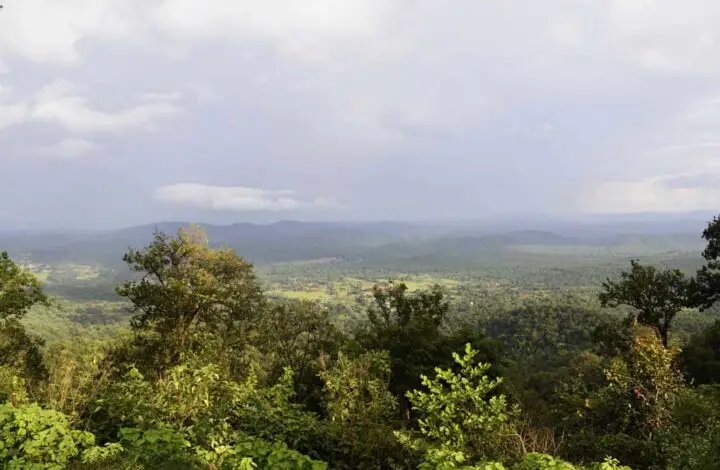
The apex court emphasised that the move aims to balance the conservation needs of Asia’s largest Sal forest with the traditional rights of the tribal communities who have lived there for centuries. Calling Saranda one of the most pristine Sal forests in the world, the judgment pointed to its global ecological value.
It further recorded that Saranda hosts critically endangered species such as the Sal forest tortoise, four-horned antelope, Asian palm civet, and wild elephants, while recognising that Adivasi groups including Ho, Munda and Oraon have for generations depended on the forest for subsistence, culture and identity.
Saranda forest in West Singhbhum district of Jharkhand was once heavily Naxal infested. But sustained anti-Naxal operations have now largely lessened the Maoist menace in the forest, though West Singhbhum is still among the half-a-dozen districts in India that are most Left Wing Extremism-affected.
Where Mining Meets Conservation
The ruling comes against the backdrop of Saranda’s long-standing role as a mining hub. Reports presented before the court highlighted that the Saranda forest division accounts for 26% of India’s iron ore reserves, supplying major steel plants run by SAIL and Tata Steel at Chiria, Gua, Kiriburu, Meghahatuburu and Vijaya II.
Jharkhand, however, had been reluctant to demarcate the full sanctuary area. In its early affidavit, the State proposed restricting sanctuary status to 24,941.64 hectares (249.41 sq km), arguing that protecting the entire region would require demolishing “vital public infrastructure” and could disrupt tribal settlements. Later though, it clarified that the complete 31,468.25 hectares proposed for sanctuary status involved no mining or non-forest land use.
The court chose to rely on the original 1968 notification issued by the erstwhile Bihar government, which had first designated the same expanse (314 sq km) as the Saranda Game Sanctuary.
“The State government shall notify the area comprising of 126 compartments as notified in 1968 notification, excluding six compartments i.e., compartment numbers KP-2, KP-10, KP-11, KP-12, KP-13 and KP-14, as a wildlife sanctuary within a period of three months from the date of this judgment,” the Supreme Court bench of the then CJI Justice BR Gavai and Justice K Vinod Chandran directed.
Saranda’s Ecological Value And Decline
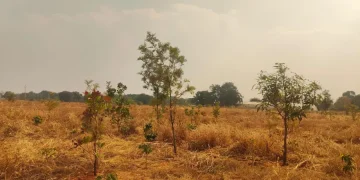
Sprawled across 82,000 hectares in West Singhbhum, Saranda has long been recognised as one of Asia’s great Sal forest systems and served as a crucial elephant corridor until the 1990s. A Wildlife Institute of India (WII) report tabled before the court detailed how years of iron ore extraction had obliterated elephant migration routes, fragmented habitats, and sharply altered the forest’s ecological character.
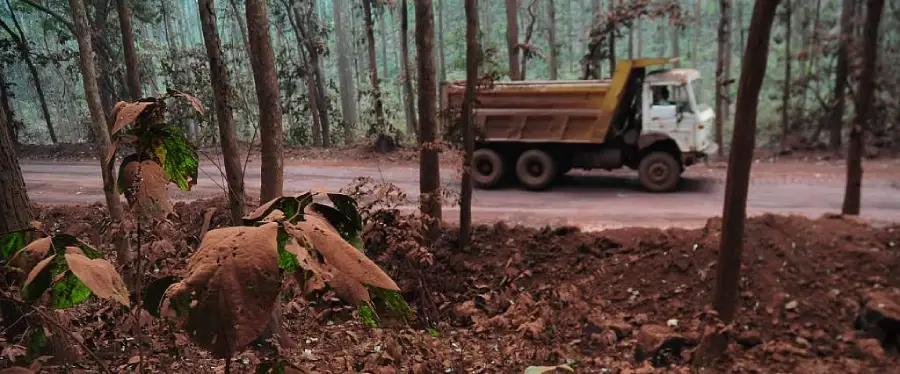
Mining in the region dates back to 1906, but extraction rapidly expanded after the formation of Jharkhand in 2000. The State’s affidavit acknowledged that the 1968 sanctuary notification “fell into abeyance and is now reportedly missing from State records,” enabling mining to expand unchecked in the early 21st century.
In 2001, Jharkhand declared the Singhbhum Elephant Reserve, with Saranda as its core. Environmentalists like R. K. Singh opposed this strategy, contending that the original sanctuary area should have formed the protected nucleus, surrounded by an ESZ, not the other way around.
In 2022, the National Green Tribunal directed the state to consider notifying Saranda as a sanctuary, but no action followed. Eventually, conservationists approached the Supreme Court through the TN Godavarman case, seeking long-overdue legal protection.
Tribal Fears, Sacred Sites And The Assurance from Court
While conservationists pressed for protection, tribal communities across Saranda raised concerns that sanctuary status would restrict their movement, sever livelihood systems, and threaten sacred cultural sites.
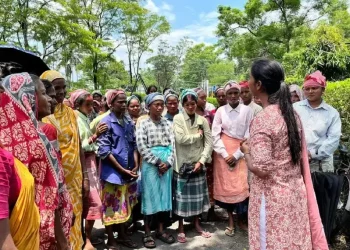
Budhram Laguri, central president of the Adivasi Munda Samaj Vikas Samity, told The Indian Tribal there are 50 revenue villages and 10 forest villages inside Saranda. “We had been agitating against the notification of the Saranda forest as a sanctuary as there was apprehension of loss of livelihood of tribals. We have an unbreakable bond with the Saranda forest from social, economic, cultural, and religious perspectives. Many of our sacred sites, including Sarna, Desauli, Sasandiri, Masna, etc., are located within this forest, ensuring our unique social identity and existence,” added Laguri.
Laguri noted that forest produce, herbs and employment in iron ore mines form the backbone of local sustenance. “We were afraid that declaring the Saranda forest area a wildlife sanctuary will destroy our villages and our social, cultural, and religious identity, as well as our livelihood and employment,” he said.
The Supreme Court’s clarification that sanctuary status will not affect the rights of forest-dependent communities led to the end of the agitation.
“However Supreme Court order stressing that the forest dwellers will not be affected by the notification has cleared the issue and we have stopped our agitation,” Laguri said.
Scientific Basis For Landscape-Level Sanctuary
The Wildlife Institute of India had earlier classified Saranda into mining, non-mining and conservation zones, based on ecological parameters and elephant movement pathways. Its study recommended immediate protection of the region to safeguard long-term biodiversity.
Environmental petitioner R. K. Singh reinforced this in court:
“Effective elephant conservation requires a landscape-level perspective that goes beyond protected area boundaries to include multiple-use forests, plantations, and critical wildlife corridors.”
Singh dismissed claims that the forest is degraded: “It would be erroneous to label Saranda as an ‘empty forest,’ as it harbours a rich diversity of faunal species. The Asian elephant, in particular, frequently traverses this region, utilising multiple corridors that facilitate its dispersal between Jharkhand and adjoining states.”
He further underlined that local fears were rooted in misinformation: “The concern among local communities that the declaration of Saranda as a Wildlife Sanctuary would abolish their traditional rights over the forest is largely misconceived. The Supreme Court also clarified in its recent judgment that notifying the 314 sq km area will not infringe upon the individual or community rights of tribal populations.”
Court’s Stand On Tribal Rights And State’s Responsibility
The Supreme Court invoked statutory protections as it addressed doubts over habitation and rights: “The provisions contained in Section 24(2)(c) of the Wildlife Protection Act (WPA) and Section 3 read with Section 4(1) of the Forest Right Act (FRA) amply protect the rights of the tribals and forest dwellers even after declaration of the said area as a wildlife sanctuary.”
The Bench also delivered a sharp rebuke to the State: “The bogey that on declaration of wildlife sanctuary, the habitations and rights of the tribals and traditional forest dwellers will be lost and vital public infrastructures like educational institutions, roads, etc., will have to be demolished is only a figment of imagination of the State. Rather than taking such a stand before this court, we are of the considered view that the State should have educated the tribals/forest dwellers residing in the said areas about the rights available to them under the FRA as well as the WPA.”

The Bench directed the Jharkhand government to widely publicise that neither the individual nor community rights of tribals and forest dwellers in the Saranda area will be adversely affected by the judgment.
At the same time it outlined that “mining within a national park and wildlife sanctuary and within an area of one kilometre from the boundary of such national park and wildlife sanctuary shall not be permissible”.
In September 2025, the Jharkhand cabinet had already approved notifying the 314.65 sq km area as the state’s 12th Wildlife Sanctuary, along with a 1-km Eco-Sensitive Zone, but the final notification is still awaited.
Muted Political Responses And The Stakes In Singhbhum
Despite the ecological and political significance of the decision, both the ruling JMM and opposition BJP have refrained from issuing formal statements.
Chief Minister Hemant Soren had earlier said the government intended to notify the sanctuary while ensuring that forest-dependent communities do not face existential risks. But after the Supreme Court order, both parties have remained silent.
The political importance of the region cannot be overstated. Singhbhum Parliamentary seat has historically been dominated by the Congress and the JMM, represented over the years by leaders such as Bagun Sumbrui, Vijay Singh Soy and Geeta Koda. At present, it is held by Joba Majhi of the JMM. The BJP broke this dominance only twice—through Laxman Gilua in 1999 and 2014.
Today, five of the six Assembly constituencies in the region are with the JMM and the Congress, with the lone exception being Seraikela, held by former Chief Minister and JMM veteran Champai Soren after shifting to the BJP ahead of the 2024 Assembly polls.