


• About
  • Editor & Writers
  • Contact
  • Sitemap
No Result
View All Result
Support Our Mission
Saturday, September 26, 2026
The Indian Tribal
  • Home
  • Achievers
    • उपलब्धिकर्ता
  • Cuisine
    • खान पान
  • Health
    • स्वास्थ्य
  • Legal
    • कानूनी
  • Music
    • संगीत
  • News
    • Updates
    • खबरें
  • Sports
    • खेलकूद
  • Variety
    • विविध
  • हिंदी
    • All
    • आदिवासी
    • उपलब्धिकर्ता
    • कला और संस्कृति
    • कानूनी
    • खबरें
    • खान पान
    • खेलकूद
    • जनजाति
    • भारत
    • विविध
    • संगीत
    • संस्कृति
    • स्वास्थ्य
    The Indian Tribal

    मेघालय के आदिवासी समुदाय बचा रहे जंगल और जल स्रोत, बालपाक्रम राष्ट्रीय उद्यान में संरक्षण की नई मिसाल

    The Indian Tribal

    ओडिशा के नबरंगपुर में आदिवासी किसानों की मक्का खेती ने कैसे बदली तस्वीर

    The Indian Tribal

    छत्तीसगढ़ में आदिवासी ट्रैकर्स और AI मिलकर बचा रहें हैं दुर्लभ वन्यजीव

    The Indian Tribal

    हाशिए से राष्ट्रीय केंद्र तक: बदल रही है भारत के आदिवासी समुदायों की कहानी

    The Indian Tribal

    शिक्षा, वन उपज में मूल्य संवर्धन से आदिवासी समुदायों के आर्थिक सशक्तीकरण की नई राह

    The Indian Tribal

    मणिपुर में संघर्ष के बीच आदिवासी कोचों ने संभाली नई पीढ़ी के खिलाड़ियों की कमान

    The Indian Tribal

    ओडिशा के आदिवासी किसान ने 10 सालों में बचाईं धान की 100 से ज्यादा देशी किस्में

    The Indian Tribal

    आदिवासी समुदायों में पारंपरिक दाइयों की भूमिका क्यों अब भी कायम है, जब सरकार संस्थागत प्रसव पर दे रही है जोर?

  • Gallery
    • Videos
  • Latest News
The Indian Tribal
  • Home
  • Achievers
    • उपलब्धिकर्ता
  • Cuisine
    • खान पान
  • Health
    • स्वास्थ्य
  • Legal
    • कानूनी
  • Music
    • संगीत
  • News
    • Updates
    • खबरें
  • Sports
    • खेलकूद
  • Variety
    • विविध
  • हिंदी
    • All
    • आदिवासी
    • उपलब्धिकर्ता
    • कला और संस्कृति
    • कानूनी
    • खबरें
    • खान पान
    • खेलकूद
    • जनजाति
    • भारत
    • विविध
    • संगीत
    • संस्कृति
    • स्वास्थ्य
    The Indian Tribal

    मेघालय के आदिवासी समुदाय बचा रहे जंगल और जल स्रोत, बालपाक्रम राष्ट्रीय उद्यान में संरक्षण की नई मिसाल

    The Indian Tribal

    ओडिशा के नबरंगपुर में आदिवासी किसानों की मक्का खेती ने कैसे बदली तस्वीर

    The Indian Tribal

    छत्तीसगढ़ में आदिवासी ट्रैकर्स और AI मिलकर बचा रहें हैं दुर्लभ वन्यजीव

    The Indian Tribal

    हाशिए से राष्ट्रीय केंद्र तक: बदल रही है भारत के आदिवासी समुदायों की कहानी

    The Indian Tribal

    शिक्षा, वन उपज में मूल्य संवर्धन से आदिवासी समुदायों के आर्थिक सशक्तीकरण की नई राह

    The Indian Tribal

    मणिपुर में संघर्ष के बीच आदिवासी कोचों ने संभाली नई पीढ़ी के खिलाड़ियों की कमान

    The Indian Tribal

    ओडिशा के आदिवासी किसान ने 10 सालों में बचाईं धान की 100 से ज्यादा देशी किस्में

    The Indian Tribal

    आदिवासी समुदायों में पारंपरिक दाइयों की भूमिका क्यों अब भी कायम है, जब सरकार संस्थागत प्रसव पर दे रही है जोर?

  • Gallery
    • Videos
  • Latest News
No Result
View All Result
The Indian Tribal
No Result
View All Result
  • Home
  • Achievers
  • Cuisine
  • Health
  • Legal
  • Music
  • News
  • Sports
  • Variety
  • हिंदी
  • Gallery
  • Latest News
Support Our Mission
Home » The Indian Tribal / Achievers » From Poonch to Professorship

From Poonch to Professorship

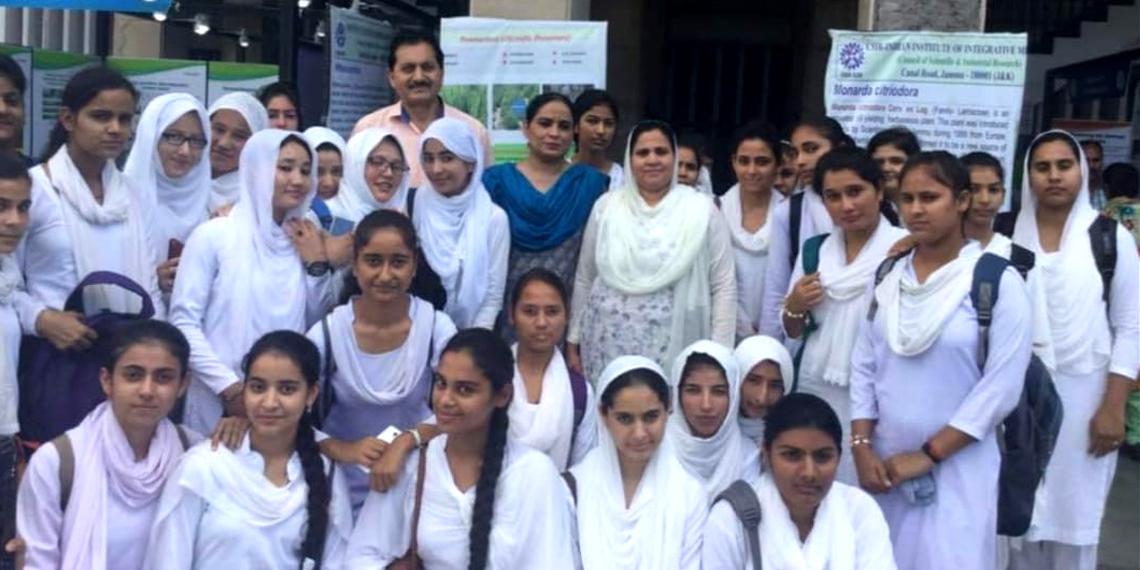
The will to learn kept a small tribal girl going several miles and today, she’s the head of the zoology department at the Government Degree College, Rajouri, Jammu & Kashmir. Mohit Kandhari learns her story

November 14, 2021
From Poonch to Professorship

Dr Shamim Akhtar (centre, in white suit), Head of the Zoology Department, Government Degree College, Rajouri

As a small Kashmiri village girl from the frontier district of Poonch, she trekked 5 km to and from her classes and was married even before completing her middle school.
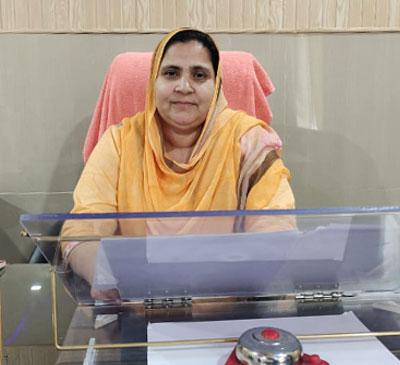
Dr Shamim Akhtar won the Zoological Society of India’s Young Scientist Award in 2002, the Dr DS Chauhan Medal in 2007, the Madhavi Shyam Medal in 2009 and the Environmental Science Medal in 2017

Today, she’s the head of the zoology department at the Government Degree College, Rajouri, Jammu & Kashmir.

Dr Shamim Akhtar, who is a Gujjar tribal, has authored a book on her favourite subject and been published in several different journals, with some 80 papers to her credit.

She won the Zoological Society of India’s Young Scientist Award in 2002, the Dr DS Chauhan Medal in 2007, the Madhavi Shyam Medal in 2009 and the Environmental Science Medal in 2017. 

Dr Akhtar is the recipient of over half a dozen fellowships and currently serves as a member of the Indian Research Communication’s advisory board and as editorial secretary at the Zoological Society of India.

Her early life, though, would not give a hint of her sparkling academic career.
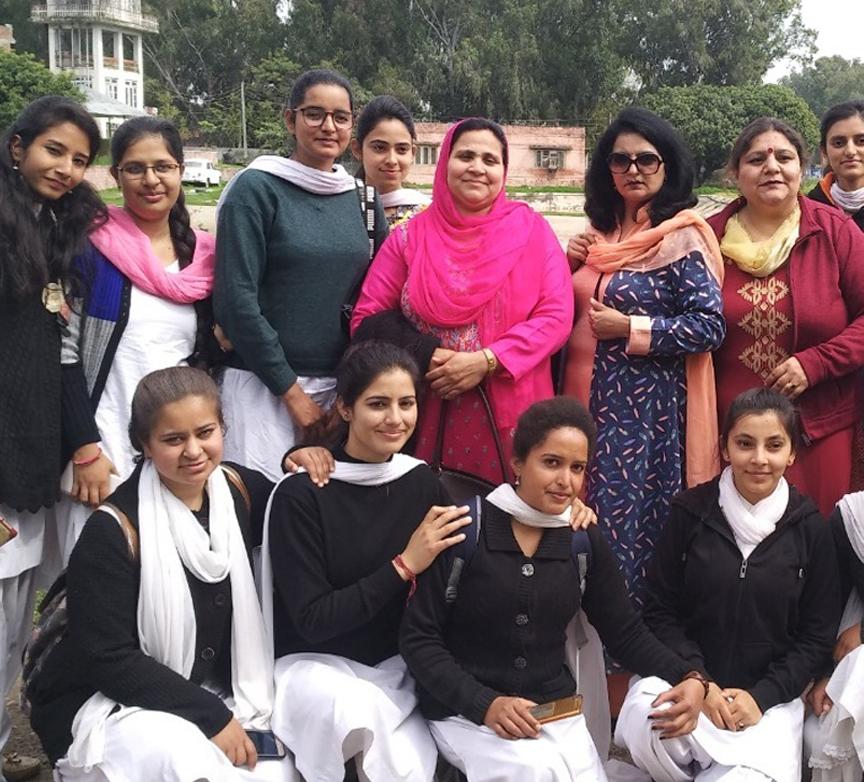
Dr Shamim Akhtar (centre, in pink suit) along with girl students

For about five years, she served as a contractual teacher in different institutions but was finally inducted as faculty at her alma mater, Government Degree College, Rajouri in October 2007.

Dr Akhtar is from Parat village in Mendhar tehsil of Poonch. She did her primary studies at the popular Bagh ka School, named for the large number of Chinar trees in the school compound. It was the biggest attraction in the area.

Later, she shifted to the government school in Herni and studied up to class VIII. Before her examinations, though, she got married to a policeman. Dr Akhtar completed her education from the Higher Secondary School in Mendhar, where her husband was posted.

“I wanted to study further despite my early marriage,” she says. “I would first thank my parents, who stood behind me, and then my husband and his family, for supporting me and helping me realise my dream.”

Dr Akhtar completed her high school, graduation, postgraduation and doctorate all after marriage. “I did my postgraduation, MPhil and PhD studies in one go from Dr Bhimrao Ambedkar University, Agra,” she remembers.

For about five years, she served as a contractual teacher in different institutions but was finally inducted as faculty at her alma mater, Government Degree College, Rajouri in October 2007. “I am trying my best –teaching my students and trying to learn myself every day,” she says with a smile.


Root Woot | Online Puja Samagri Root Woot | Online Puja Samagri Root Woot | Online Puja Samagri

Support Our Mission

The Indian Tribal

For the past four-and-a-half years, we have travelled across India to bring to our readers the ‘Unknown, Lesser-Known Tribal Life’, which rarely finds space in the mainstream media.

We have done this without external funding, driven only by our conviction that India’s tribal heritage deserves to be documented with dignity, depth and authenticity.

If you like our work, and if it has informed, inspired or helped you understand India’s tribal/indigenous communities better, we invite you to become a part of this mission.

Your contribution will not merely fund a news platform. It will help preserve voices, traditions, histories and aspirations that form an invaluable part of India’s identity.

Because when an untold story is documented, a piece of India’s heritage is preserved forever.

Thanks
Editor

In Numbers

49.4 %
Female Literacy rate of Scheduled Tribes

Update

NCST undertakes review in Karnataka

The National Commission for Scheduled Tribes (NCST) on Thursday undertook a comprehensive review of the implementation of constitutional safeguards, welfare measures and development programmes for Scheduled Tribes in Karnataka at a review meeting. The meeting was chaired by Antar Singh Arya, Chairperson, NCST and attended by Jatothu Hussain, Member, Amit Nirmal, Joint Secretary, NCST, senior officers of the Commission, Karnataka’s Chief Secretary, Director General of Police, Additional Chief Secretaries, Principal Secretaries and Secretaries of various departments. The review was undertaken on the basis of a structured and detailed questionnaire circulated by the Commission in advance, the information and data furnished by the Government of Karnataka, grievances and petitions received from members of the Scheduled Tribe communities, feedback received prior to the review meeting, and observations arising from field visits previously undertaken by the Commission in Karnataka.
The Indian Tribal
Adivasi

Karam Parab: The Sacred Tree, Two Brothers And A Festival Connecting Forest, Farm, Community

by The Indian Tribal
September 20, 2026

From Jharkhand and Odisha to West Bengal, Chhattisgarh, Bihar, Madhya Pradesh and Assam, Karam Parab or Karma Puja is celebrated in different forms by several tribal and other communities. Geetisri Patri lists out the details. PART-1

The Indian Tribal

Tiger Conservation In India: How Tribal Displacement And Tourism Are Reshaping The Debate

September 17, 2026
The Indian Tribal

ओडिशा के नबरंगपुर में आदिवासी किसानों की मक्का खेती ने कैसे बदली तस्वीर

September 15, 2026
The Indian Tribal

The Ganesha We Know, The Stories We Miss

September 14, 2026
The Indian Tribal

छत्तीसगढ़ में आदिवासी ट्रैकर्स और AI मिलकर बचा रहें हैं दुर्लभ वन्यजीव

September 12, 2026
The Indian Tribal

हाशिए से राष्ट्रीय केंद्र तक: बदल रही है भारत के आदिवासी समुदायों की कहानी

September 11, 2026
Previous Post

पुंछ के पथरीले रास्तों से प्रोफेसर बनने तक

Next Post

बदलाव के हिमायती थे बिरसा : मोदी

Top Stories

The Indian Tribal
Adivasi

How Tribal Haats In Odisha Are Being Used to Improve Nutrition

September 24, 2026
The Indian Tribal
Adivasi

Karma Puja Across India: How Oraon, Munda, Santal, Ho, Kharia And Other Communities Keep The Tradition Alive

September 22, 2026
The Indian Tribal
Adivasi

Karam Parab: The Sacred Tree, Two Brothers And A Festival Connecting Forest, Farm, Community

September 20, 2026
Load More
  • About Us
  • Editor & Writers
  • Contact
  • Redressal
  • Copyright Policy
  • Privacy Policy And Terms Of Use
  • Disclaimer
  • Sitemap

  • Achievers
  • Cuisine
  • Health
  • India
  • News
  • Legal
  • Music
  • Sports
  • Trending
  • Chhattisgarh
  • Delhi
  • Gujarat
  • Jammu & Kashmir
  • Jharkhand
  • Kerala
  • Madhya Pradesh
  • Maharashtra
  • North East
  • Arunachal Pradesh
  • Assam
  • Manipur
  • Meghalaya
  • Mizoram
  • Nagaland
  • Sikkim
  • Tripura
  • Odisha
  • Telangana
  • West Bengal
  • Political News
  • Variety
  • Art & Culture
  • Entertainment
  • Adivasi
  • Tribal News
  • Scheduled Tribes
  • हिंदी
  • उपलब्धिकर्ता
  • कानूनी
  • खान पान
  • खेलकूद
  • स्वास्थ्य
  • संस्कृति
  • संगीत
  • विविध
  • कला और संस्कृति
  • खबरें
  • असम
  • अरुणाचल प्रदेश की ताज़ा ख़बरें
  • ओडिशा
  • केरल
  • गुजरात
  • छत्तीसगढ़
  • जम्मू और कश्मीर
  • झारखंड
  • तेलंगाना
  • दिल्ली
  • नॉर्थईस्ट
  • पश्चिम बंगाल
  • मध्य प्रदेश
  • महाराष्ट्र
  • त्रिपुरा
  • नागालैंड
  • मणिपुर
  • मिजोरम की ताज़ा ख़बरें
  • मेघालय
  • सिक्किम की ताज़ा ख़बरें
  • राजस्थान

About Us

The Indian Tribal is India’s first bilingual (English & Hindi) digital journalistic venture dedicated exclusively to the Scheduled Tribes. The ambitious, game-changer initiative is brought to you by Madtri Ventures Pvt Ltd (www.madtri.com). From the North East to Gujarat, from Kerala to Jammu and Kashmir — our seasoned journalists bring to the fore life stories from the backyards of the tribal, indigenous communities comprising 10.45 crore members and constituting 8.6 percent of India’s population as per Census 2011. Unsung Adivasi achievers, their lip-smacking cuisines, ancient medicinal systems, centuries-old unique games and sports, ageless arts and crafts, timeless music and traditional musical instruments, we cover the Scheduled Tribes community like never-before, of course, without losing sight of the ailments, shortcomings and negatives like domestic abuse, alcoholism and malnourishment among others plaguing them. Know the unknown, lesser-known tribal life as we bring reader-engaging stories of Adivasis of India.

Follow Us

All Rights Reserved

© 2026 Madtri Ventures [P] Ltd.

No Result
View All Result
  • Home
  • Achievers
  • Cuisine
  • Health
  • Health
  • Legal
  • Music
  • News
  • Sports
  • Variety
  • हिंदी
    • उपलब्धिकर्ता
    • खान पान
    • कानूनी
    • खेलकूद
    • खेलकूद
    • संगीत
    • संगीत
    • स्वास्थ्य
    • स्वास्थ्य
    • विविध
  • Gallery
  • Videos

© 2026 Madtri Ventures [P] Ltd.